
In This Guide
- Measure the product condition rather than naming the season
- Review how the oil reaches the pump
- Keep sample handling representative
- Build a comparison sheet for seasonal observations
- Compare approved recipes without losing traceability
- Define the operating envelope in the quotation
- Customer Questions
- Product References
- Discuss Your Requirement
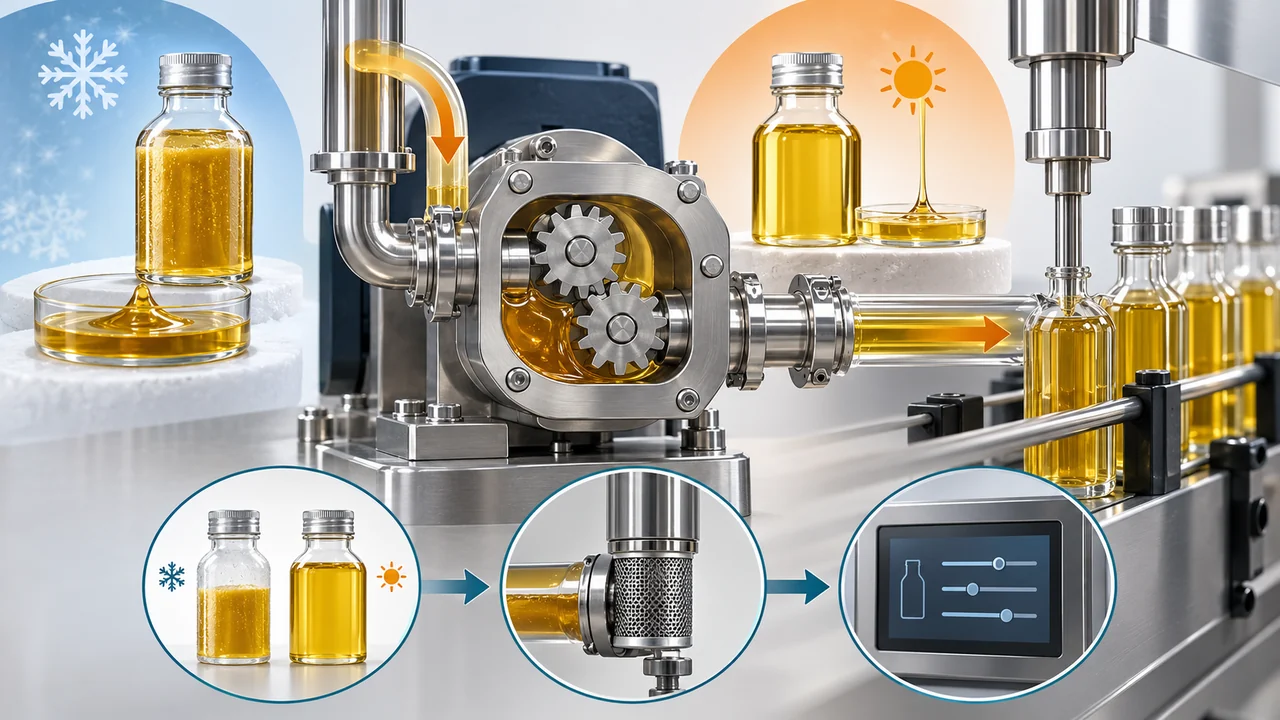
A gear pump liquid filling machine should be evaluated with the oil condition it will actually encounter, not only a convenient sample brought to the supplier. Seasonal changes can alter product temperature, handling and the behavior observed at the inlet and nozzle. An oil filling machine comparison becomes more useful when those conditions are recorded as part of the application review.
Compare representative oil samples at the intended operating conditions, review the supply route and retain the approved recipe baseline. Investigate inlet and product-condition changes before treating a seasonal difference as a speed-setting problem.
Measure the product condition rather than naming the season
Summer and winter are descriptions of the environment, not technical definitions of the oil entering the filler. Record the relevant product temperature and how the sample reached that condition. Storage, transfer and time in the supply path can make the product differ from the surrounding room.
Ask the process team for the oil properties relevant to the intended conditions. Do not apply a generic viscosity limit from another product or assume that two lubricant or edible-oil grades share the same temperature response.
Review how the oil reaches the pump
The inlet route should be examined as part of the selected pump configuration. Note supply level, connection identity, any visible restriction and the change between a full and a depleted supply container. Product entering with bubbles or an inconsistent feed can complicate a comparison of dosing settings.
Gather observations from normal guarded operation and the approved maintenance inspection. Do not loosen an inlet fitting, remove a strainer or change a transfer-pump setting while the equipment is operating. The supplier must interpret the observations against the actual product-feed arrangement.
Keep sample handling representative
Label samples by grade and lot and describe their storage and transport conditions. A sample that has been warmed, vigorously handled or allowed to stand differently from production material can produce a trial that answers the wrong question. Record those differences rather than silently treating every sample as interchangeable.
For a new seasonal operating range, ask which conditions should be represented in the trial. The review should identify the actual oil, container and dose, without creating unsupported heating instructions or assuming that a convenient bench condition represents the whole application.
Build a comparison sheet for seasonal observations
| Item | Record for comparison |
|---|---|
| Oil identity | Grade, lot and available product properties |
| Product condition | Observed temperature and handling history |
| Supply arrangement | Feed level, inlet route and replenishment events |
| Filling setup | Pump/configuration identity and recipe revision |
| Container and nozzle | Same approved format or a stated change |
| Results | Individual quantity checks, discharge appearance and transfer condition |
Keep the accepted reference run on the same sheet. This makes it possible to distinguish a changed product condition from a changed bottle or machine setup.
Compare approved recipes without losing traceability
If an authorized trial changes the filling recipe, preserve the original revision and document the setting changed. Gear-pump rotation, speed and any ordered reverse or anti-drip control belong to the selected system. Do not assume that increasing one value can compensate safely for every change in oil behavior.
Check quantity and the condition of the filled bottle after the trial. A cleaner-looking nozzle event alone does not establish acceptance. The intended output and filling tolerance must be evaluated under the agreed product and container conditions.
Define the operating envelope in the quotation
The H M oil pages compare several dosing concepts, including gear-pump, flowmeter, piston and net-weight arrangements. That comparison does not mean every concept is suitable for every oil grade. Give the manufacturer the actual grades and intended conditions so the selected seals, product path and dosing arrangement can be reviewed.
Record which product-and-condition combinations were evaluated and which remain outside the demonstrated scope. This creates a useful seasonal setup boundary and a support record, without promising that one recipe or one pump selection will cover every future oil.
Customer Questions
Is room temperature sufficient for a seasonal filling record?
No. Record the relevant product condition in the supply path and how the sample was handled; the liquid may differ from its surrounding environment.
Can one gear-pump recipe cover all oil grades?
That must be established through the actual product and configuration review. Different grades should not be treated as interchangeable solely because they are all oils.
Should pump speed be changed first when filling behavior changes?
Compare product condition and inlet supply against the accepted baseline before making an authorized recipe trial.
Product References and Further Details
These pages describe published equipment arrangements. Review the supplied machine, actual materials and agreed operating requirements when applying the guide.
Discuss Your Machine Requirement
Share your product, container or closure samples, required output, process conditions and line layout with H M Pharma Machines for a technical review.
Request a Technical Review