
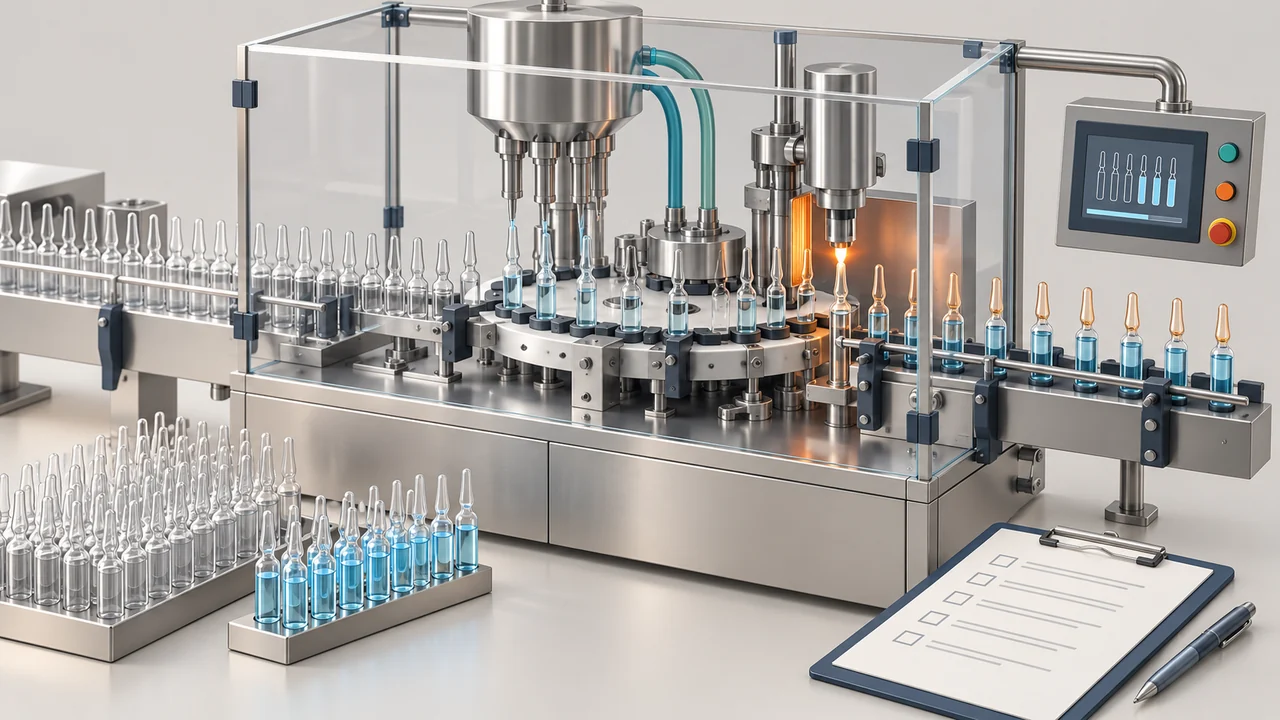
An ampoule filling and sealing demonstration becomes more useful when its results can be traced to the glass, liquid and setup used. A video or a selection guide can show the process sequence; a trial record explains which conditions produced acceptable doses, seals and handling. This article focuses on that record and the handover to inspection or labeling rather than repeating a general machine buying guide.
Identify the ampoule and liquid samples, machine setup, utility conditions, dosing checks and seal observations before the trial. Keep rejects linked to the stage where they occurred. Agree which tests assess filling, sealing and product quality separately, then record the outfeed condition needed by inspection and ampoule labeling equipment. Appearance alone does not establish every required quality attribute.
Begin with traceable glass and liquid samples
Record the ampoule supplier or sample identity, body and opening dimensions, glass format and liquid batch. Include the required fill quantity, relevant liquid properties and the condition in which the samples are presented to the machine. Keep any substitute liquid clearly identified.
The ampoule filling and sealing machine aligns open glass ampoules, doses liquid and flame-seals the neck in a synchronized sequence. A result from one glass format should not be transferred to another opening or neck geometry without checking the tooling and setup that differ.
Capture the setup behind each trial result
Identify the installed handling parts, dosing arrangement, filling needles and sealing setup. Record the settings and actual utility conditions used for the test in the supplier's trial documentation. Pre- or post-gas flushing, inspection integration and other selected functions should be marked as included or absent.
If the setup changes during testing, begin a distinguishable set of results rather than merging observations. This allows the buyer to see what corrected a problem and which operating condition belongs to the proposed supply. Keep the technical record descriptive; it is not a substitute for the machine's operating and safety instructions.
Keep dose evidence separate from the sealing result
Agree the method used to check delivered quantity and identify the measurement equipment. Link each result or sample set to the ampoule format, liquid condition and dosing setup. Include starts and restarts as well as the steady part of the run, using a sampling plan agreed before testing.
Inspect the fill position and neck condition alongside the quantity result. Liquid near the sealing area can be relevant to the process review even when the dose is acceptable. Record observations without turning a small sample of good fills into an unsupported general accuracy or output claim.
Define what the seal assessment actually covers
List the visual seal features and handling defects the trial will record, together with the buyer's acceptance criteria. Separate these observations from any specified integrity or other product-quality tests. A visually satisfactory sealed ampoule is not evidence that every separately required test has passed.
Record rejected glass and its point of rejection: infeed, filling, sealing or outfeed. Include breaks and abnormal seals in the count rather than reporting only collected good units. Sterility and product suitability depend on the complete process and qualification; a flame-sealing demonstration should not be presented as a guarantee of either.
Use a trial sheet that preserves the useful comparisons
| Record group | Items to retain |
|---|---|
| Samples | Glass format, liquid identity and dose target |
| Setup | Format parts, needles, settings and selected functions |
| Operating conditions | Supply conditions, run segment and restart event |
| Results | Dose checks, seal observations and reject categories |
| Changes | Adjustment made and the following result set |
| Handover | Outfeed arrangement and downstream sample condition |
Record the observation period and explain how acceptable output was counted. Keep the signed trial scope with the result sheet.
Check the ampoule that reaches labeling
Submit representative sealed ampoules and labels when reviewing an ampoule labeling machine. The product page describes controlled feeding, separation and wrap-around application to fragile glass, with handling architecture and inspection functions selected for the application.
Agree the collection and transfer arrangement from sealing, then observe support, spacing and the condition of the labeling surface. When discussing an ampoule line with a manufacturer in India, include these interfaces in the enquiry to H M Pharma Machines. The trial record should identify the demonstrated machine boundaries and any downstream operation still requiring a separate test.
Buyer Questions
Is a machine video sufficient evidence of ampoule trial performance?
It can explain the process and show an example, but it does not identify every sample, setting or acceptance check. Keep a documented trial record for the requirements being purchased.
Does a good-looking flame seal prove container integrity?
Visual appearance and integrity are different assessments. Define the required checks and record their results separately; do not infer an unperformed test from the appearance of the seal.
Why include labeling in a filling and sealing trial plan?
The sealed ampoule must be transferred and supported for the next operation. Sample condition, glass handling and label application can require their own review even when filling and sealing are satisfactory.
Related Machine Guides
Product References and Further Details
These primary pages describe the published machine arrangements discussed in this guide. Use the actual product and component requirements when reviewing a configuration.
Discuss Your Machine Requirement
Share your product, container or closure samples, required output, process conditions and line layout with H M Pharma Machines for a technical review.
Request a Technical Review