
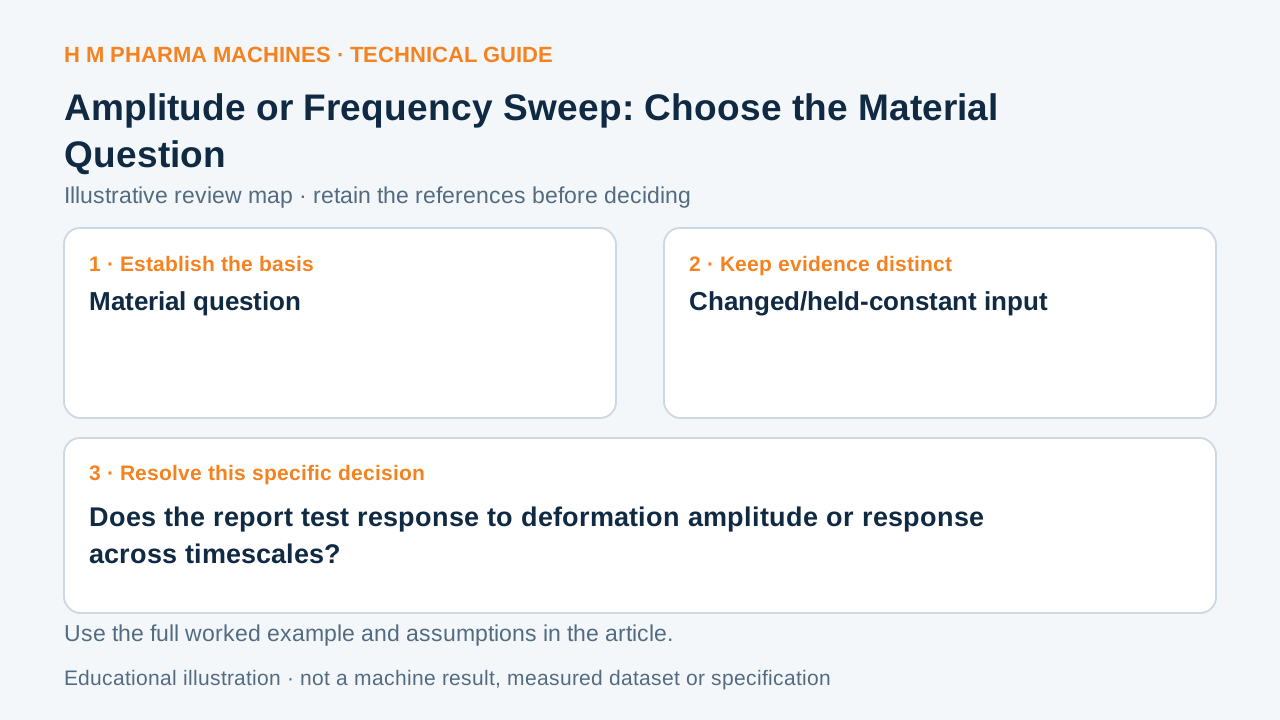
Amplitude and frequency sweeps change different inputs. Choose the test that answers the intended characterization question.
See Which Input Changes
Anton Paar describes an amplitude sweep as changing deformation amplitude while holding frequency constant. A frequency sweep changes frequency while holding a selected amplitude constant. The first can identify a linear viscoelastic range; the second evaluates frequency-dependent response within an appropriate range.
A report should identify the controlled quantity and the input held constant. Two graphs labelled rheology can therefore serve different purposes. Comparing their vertical values without their test definitions can hide a change in both the sample response and the experiment. Primary rheology reference.
Illustrative Request Choice
Hypothetical question A asks whether a comparison can be performed without materially disrupting the measured structure. An amplitude-range assessment is relevant. Question B asks how response varies between slower and faster oscillations; a frequency sweep addresses that distinction.
These are educational requests, not an approved HM formulation method. The laboratory determines the actual settings, linear-region criterion and suitable sequence. A frequency result collected outside the intended linear range should not silently be described as a small-deformation material property.
Preserve the Precondition
Keep the amplitude-selection basis with a frequency sweep and the frequency basis with an amplitude sweep. Record whether the sample changed during the test and which conclusion the report supports. Neither method is a complete reproduction of industrial mixing or transfer.
Use the worksheet to map the buyer’s material question to the provided report. In a vessel enquiry, this can prevent a useful laboratory characterization from being requested or interpreted under the wrong label. Do not prescribe universal amplitudes or frequencies from an illustrative guide. HM application context: Manufacturing Vessel.
Amplitude or Frequency Sweep: Choose the Material Question — blank interpretation record
This blank worksheet is for your own project. It contains no H M machine trial result.
| Comparison | Evidence/reference | Reviewer |
|---|---|---|
| Material question | To complete | To complete |
| Changed/held-constant input | To complete | To complete |
| Linear-range basis | To complete | To complete |
| Supported conclusion and exclusions | To complete | To complete |
Customer Questions
Do amplitude and frequency sweeps measure the same question?
They vary different inputs and can support different interpretations.
Can frequency testing ignore amplitude selection?
The selected amplitude and its applicable region belong to the method.
Does either test reproduce a mixer automatically?
No. Actual process conditions need a separate assessment.
Related Equipment References
Review the actual offered equipment and application separately from this educational example.
Primary References
These references support the technical principles discussed in this guide. The worked examples and review questions are educational.
Discuss Your Machine Requirement
Share your product, container, required output and the evidence needed for your technical review.
Request a Technical Review