
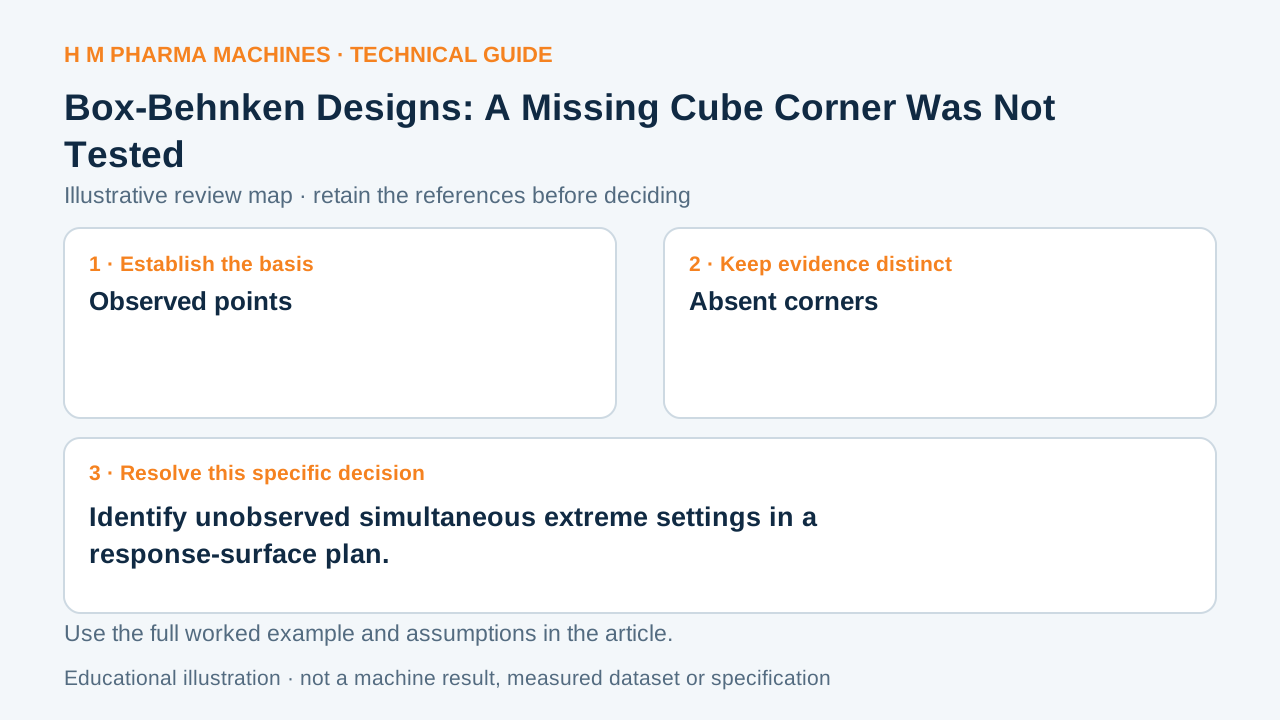
A three-factor Box-Behnken plan uses edge-midpoint and center combinations. Its data should not be described as direct observations of every simultaneous extreme.
The statistical question
A Box-Behnken design supports quadratic modeling using selected three-level combinations rather than an embedded full factorial cube. For three factors, the locations include edge midpoints and the center; cube corners with all three factors at extremes are absent. A fitted response at an absent corner is therefore a model prediction, not a directly tested condition. Feasibility still needs application-specific review.
An illustrative review example
For an illustrative coded plan, the point +1,+1,0 can occur at an edge midpoint, but +1,+1,+1 is not a three-factor Box-Behnken corner observation. If an analysis file displays a predicted response for the latter, label it with its model basis and the missing direct observation. No conclusion about safety, machine capability or corner performance follows simply from the plan name.
Prepare the evidence for discussion
List the actual run coordinates and mark the factor combinations the buyer most needs to assess. Ask the analyst whether absent extreme combinations limit the intended conclusion or require additional authorized confirmation work. Keep physical parameter maps beside the coded design. When discussing a machine purchase, distinguish measured sample behavior from inferred behavior at simultaneous extremes, especially when pack condition or product properties could change the response.
An absent corner remains unobserved
This blank worksheet is for your own project. It contains no H M machine trial result.
| Question to resolve | Evidence to retain |
|---|---|
| Observed points | Executed edge and center coordinates |
| Absent corners | Simultaneous extremes not observed |
| Prediction | Model value clearly labeled |
| Buyer question | Required confirmation combinations |
Customer Questions
Are all cube corners directly tested?
No. The three-factor Box-Behnken geometry excludes simultaneous three-factor extreme corners.
Can software predict at an untested combination?
It may produce a model value, which must be labeled as a prediction rather than an observation.
Does the design name establish physical feasibility?
Every proposed physical combination still needs review against the application and permitted trial conditions.
Primary References
These references support the technical principles discussed in this guide. The worked examples and review questions are educational.
Discuss Your Machine Requirement
Share your product, container, required output and the evidence needed for your technical review.
Request a Technical Review