
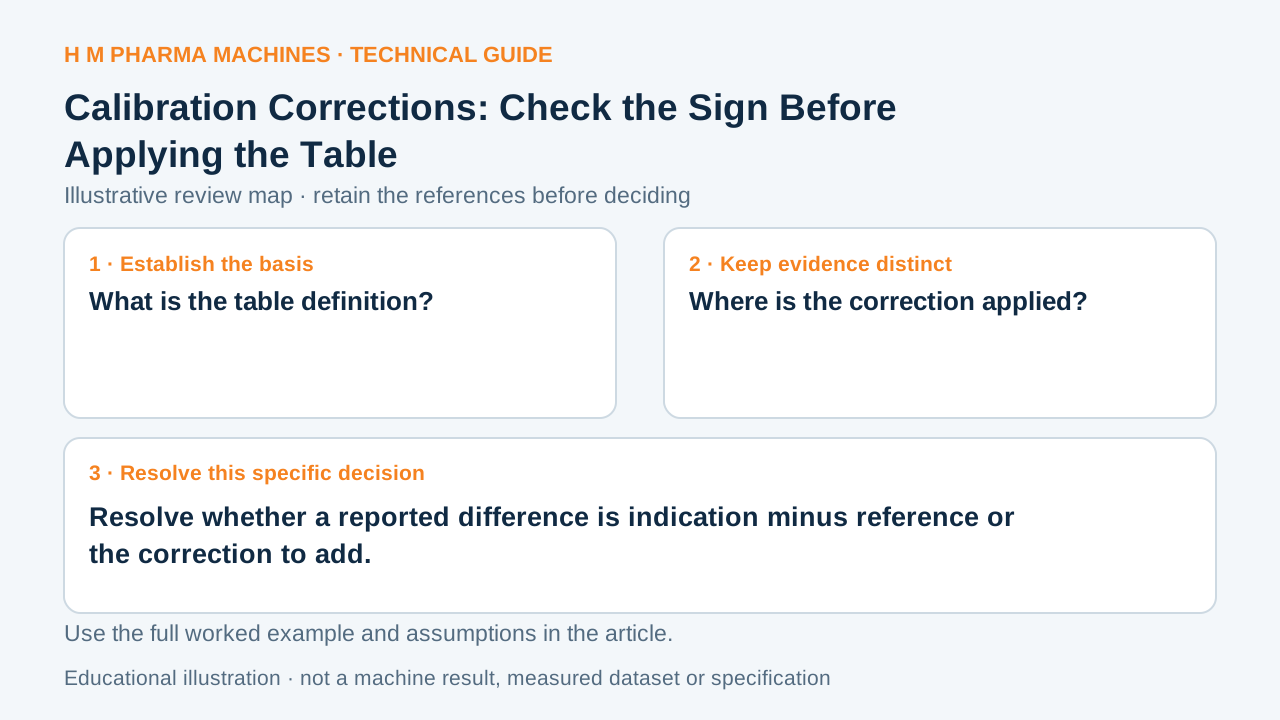
The sign convention in a calibration table matters. Write the equation before applying any correction to production readings.
A difference and a correction may have opposite signs
A correction compensates for an estimated systematic effect. A table may show indication minus reference, while the correction to add is reference minus indication. Neither heading should be shortened to “difference” in a spreadsheet without preserving its definition.
Check one invented row by hand
At a hypothetical reference of 100.00 g, an instrument indicates 100.20 g. Its indication-minus-reference difference is +0.20 g. In a simple additive model, the correction to add is −0.20 g, giving 100.00 g for that example. Adding +0.20 g would move the reading in the wrong direction.
This invented one-point example does not establish a constant correction over the whole range. A real calibration can require a table, factor or curve, and the uncertainty of the corrected result remains relevant.
Preserve the calculation definition
Keep the certificate column heading, units and interpolation instructions beside the implemented equation. Have a reviewer check a known table row and a second appropriate point. Record whether corrections are applied in the instrument or in later software so that they are not applied twice.
Primary references: JCGM international vocabulary, JCGM international vocabulary.
Measurement review worksheet
This blank worksheet is for your own project. It contains no H M machine trial result.
| Question | Evidence to retain |
|---|---|
| What is the table definition? | Indication−reference or correction-to-add |
| Where is the correction applied? | Instrument or calculation |
| Does the rule vary with range? | Actual table or function |
Customer Questions
Is positive error always a positive correction?
No. Check the certificate’s sign convention.
Can one point justify a constant offset everywhere?
No. The real calibration relationship governs the range.
Can the correction be applied twice?
Yes. Identify instrument-side and software-side transformations.
Primary References
These references support the technical principles discussed in this guide. The worked examples and review questions are educational.
Discuss Your Machine Requirement
Share your product, container, required output and the evidence needed for your technical review.
Request a Technical Review