
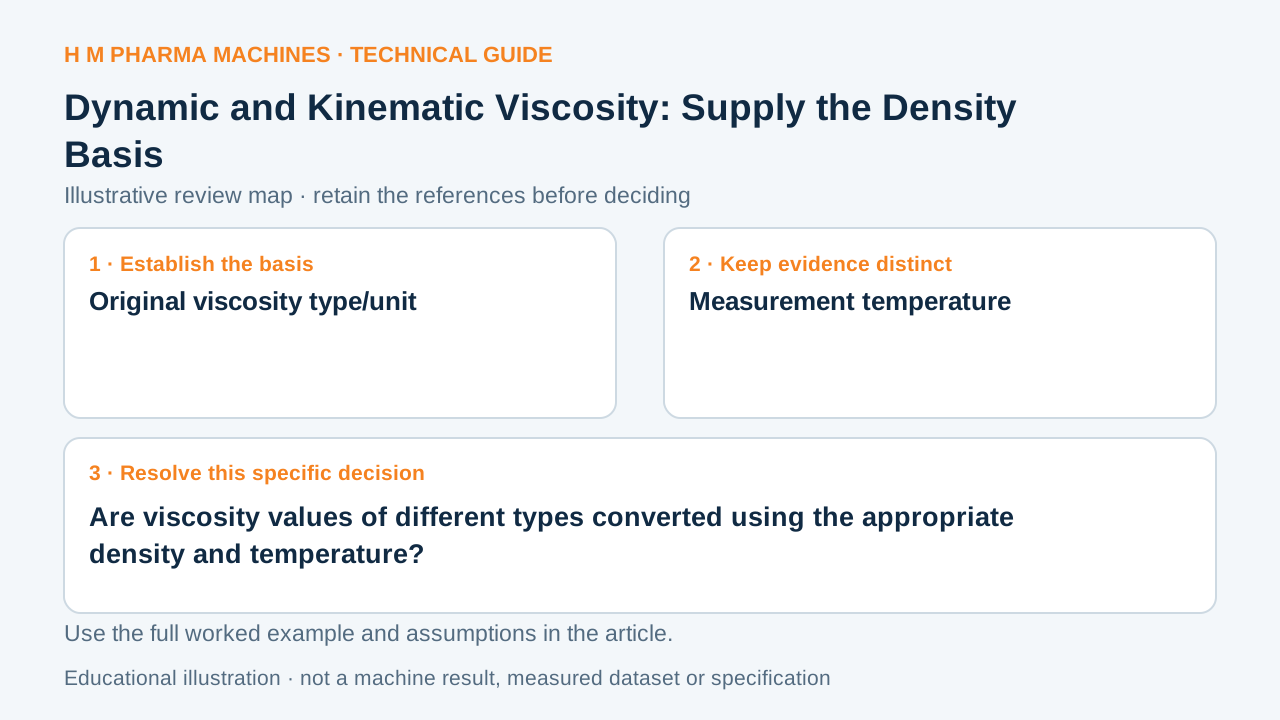
A value in mPa·s and a value in mm²/s represent different viscosity quantities. They cannot be exchanged without the density basis.
Identify Which Viscosity Is Reported
KSB defines kinematic viscosity ν as dynamic viscosity η divided by density ρ, so η = νρ. Dynamic viscosity units include mPa·s; kinematic viscosity units include mm²/s. With density expressed in g/cm³, those two unit choices produce a convenient numerical conversion.
Keep the density at the relevant measurement temperature. Using a nominal density from a different condition can change the result. Also retain the original viscosity type so the supplier can see whether it was measured directly or calculated from another quantity. Primary rheology reference.
Illustrative Conversion
Suppose an invented liquid report gives ν = 100 mm²/s and ρ = 0.90 g/cm³ at the same temperature. The calculated dynamic viscosity is 90 mPa·s. A density of 1.10 g/cm³ would give 110 mPa·s for the same kinematic value.
These numbers are educational and do not characterize an HM filling product. The example demonstrates why equal numerical labels in different units are not equivalent. Conversion also does not make a Newtonian capillary-method result interchangeable with every shear-dependent rotational result.
Make the Enquiry Reconstructible
Ask the product owner to identify the quantity, unit, temperature, density source and method. Where a conversion was performed, preserve its arithmetic and mark the output as calculated. Do not rewrite the original report to conceal the initial measurement basis.
Use the worksheet when an oil or liquid supplier sends different report formats. The aim is a comparable material description for the equipment discussion. Product-path compatibility, delivered dose and pump behaviour still need the actual application review. HM application context: Gear Pump Liquid Filling Machine.
Dynamic and Kinematic Viscosity: Supply the Density Basis — blank interpretation record
This blank worksheet is for your own project. It contains no H M machine trial result.
| Comparison | Evidence/reference | Reviewer |
|---|---|---|
| Original viscosity type/unit | To complete | To complete |
| Measurement temperature | To complete | To complete |
| Density source and unit | To complete | To complete |
| Calculated value and method boundary | To complete | To complete |
Customer Questions
Can cP and cSt be treated as the same number?
Their numerical relationship needs the density basis; they represent different quantities.
Must density use the same temperature?
Use the relevant density condition and make any mismatch explicit.
Does conversion establish filler compatibility?
No. It reconciles quantities, not actual equipment performance.
Related Equipment References
Review the actual offered equipment and application separately from this educational example.
Primary References
These references support the technical principles discussed in this guide. The worked examples and review questions are educational.
Discuss Your Machine Requirement
Share your product, container, required output and the evidence needed for your technical review.
Request a Technical Review