
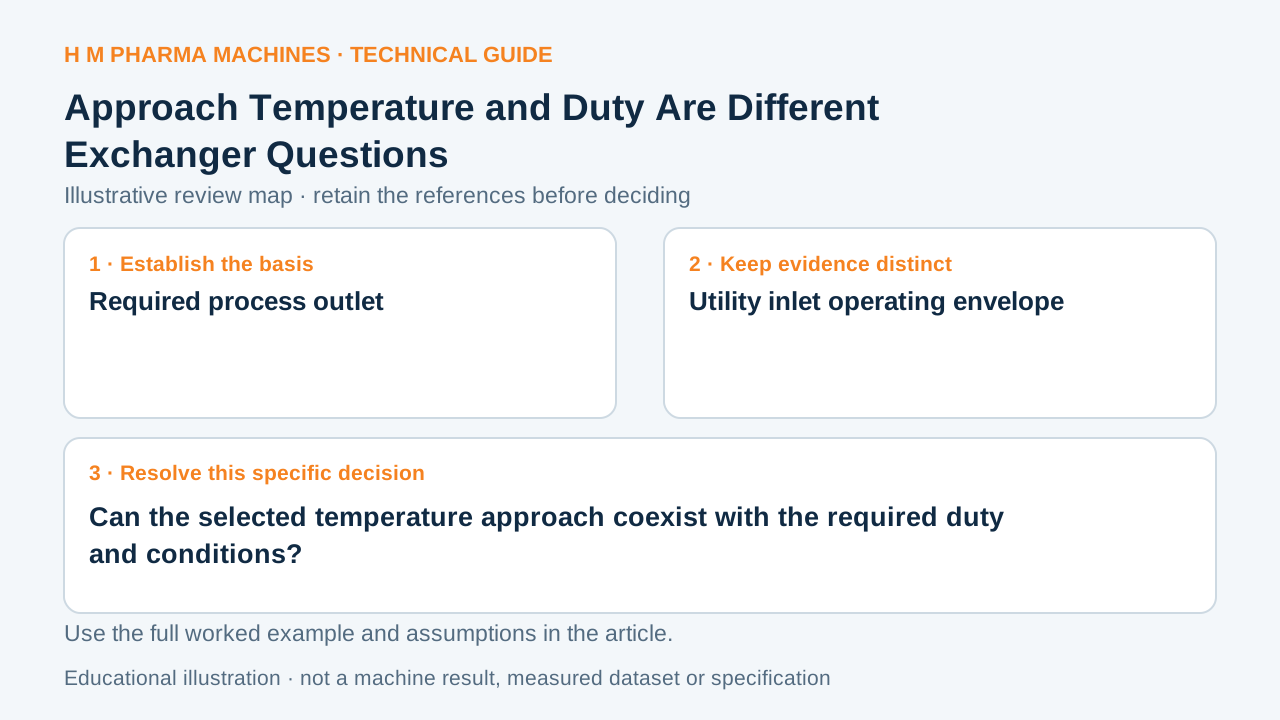
A heat-duty number can conceal a demanding terminal approach. Compare the closest hot-to-cold temperature difference too.
Define the Thermal Model
The approach temperature is a local terminal gap between the exchanging streams. Alfa Laval’s heating-and-cooling FAQ identifies approach as a sizing factor. A smaller positive gap reduces the available driving force; a quoted kW figure alone does not describe the temperature program that must produce it.
Compare a Hypothetical Case
Suppose a hypothetical process must reach 59°C using a hot stream entering at 60°C. That end approach is 1 K. If the utility instead arrives at 65°C, the same requested process outlet gives 6 K. The desired outlet and duty may be unchanged, but the thermal design has a different terminal constraint.
Complete the Engineering Review
Record the closest approach for every required operating case, including the warmest cooling supply or coolest heating supply. Check the other end too; the smallest gap is not always where a summary table suggests. Keep achievable endpoints distinct from a simple heat-balance calculation, which can balance energies without validating transfer area.
For a manufacturing-vessel project, obtain the actual utility envelope. The example’s temperatures are invented and convey no HM close-approach specification. Have the exchanger supplier calculate the selected arrangement rather than importing an advertised minimum from a different equipment family.
Can the selected temperature approach coexist with the required duty and conditions?
This blank worksheet is for your own project. It contains no H M machine trial result.
| Review field | Reference or result | Responsible person |
|---|---|---|
| Required process outlet | To complete | To complete |
| Utility inlet operating envelope | To complete | To complete |
| Closest approach and its location | To complete | To complete |
| Supplier calculation for worst case | To complete | To complete |
Customer Questions
Does positive approach prove enough area?
No. It is one necessary thermal check.
Can a nominal utility temperature cover every case?
Document its operating envelope.
Is one supplier’s minimum universal?
Use the selected unit and duty.
Related Equipment References
Review the actual offered equipment and application separately from this educational example.
Primary References
These references support the technical principles discussed in this guide. The worked examples and review questions are educational.
Discuss Your Machine Requirement
Share your product, container, required output and the evidence needed for your technical review.
Request a Technical Review