
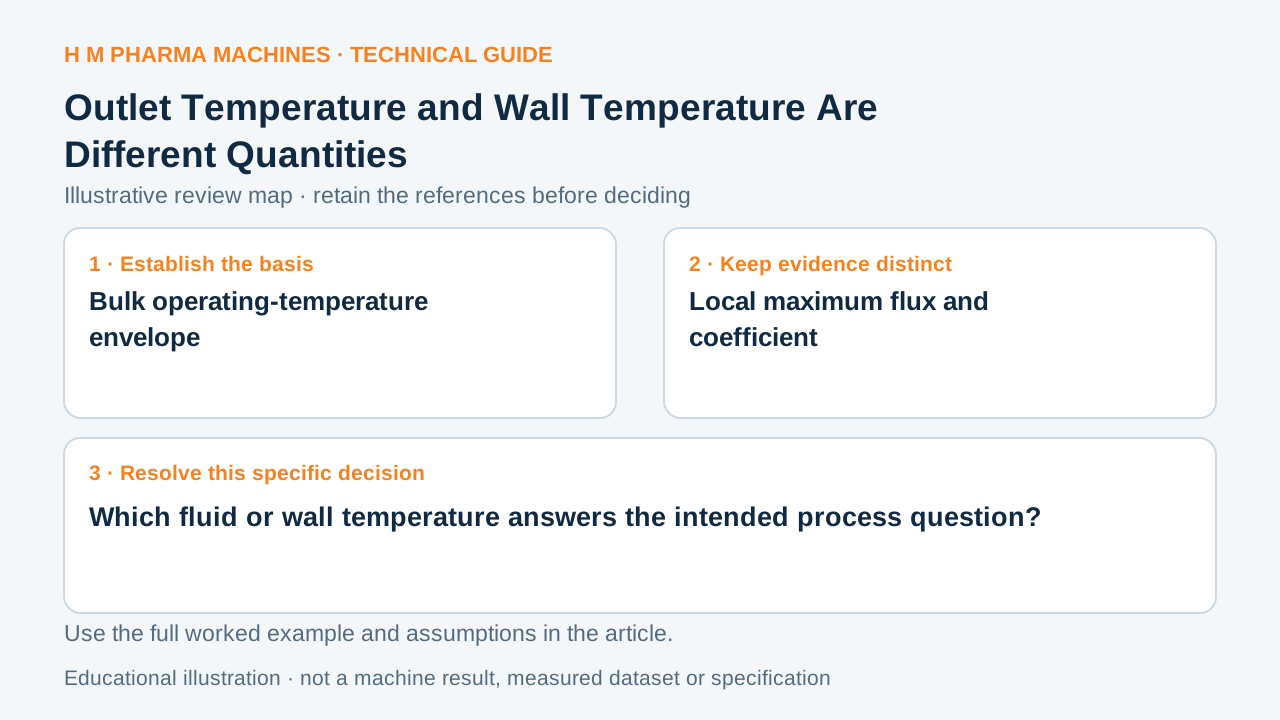
Bulk fluid temperature and the hotter fluid layer beside a heating wall need separate thermal checks.
Define the Thermal Model
Eastman distinguishes bulk heat-transfer-fluid temperature from film temperature at the metal interface. The Therminol technical-resource glossary relates the local temperature difference to heat-flux density and the transfer coefficient. Use a local transfer model; one average outlet reading does not automatically establish the hottest interface condition.
Compare a Hypothetical Case
For an invented heating location, assume q″ = 20,000 W/m² and local h = 1,000 W/(m²K). The corresponding film-to-bulk gap is q″/h = 20 K. A bulk value of 80°C therefore pairs with a modeled film value of 100°C. If local h falls to 500 with the same flux assumption, that gap becomes 40 K.
Complete the Engineering Review
Ask the heater or exchanger supplier to identify the local maximum heat-flux basis and fluid-side coefficient. Compare bulk and film conditions against the selected fluid’s actual documented limits. Keep the thermal calculation distinct from instrument location or sensor corrections. An area-average heat flux can hide a more demanding local patch.
Use the manufacturing-vessel utility context to obtain the actual heating arrangement. No heat-transfer fluid or temperature limit is recommended here. The example demonstrates a boundary distinction and does not assign HM wall conditions, fluid life or an acceptable operating setpoint.
Which fluid or wall temperature answers the intended process question?
This blank worksheet is for your own project. It contains no H M machine trial result.
| Review field | Reference or result | Responsible person |
|---|---|---|
| Bulk operating-temperature envelope | To complete | To complete |
| Local maximum flux and coefficient | To complete | To complete |
| Calculated film-to-bulk difference | To complete | To complete |
| Selected fluid’s documented separate limits | To complete | To complete |
Customer Questions
Does bulk temperature equal film temperature?
A transfer gradient can separate them.
Can average flux represent every hot spot?
Check the local maximum basis.
Does this correct a temperature sensor?
Instrument behavior is a separate topic.
Related Equipment References
Review the actual offered equipment and application separately from this educational example.
Primary References
These references support the technical principles discussed in this guide. The worked examples and review questions are educational.
Discuss Your Machine Requirement
Share your product, container, required output and the evidence needed for your technical review.
Request a Technical Review