
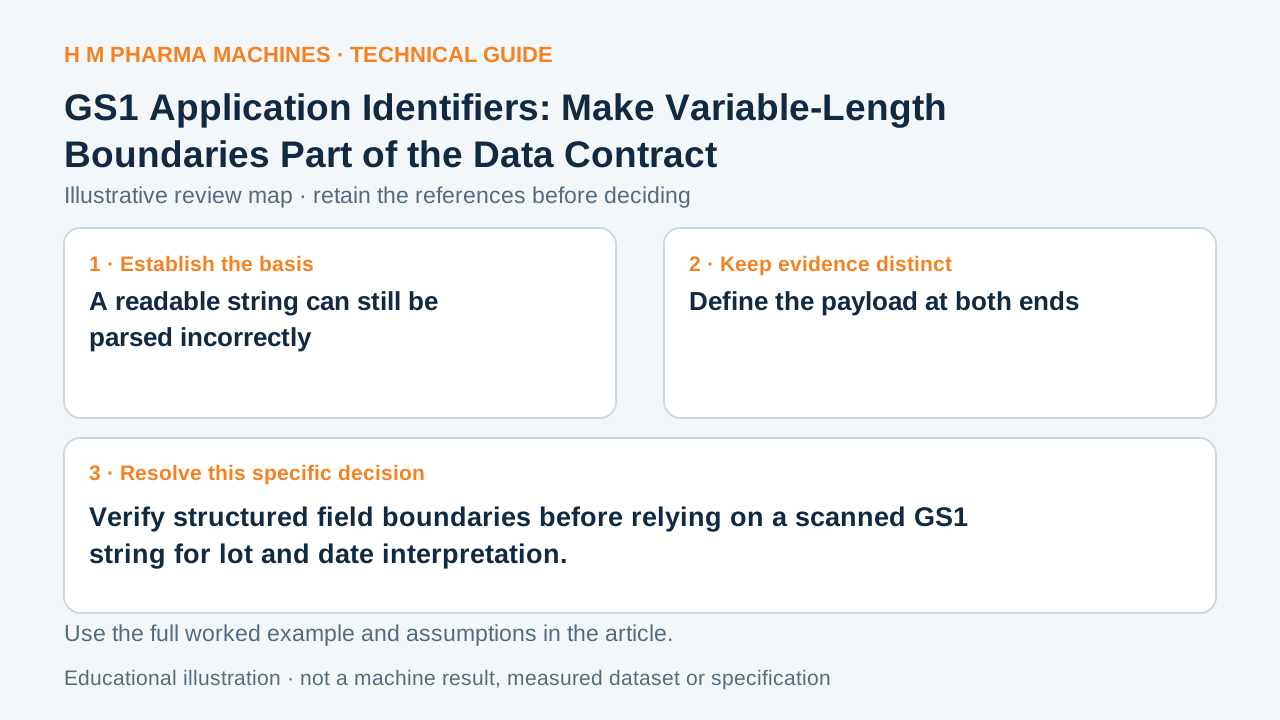
Verify structured field boundaries before relying on a scanned GS1 string for lot and date interpretation.
A readable string can still be parsed incorrectly
GS1 Application Identifiers define the meaning and format of data elements. Some elements have fixed lengths and others variable lengths. GS1 guidance specifies separator behavior for relevant variable-length elements when more data follows. The parentheses commonly shown in human-readable text identify the AI for a reader; they should not be confused with the encoded data structure. An integration must understand the actual boundaries rather than merely find familiar digits in a scanned string.
GS1: application identifier reference supports the technical principle above.
Define the payload at both ends
Create a payload table containing AI, data meaning, format and length rule, source system field and the next element. Record how separators are encoded and how the scanner or software represents them at the receiving interface. A screenshot of human-readable text is not an authoritative specimen of the encoded payload. Preserve a reference sample with its actual decoded representation and expected parsed fields.
Distinguish identifier-format validation from content validation. A parser may recognize the lot field boundary correctly while the lot itself is wrong for the batch. Conversely, the right lot characters do not rescue a payload with incorrect field boundaries. The acceptance plan needs both questions without using one as proof of the other.
GS1 DataMatrix guideline supports the technical principle above.
Hypothetical variable-field worksheet
In an invented payload design, AI 10 carries a variable-length lot value LOT7, and AI 17 carries a date element. Draw the data as AI 10, LOT7, required separator representation and AI 17 with its date data. Then compare a deliberately malformed teaching sample that concatenates the following element without the required boundary. The receiving software may not recover the intended fields merely because a human can guess them. Write the expected lot and date outputs next to the exact received character sequence. No real product code, production lot, customer data or HM coding capability is asserted by this example.
Keep the grammar with the approved artwork and software
The final record should identify the data-source mapping, payload grammar, receiving representation and expected parsed result. Recheck relevant cases when the element order or a variable field changes. Use current applicable GS1 requirements for the actual application; this article does not reproduce the complete specification or authorize a commercial identifier. When discussing coding equipment, confirm the proposed data-handling and printing scope before assuming support. The useful output is a precise data contract that can be tested independently of whether a scanner happens to decode a symbol once.
Customer Questions
Are parentheses in human-readable AI text the encoded separators?
No. Human-readable presentation and the encoded payload structure must be distinguished.
Does a successful decode prove the lot and date were parsed correctly?
No. Check the actual received representation and expected field outputs.
Does this guide confirm GS1 printing on a current HM coder?
No. Confirm the proposed coding configuration, software and supported data handling.
Related Equipment References
Review the actual offered equipment and application separately from this educational example.
Primary References
These references support the technical principles discussed in this guide. The worked examples and review questions are educational.
Discuss Your Machine Requirement
Share your product, container, required output and the evidence needed for your technical review.
Request a Technical Review