
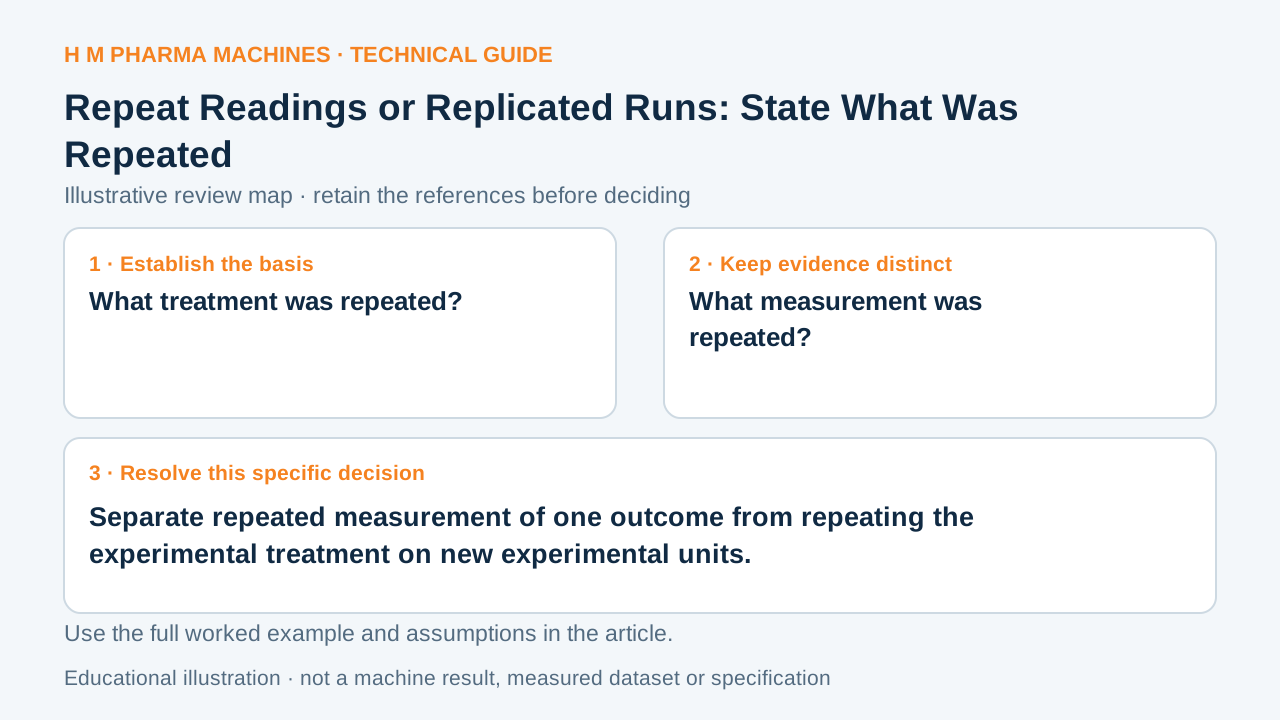
Ten readings of one trial outcome do not automatically represent ten independent trials.
The repeated unit defines the evidence
Replicated experimental runs provide information about variability of the response under a treatment combination. Repeatedly reading one already-produced sample can instead describe part of the measurement process. The trial design should identify its experimental units so the analysis does not substitute measurement repetitions for independent process outcomes.
A hypothetical two-level record
A buyer retains five distinct trial runs and takes three readings from each run’s identified check item. Preserve run IDs and reading IDs separately. There are fifteen readings, but only five recorded runs; the appropriate analysis must respect that structure.
If the experiment was intended to compare run-to-run behaviour, counting every reading as an independent run exaggerates the available replication. If the question concerns measurement repeatability, the repeated readings may be directly relevant. These distinctions establish no universal HM replication requirement.
Plan the record hierarchy
State which treatment is applied, what one experimental unit is, which unit receives the treatment and which observations are repeated within it. Record any common batch or setup shared by several units. Ask the analyst how that hierarchy enters the variation estimate.
In a machinery trial discussion, send the original unit structure rather than a flattened column of numbers. Discuss whether the intended response is destructive, whether the same item changes between readings and which repetitions are feasible. Preserving those facts allows additional trial work to address the actual missing level of evidence.
Trial discussion worksheet
This blank worksheet is for your own project. It contains no H M machine trial result.
| Review question | Reference or observation to retain |
|---|---|
| What treatment was repeated? | Independent run or unit |
| What measurement was repeated? | Reading identity within unit |
| What shared conditions exist? | Batch and setup hierarchy |
Customer Questions
Are fifteen readings always fifteen independent runs?
No. Identify which units produced the readings.
Are repeat readings irrelevant?
They may be useful for a measurement question, while answering a different process question.
Should the table retain nested IDs?
Yes. Flattening can hide the evidence structure.
Primary References
These references support the technical principles discussed in this guide. The worked examples and review questions are educational.
Discuss Your Machine Requirement
Share your product, container, required output and the evidence needed for your technical review.
Request a Technical Review