
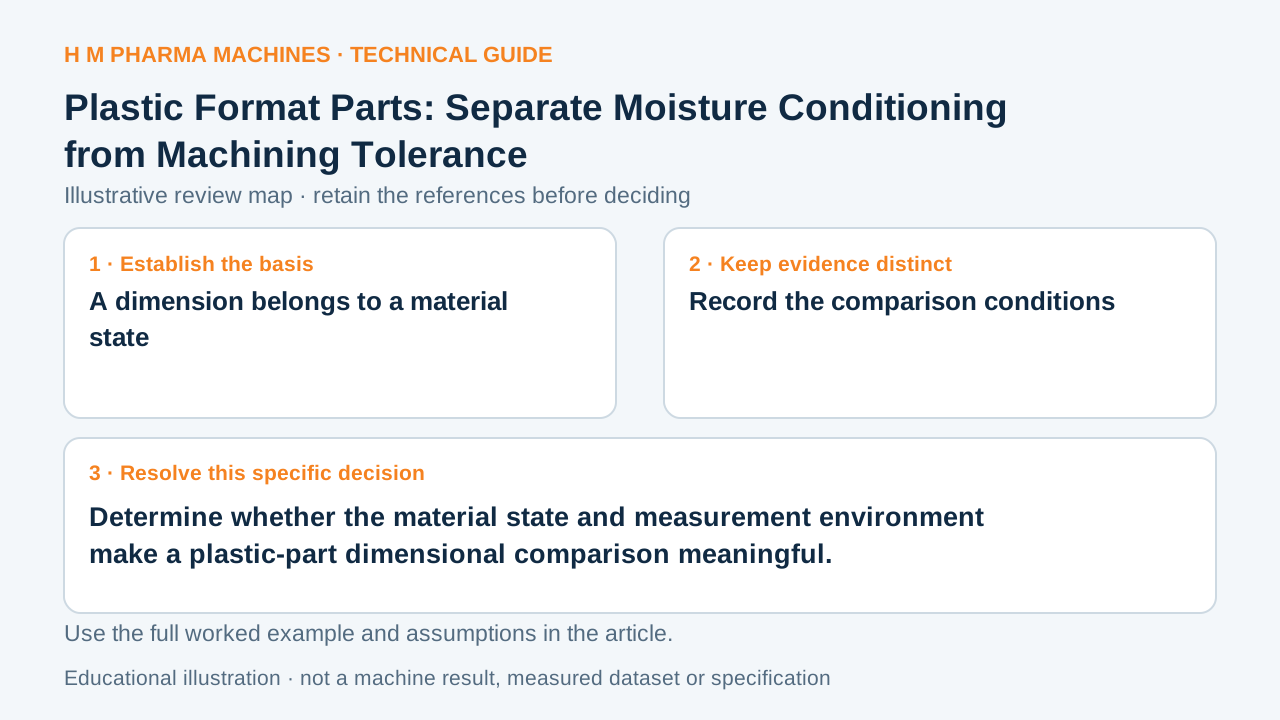
Determine whether the material state and measurement environment make a plastic-part dimensional comparison meaningful.
A dimension belongs to a material state
Engineering polymers differ in moisture absorption, and absorbed moisture can affect dimensions and other properties. Ensinger's engineering-plastics guidance identifies material type and environmental conditions as relevant. A plastic guide or format part measured immediately after machining may therefore need a different comparison context from one held in a humid operating area. This does not mean that every dimensional difference is caused by moisture. It means that conditioning state belongs beside the drawing tolerance when interpreting a measurement.
Ensinger: engineering plastics manual supports the technical principle above.
Record the comparison conditions
For each measurement, write the exact material designation, part identifier, measurement method, temperature, recent storage environment and known conditioning history. Include the time elapsed since machining or removal from service when that is relevant. Mark unknown history as unknown. Do not use a generic online absorption percentage to predict the movement of a finished part without considering its grade, geometry and exposure.
Choose the practical question before collecting more numbers: incoming dimensional acceptance, fit after storage, or fit during a stated operating condition. These may require different documented measurement states. Ask the material or part designer how the required state is defined and how it relates to the drawing. That turns a vague disagreement over size into an interpretable comparison.
Hypothetical two-state worksheet
Imagine a fictional guide insert with a critical opening. Measurement A is recorded on the day of machining at a controlled room condition. Measurement B is taken after several weeks in a humid storage area, but its exact material designation is missing. Instead of subtracting the readings and declaring machining error, make rows for size, instrument, temperature, material and conditioning history. The subtraction reports an observed difference only. The missing material and unmatched state prevent a firm attribution. The next action is to recover the material identity and agree a comparable conditioning and measurement basis. This example invents no HM part dimension, shrinkage percentage or fit allowance.
Keep geometry decisions with the responsible design
The final review should state which material state supports acceptance and which conditions the part is expected to encounter. Preserve that statement with the drawing and replacement-part identity. Do not enlarge a guide opening solely from one unmatched reading; the change can affect handling and other interfaces. For a new labeling or capping project, explain the storage and operating environment when discussing format parts. The worksheet helps distinguish a material-state question from a machining or assembly question without prescribing an unverified polymer substitution.
Customer Questions
Can humidity change a plastic part's dimensions?
It can for moisture-absorbing materials; the extent depends on the exact material and exposure.
Does a size difference prove moisture caused it?
No. Material state, temperature, measurement method and other causes must be considered.
Should I use a generic absorption percentage as a clearance?
No. Request the designer's material- and geometry-specific basis for the part and its intended conditions.
Related Equipment References
Review the actual offered equipment and application separately from this educational example.
Primary References
These references support the technical principles discussed in this guide. The worked examples and review questions are educational.
Discuss Your Machine Requirement
Share your product, container, required output and the evidence needed for your technical review.
Request a Technical Review