
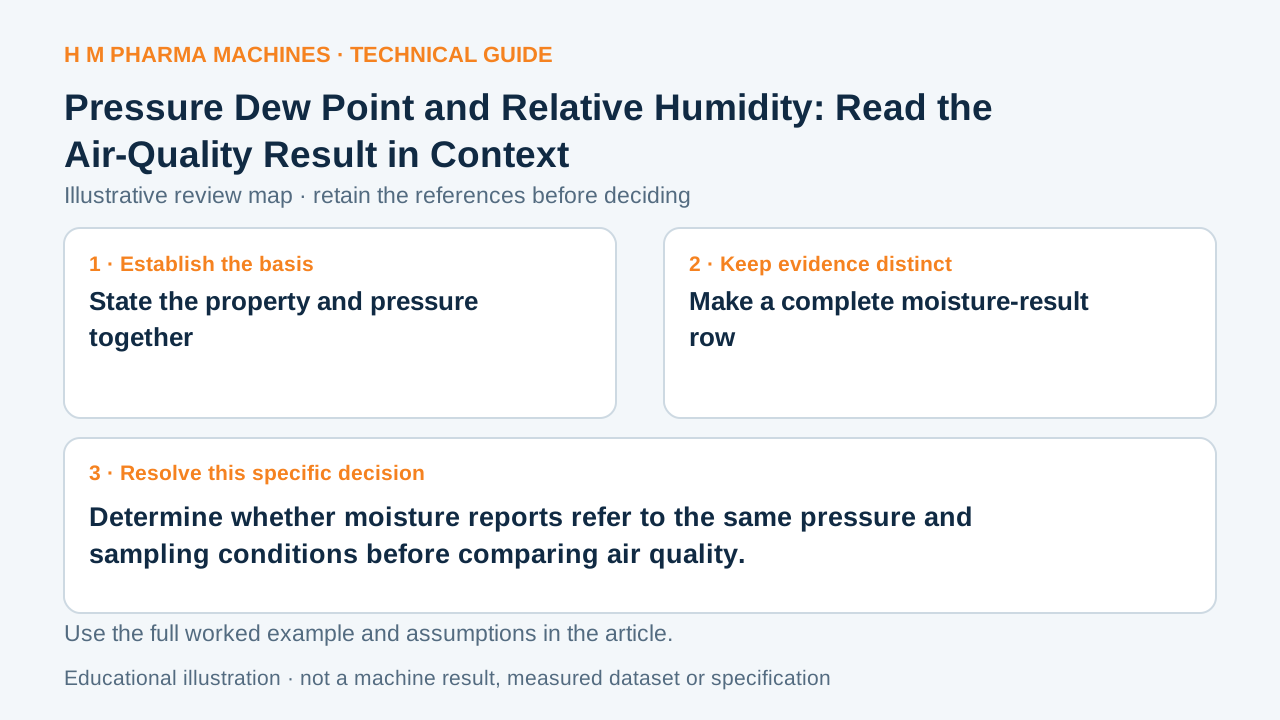
Determine whether moisture reports refer to the same pressure and sampling conditions before comparing air quality.
State the property and pressure together
Dew point describes the temperature at which condensation begins for the stated conditions. In compressed air, the pressure at measurement matters. Vaisala distinguishes dew point at process pressure from a reading after expansion to a different pressure. Relative humidity is another property and also depends on temperature. A percentage humidity and a dew-point temperature cannot be ranked as competing quality numbers without understanding what each describes and where it was measured.
Vaisala: what is dew point and how to measure it supports the technical principle above.
Make a complete moisture-result row
Record the reported property, value and units; sampling location; sample pressure; sample temperature; and whether the measurement occurred in-line or in an expanded sample. Add instrument identity, method reference and observation time. Preserve the actual pressure definition rather than writing only compressed air. If a report omits the sampling conditions, mark the comparison unresolved instead of assuming atmospheric pressure.
Identify the purpose of the measurement: a dryer outlet trend, a point-of-use condition or an acceptance criterion from the project specification. Those locations can answer different questions. Use the defined project requirement when deciding adequacy; this guide supplies no universal pharmaceutical compressed-air class or arbitrary dew-point target.
Hypothetical report reconciliation
Consider three fictional entries. A reports dew point at the stated process pressure. B reports atmospheric dew point after a sample is expanded. C reports relative humidity but omits temperature. Put A and B in different measurement-basis columns, and flag C's missing temperature. Even if the displayed numbers look similar, the worksheet cannot declare equal moisture conditions. The next request is for the full basis and, where appropriate, an instrument-supported conversion with stated assumptions. No invented conversion is inserted merely to rank the reports. These entries describe no HM air supply, measured result or dryer performance.
Follow the same basis through the project
After resolving definitions, retain the accepted criterion and the measurement conditions together. A later maintenance report should show whether it used the same location and pressure basis. If not, compare the bases before declaring a quality improvement or deterioration. For a new air-dependent machine requirement, give the utility designer the intended point of use and its relevant moisture requirement. A useful result is a coherent specification and measurement record. It does not follow that a good dryer-outlet reading guarantees every downstream branch has the same condition, particularly if sampling and operating circumstances differ.
Customer Questions
Are atmospheric and pressure dew point interchangeable?
No. Their pressure conditions must be stated and interpreted appropriately.
Can relative humidity be compared without temperature?
Not meaningfully for this purpose; its interpretation depends on temperature.
Does this guide set a required air-quality class?
No. Use the defined application requirement and a matching measurement basis.
Related Equipment References
Review the actual offered equipment and application separately from this educational example.
Primary References
These references support the technical principles discussed in this guide. The worked examples and review questions are educational.
Discuss Your Machine Requirement
Share your product, container, required output and the evidence needed for your technical review.
Request a Technical Review