
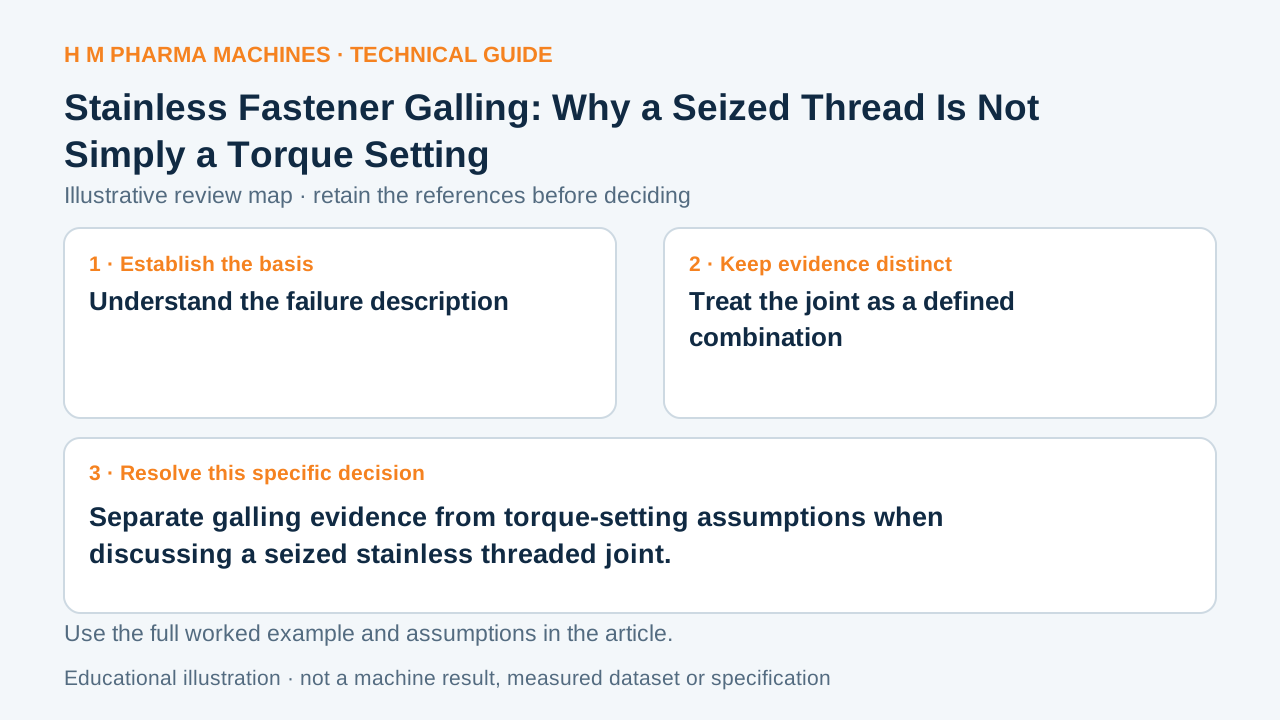
Separate galling evidence from torque-setting assumptions when discussing a seized stainless threaded joint.
Understand the failure description
Galling is adhesive surface damage that can occur when contacting metal surfaces slide under load. The Nickel Institute discusses this mechanism for stainless nuts and bolts, where a thread can seize as material transfers between surfaces. A joint that stopped turning is therefore not automatically evidence that the requested clamp load was reached. Nor does every seized fastener prove galling: damaged threads, dirt and corrosion can produce other problems. The first useful step is to describe what was observed without assigning an unsupported cause.
Nickel Institute: erection and installation of stainless steel components supports the technical principle above.
Treat the joint as a defined combination
Record the bolt and nut designations, thread size, visible thread condition, coating or lubricant identity, tightening tool and documented procedure. Keep these entries together because changing lubrication can change the relationship between applied torque and achieved clamp load. A torque value borrowed from a dry-joint table may be inappropriate after introducing a lubricant. Avoid selecting an anti-seize product only because it reduced seizure in an unrelated assembly; contamination compatibility and the joint designer's instructions also matter.
For a service discussion, identify which pieces were removed and preserve photographs or returned parts where appropriate. Describe the point at which resistance changed and whether the joint was new or reused. Do not force a damaged joint back into service to obtain a more convenient narrative.
Hypothetical evidence worksheet
Suppose a classroom example compares two seized joints. Joint A used a documented bolt–nut combination with unknown lubricant. Joint B used an unrecorded replacement nut and a known lubricant. Both operators report the same final torque display. Build columns for material pairing, thread condition, lubricant, procedure reference and observation. The equal display does not establish equal preload or equal cause. Mark the lubricant for A and nut identity for B as unresolved. The next request is for those missing identifiers and the designer's assembly instruction, not an invented new torque number. These are fictional joints, not a report of HM field failures.
Translate the finding into a controlled revision
If the responsible designer changes a fastener pairing, coating, lubricant or tightening method, record the complete revised combination and its applicable procedure. That preserves the reason for the change and prevents a partial substitution during later maintenance. The resulting record is particularly useful for frequently opened guards or service assemblies. This guide supplies a mechanism-based review method; it provides no universal torque, lubricant recommendation or permission to alter a current machine joint.
Customer Questions
Does reaching the displayed torque prove the joint is sound?
No. A damaged or seizing thread can create resistance without demonstrating the intended clamp condition.
Can I add lubricant and retain any old torque value?
Do not assume that. Use the documented assembly instruction for the complete lubricated or coated joint.
What evidence helps distinguish a galling concern?
Component identity, thread photographs, lubricant information, assembly sequence and the observed change in turning resistance are useful.
Related Equipment References
Review the actual offered equipment and application separately from this educational example.
Primary References
These references support the technical principles discussed in this guide. The worked examples and review questions are educational.
Discuss Your Machine Requirement
Share your product, container, required output and the evidence needed for your technical review.
Request a Technical Review