
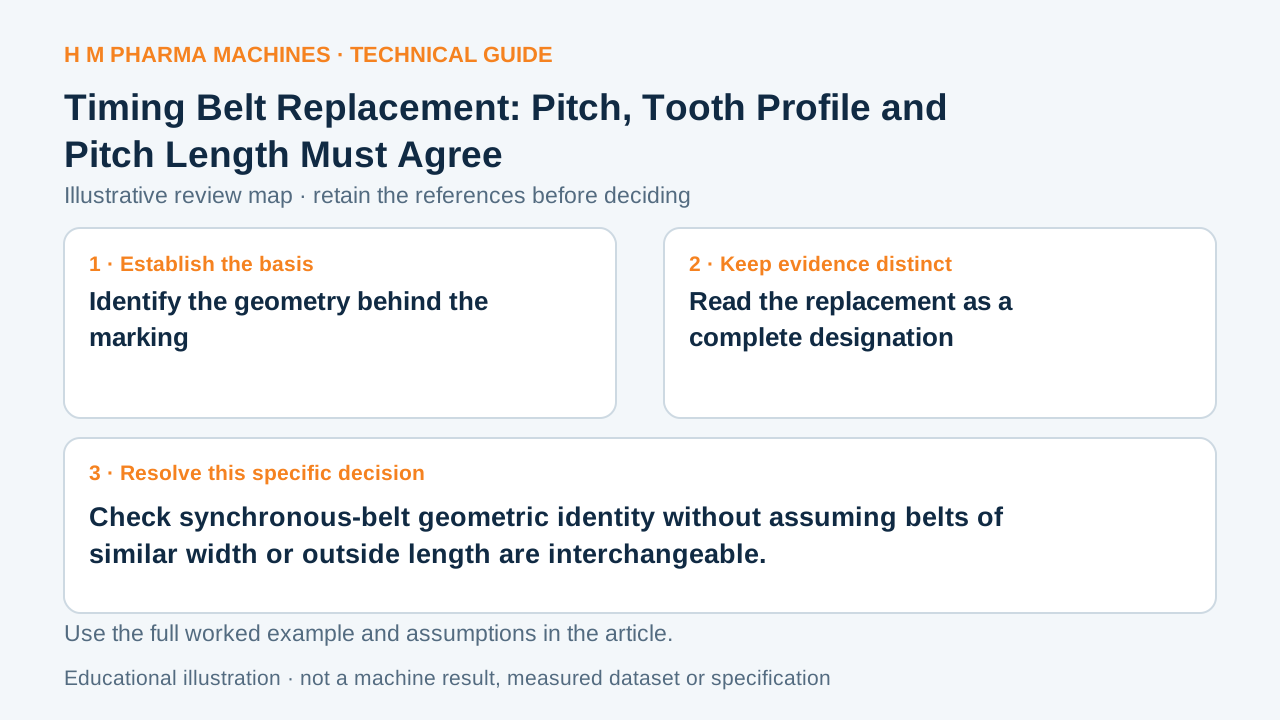
Check synchronous-belt geometric identity without assuming belts of similar width or outside length are interchangeable.
Identify the geometry behind the marking
A synchronous drive depends on matching belt teeth and pulley geometry. Gates' power-transmission catalog defines pitch and pitch-line geometry. A belt's width or approximate outside circumference alone cannot establish that match. Tooth profile, pitch, pitch length and construction belong to the identity review. A belt may appear to sit on a pulley while still being an unsuitable geometric or construction choice, so visual fit is not a complete replacement basis.
Gates: industrial power transmission catalog, synchronous-belt geometry supports the technical principle above.
Read the replacement as a complete designation
Transcribe the full marking from the documented belt or spare-parts record. Separate tooth profile, pitch, length, width and any construction suffix into fields, and note the reference used to decode them. Confirm whether the stated length is a pitch length or another measurement. A supplier's abbreviated quotation should be reconciled against the original full designation rather than accepted because its first few characters match.
Record the pulley designation or the responsible designer's matching reference as well. If the existing belt marking is unreadable, photographs and a measured estimate can help identify it, but they should remain provisional evidence. Do not force an estimated belt onto the assembly to settle the identity question.
Hypothetical pitch-length calculation
For an invented geometry exercise, a belt has 100 teeth at an 8 mm pitch. Its pitch length is 100 × 8 = 800 mm. That arithmetic does not identify the tooth profile or belt construction. Compare a second fictional offer that also states 800 mm pitch length but has a different profile designation. Put equal length in the matching column and profile mismatch in the unresolved column. A third offer listing only 800 mm overall length is not yet comparable because the length definition is missing. These values specify no HM drive and are not an instruction to choose a belt from tooth count alone.
Complete the compatibility question before the installation question
Once the exact replacement is confirmed, use the applicable drive-specific installation and tension instructions. Those are a separate step from decoding the geometry. Keep the accepted designation with the spare-parts record, including any supplier-approved alternative and its scope. For labeling or capping equipment, ask for the component identity needed for later spare procurement rather than assuming a standard belt from a photograph. This guide helps prevent an incomplete RFQ; it supplies no installed belt specification, tension value or claim of universal interchangeability.
Customer Questions
Do equal pitch lengths mean two belts are interchangeable?
No. Profile, pitch, width, construction and the matching drive requirements must also agree.
Is outside circumference the same as pitch length?
Do not assume that. Identify the length definition used by the designation or measurement.
Can tooth count help identify a belt?
It can support a geometry check, but it does not establish the complete approved replacement identity.
Related Equipment References
Review the actual offered equipment and application separately from this educational example.
Primary References
These references support the technical principles discussed in this guide. The worked examples and review questions are educational.
Discuss Your Machine Requirement
Share your product, container, required output and the evidence needed for your technical review.
Request a Technical Review