
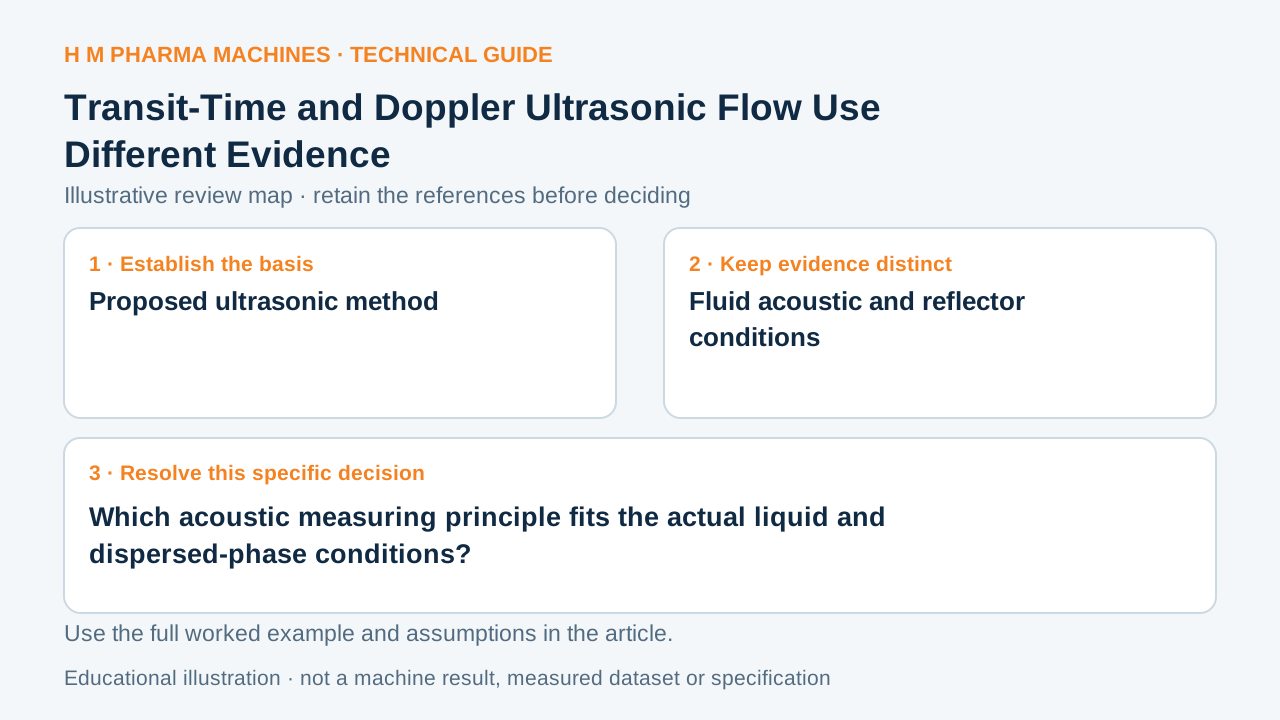
Transit-time and Doppler ultrasonic flow measurements use different acoustic evidence. Identify the liquid condition before treating them as interchangeable.
Identify the Physical Basis
Transit-time measurement compares upstream and downstream sound travel times. Doppler measurement uses reflections from moving particles or bubbles. OMEGA’s hybrid-meter description distinguishes its two operating modes and their fluid-condition basis. A liquid must support the selected acoustic method; the word ultrasonic alone does not describe what the sensor needs to observe.
Work Through an Example
In a hypothetical application, a clean liquid produces a usable transit-time signal while no suitable moving reflectors are identified for Doppler mode. Adding a photograph of a cloudy product does not yet prove the second method will work: particle characteristics, acoustic attenuation and actual flow conditions still need review. Similarly, having bubbles is not an instruction to introduce air into a product merely to create a signal.
Use the Result in the Review
Document the fluid state, particle or gas condition and the pipe’s material, dimensions and lining for a clamp-on assessment. Ask which mode the supplier evaluated and what signal-quality evidence supports the trial. Preserve rejected-mode observations rather than reporting only the best-looking display. If fluid condition changes across a batch, identify whether the useful acoustic path or reflector population changes too.
The flowmeter filler is relevant application context, but it does not establish a fitted ultrasonic technology. Use an actual project review to confirm instrument choice. This comparison helps choose an evidence path; it does not transfer OMEGA’s published product ranges to HM machinery.
Which acoustic measuring principle fits the actual liquid and dispersed-phase conditions?
This blank worksheet is for your own project. It contains no H M machine trial result.
| Review field | Reference or result | Responsible person |
|---|---|---|
| Proposed ultrasonic method | To complete | To complete |
| Fluid acoustic and reflector conditions | To complete | To complete |
| Pipe material, bore, wall and lining | To complete | To complete |
| Trial signal quality across fluid changes | To complete | To complete |
Customer Questions
Do the two methods observe the same thing?
No. Travel time and reflected-frequency shift differ.
Does cloudiness prove Doppler suitability?
No. Confirm reflector and acoustic conditions.
Is every ultrasonic meter clamp-on?
No. Confirm the selected construction.
Related Equipment References
Review the actual offered equipment and application separately from this educational example.
Primary References
These references support the technical principles discussed in this guide. The worked examples and review questions are educational.
Discuss Your Machine Requirement
Share your product, container, required output and the evidence needed for your technical review.
Request a Technical Review