
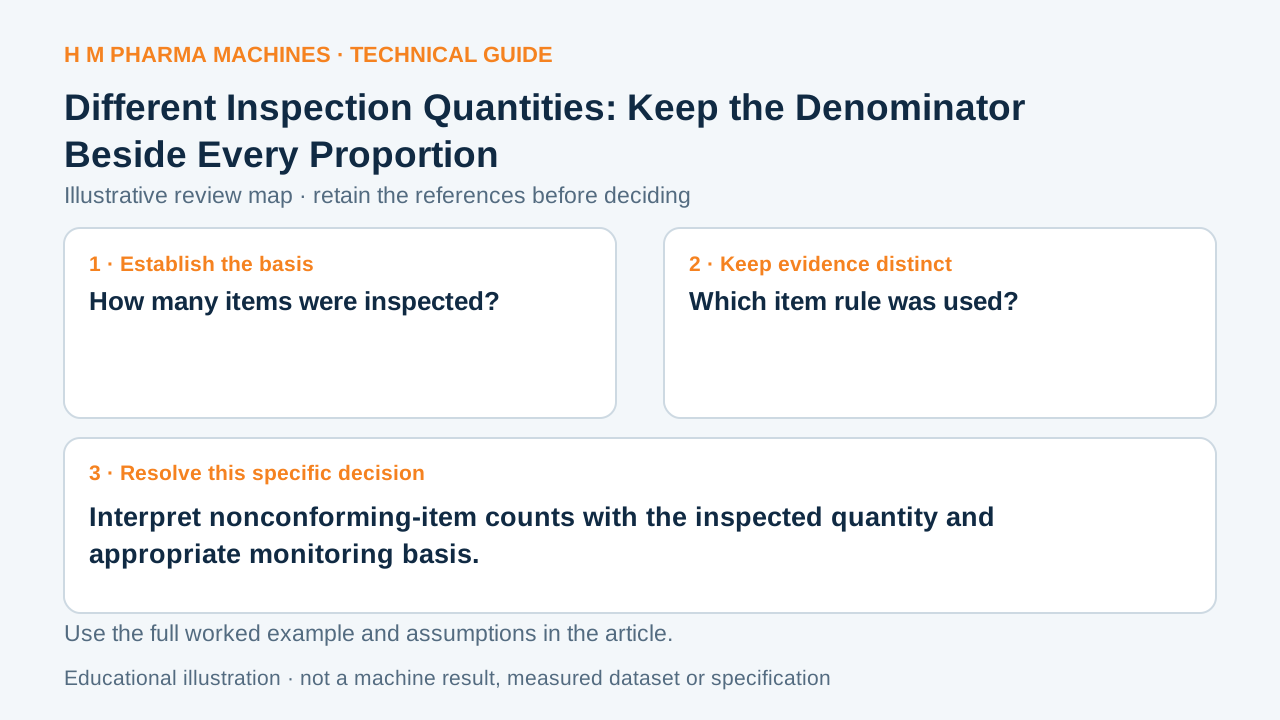
Two findings counts can represent very different rates when the inspected quantities differ.
A proportion needs its inspected quantity
For a defined item classification, the sample proportion is the number of nonconforming items divided by the number inspected. Under a suitable independent constant-probability model, its sampling variability depends on sample size. Consequently, a monitoring calculation must retain the denominator for each collection period rather than compare raw counts alone.
An explicitly hypothetical pair of periods
Period A has two nonconforming items among 100 inspected; period B has two among 1000. The proportions are 2% and 0.2%. Equal counts do not imply equal proportions. The different collection quantities also matter to the uncertainty and any chart-limit calculation.
Check why inspected quantities differ. A reduced period, a partial inspection or a different population may change more than the denominator. This example teaches arithmetic and record design, without setting a permissible HM rate or an inspection plan.
Request comparable definitions with every row
Retain period identity, inspected quantity, nonconforming-item count, classification rule and collection method. If a container has multiple findings, apply the agreed item rule instead of silently using the total finding count in the numerator.
When discussing a trend, distinguish a zero count after actual inspection from a period with no inspection. Do not enter the latter as a measured zero rate. Ask the analyst how varying sample sizes and the collection structure are treated. A calculated monitoring limit requires an appropriate baseline and model, not simply a selected chart icon.
Trial discussion worksheet
This blank worksheet is for your own project. It contains no H M machine trial result.
| Review question | Reference or observation to retain |
|---|---|
| How many items were inspected? | Denominator for each row |
| Which item rule was used? | Stable classification reference |
| Was there actual inspection? | Measured period or missing observation |
Customer Questions
Do equal finding counts establish equal rates?
No. Compare the relevant inspected quantities.
Is a no-inspection period a zero rate?
No. It is missing inspection evidence.
Does the denominator matter to chart uncertainty?
Yes. Sampling variability depends on the collection quantity and model.
Primary References
These references support the technical principles discussed in this guide. The worked examples and review questions are educational.
Discuss Your Machine Requirement
Share your product, container, required output and the evidence needed for your technical review.
Request a Technical Review