
Visible bubbles can come from vaporisation, released dissolved gas or entrained air. Distinguish the mechanism before choosing a corrective explanation.
Identify the Physical Basis
Vapour cavitation involves a local liquid pressure reaching its temperature-dependent vapour-pressure region. Gas bubbles can instead form when dissolved gas comes out of solution. KSB’s cavitation reference distinguishes these mechanisms and notes that they can overlap. Air already carried into the line introduces another boundary question: its presence is not proof that the liquid crossed its vapour-pressure limit.
Work Through an Example
Imagine a hypothetical trial where bubbles appear after a pressure drop. One record supplies pressure without temperature; another supplies temperature without a fluid identity; a third only shows a photograph. None individually distinguishes vaporisation from dissolved-gas release. A second trial may show air entering upstream while local pressure remains above the liquid’s vapour pressure. That observation changes the investigation, but it still does not quantify the whole gas fraction.
Use the Result in the Review
Bring together fluid identity, temperature, local absolute-pressure evidence and observations upstream and downstream. Mark where the instrument is located; a remote pressure reading may not describe the lowest-pressure region. Record whether bubbles exist before the pump, appear during transfer or remain after the flow stops. Ask the supplier which mechanism the evidence supports and which additional observation would discriminate between the alternatives.
The flowmeter filler provides equipment context for a product-wetted trial. This guide addresses the physical origin of bubbles, while a filling investigation must also evaluate their effect on the selected measuring and dosing arrangement. It does not assign a cavitation margin or prescribe pressurisation.
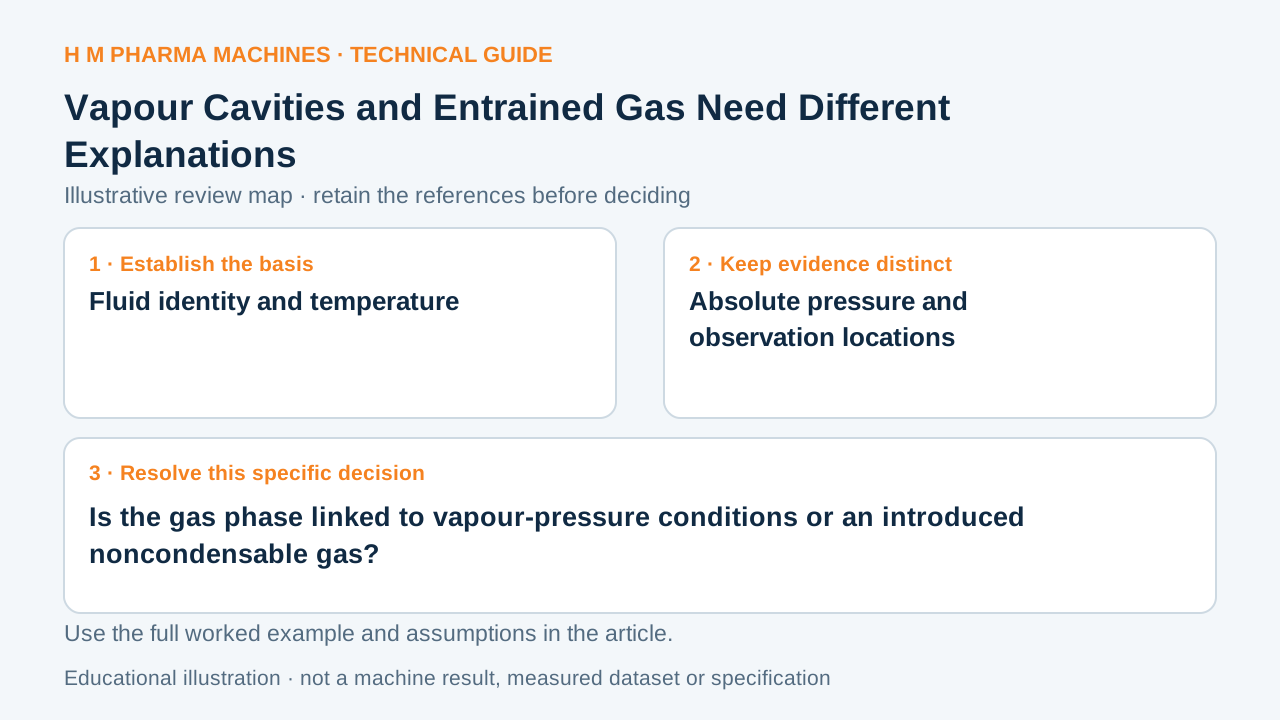
Is the gas phase linked to vapour-pressure conditions or an introduced noncondensable gas?
This blank worksheet is for your own project. It contains no H M machine trial result.
| Review field | Reference or result | Responsible person |
|---|---|---|
| Fluid identity and temperature | To complete | To complete |
| Absolute pressure and observation locations | To complete | To complete |
| Bubble behaviour before and after transfer | To complete | To complete |
| Evidence supporting the proposed mechanism | To complete | To complete |
Customer Questions
Does every visible bubble mean vapour cavitation?
No. Entrained or released gas can produce bubbles too.
Is gauge pressure enough for a vapour-pressure comparison?
Use a consistent absolute-pressure basis.
Can more than one mechanism occur together?
Yes. Keep overlapping mechanisms open until the evidence separates them.
Related Equipment References
Review the actual offered equipment and application separately from this educational example.
Primary References
These references support the technical principles discussed in this guide. The worked examples and review questions are educational.
Discuss Your Machine Requirement
Share your product, container, required output and the evidence needed for your technical review.
Request a Technical Review