
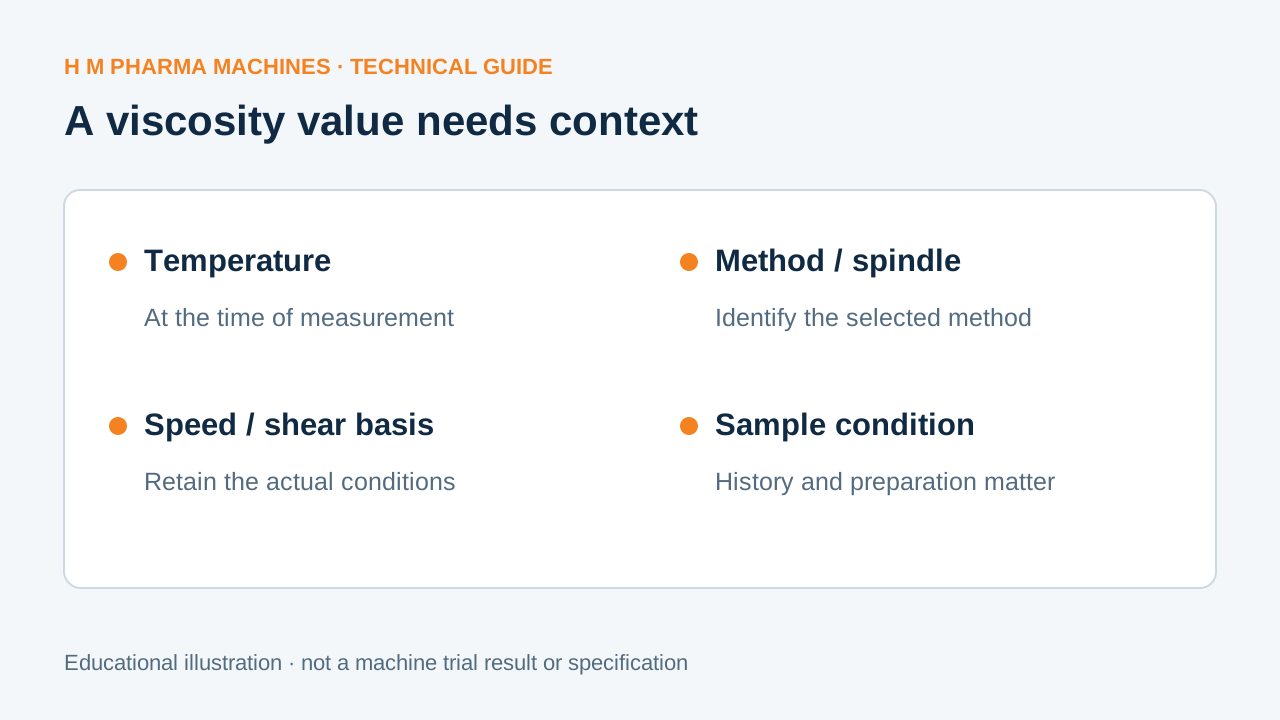
A viscosity value becomes useful to a filling enquiry when the supplier can see how it was measured. Keep the conditions beside the number.
Identify the Measurement, Not Only the Liquid
Attach the laboratory report or method reference to the product lot and sample identity. Include the instrument model, spindle or measuring geometry, container, sample volume, temperature, speed and reading time. AMETEK Brookfield's DV2T manual identifies these conditions among the variables needed for repeatable viscosity testing. Brookfield DV2T manual, Viscometer Related Variables.
Retain the unit exactly as reported. If information is missing, ask the measurement owner to supply it rather than reconstructing a test from an informal product description. A viscosity specification should remain distinguishable from one observed sample result.
Do Not Treat RPM as a Universal Shear Rate
For a non-Newtonian liquid, apparent viscosity can depend on shear conditions and test duration. Brookfield explains that rotational speed, spindle geometry and the surrounding container affect the measurement. Equal RPM on different measuring arrangements does not establish equal shear rate. Preserve the actual method rather than applying a universal RPM-to-shear conversion.
The manufacturer's test-method guidance distinguishes a single-point test from a controlled rate ramp. A point result and a series collected under changing speeds answer different characterization questions. Ask which record the formulation team intends the supplier to use. Brookfield More Solutions, chapter 6.
Keep Preparation and Timing with the Result
Brookfield's method variables include how the sample was prepared or loaded and when the reading was recorded. Carry the laboratory's relevant preparation, rest and timing references into the enquiry. Describe transport or conditioning that differed from the material intended for the filling trial.
Do not prescribe a new preparation or speed merely to obtain a convenient value. The measurement owner should define the method. The machinery supplier needs to know what the supplied sample represents and which formulation conditions remain outside that record.
Illustrative Example: Two Values Need Not Contradict
Hypothetical reports list 2,500 mPa·s at 10 RPM and 1,500 mPa·s at 50 RPM, both at 25°C. Those invented values are not HM trial results. Before calling one batch thinner, compare geometry, sample identity, preparation and reading time. Changed speed can be relevant for a non-Newtonian material, but the two reports alone do not establish the cause of the difference.
Request a comparable measurement basis or retain the reports as different conditions. An unexplained average of the two values would remove information the supplier needs.
Use the Data to Bound the Machinery Discussion
The published peristaltic filling page calls for product and tubing compatibility review; the servo piston filling page provides another configuration to discuss against the actual formulation. A bench viscosity number does not approve either product path or establish output.
Complete the worksheet with the formulation team. Send the measurement record beside the intended dose, container and operating condition. Keep laboratory characterization separate from representative machine-trial evidence, so neither is silently described as the other.
Blank viscosity report comparison
This blank worksheet is for your own project. It contains no H M machine trial result.
| Condition | Report A | Report B |
|---|---|---|
| Lot, sample and method reference | To complete | To complete |
| Instrument, spindle/geometry and container | To complete | To complete |
| Speed/shear basis and temperature | To complete | To complete |
| Preparation, reading time and reported unit | To complete | To complete |
Customer Questions
Can equal RPM make two viscosity tests equivalent?
Not by itself. Measuring geometry, container, temperature, sample preparation and timing also belong in the comparison.
Should different-speed values be averaged for the enquiry?
Keep each value linked to its conditions. Ask the measurement owner which characterization record represents the intended filling sample.
Does a viscosity report establish filler compatibility?
It supports review but does not approve the product path, tubing, dose, output or actual filling result.
Related Equipment References
Review the actual offered equipment and application separately from this educational example.
Primary References
These references support the technical principles discussed in this guide. The worked examples and review questions are educational.
Discuss Your Machine Requirement
Share your product, container, required output and the evidence needed for your technical review.
Request a Technical Review