
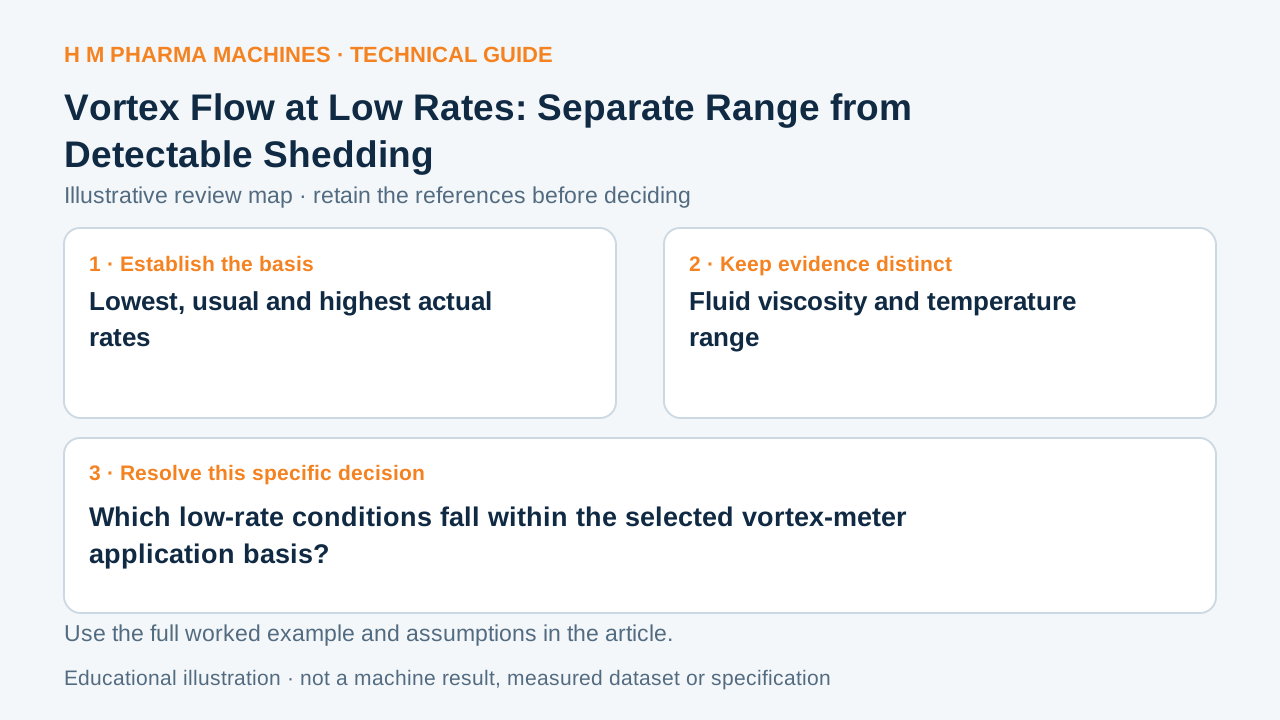
A vortex meter relies on a usable shedding signal. The advertised upper range does not establish measurement at every low flow.
Identify the Physical Basis
Vortex flow measurement detects vortices formed behind a bluff body. Endress+Hauser’s principle reference describes a suitable linear Reynolds-number region and reduced usefulness when the shedding becomes poorly defined. Density and viscosity therefore matter to the lower measuring boundary, even when they do not alter the basic volumetric principle within its valid region.
Work Through an Example
Consider a hypothetical process with a normal rate of 40 L/min and a final dribble phase of 2 L/min. A supplier review may establish a usable instrument range for the first part while leaving the second unresolved. Dividing the quoted maximum rate by a catalogue turndown number without checking the product and duty basis would not close that gap. The two rates here are illustrative, not a proposed filling sequence.
Use the Result in the Review
Show the lowest actual flow segment, fluid viscosity and temperature, as well as the usual and highest rates. Ask the selected supplier to identify the lower measurable range and any low-flow cutoff behaviour. Record what happens below that boundary: a displayed zero, held value or diagnostic state should not be casually interpreted as proven absence of physical flow. Keep the result linked to the exact sensor size and configuration.
Use the flowmeter filler page to describe the application, then confirm the selected measuring principle. This guide examines vortex low-flow applicability. It does not claim a vortex option is fitted, select a sensor size or transfer a textbook Reynolds threshold into an HM performance guarantee.
Which low-rate conditions fall within the selected vortex-meter application basis?
This blank worksheet is for your own project. It contains no H M machine trial result.
| Review field | Reference or result | Responsible person |
|---|---|---|
| Lowest, usual and highest actual rates | To complete | To complete |
| Fluid viscosity and temperature range | To complete | To complete |
| Selected sensor lower-range evidence | To complete | To complete |
| Cutoff and invalid-signal interpretation | To complete | To complete |
Customer Questions
Does the range extend to zero?
Check the actual lower boundary.
Can viscosity affect the lower rate?
Yes. Check its Reynolds-number basis.
Does zero prove a closed valve?
No. Read cutoff and validity status.
Related Equipment References
Review the actual offered equipment and application separately from this educational example.
Primary References
These references support the technical principles discussed in this guide. The worked examples and review questions are educational.
Discuss Your Machine Requirement
Share your product, container, required output and the evidence needed for your technical review.
Request a Technical Review