
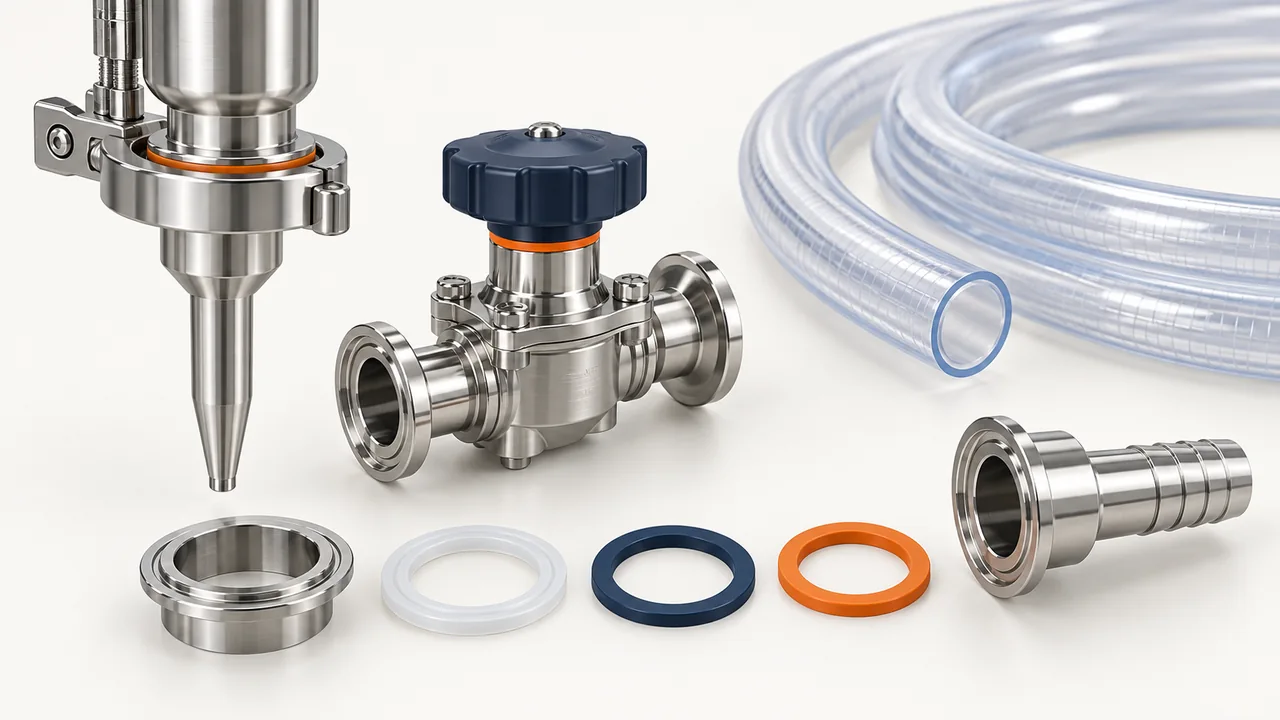
Map the product path before comparing material descriptions
A quotation that names a stainless-steel grade does not necessarily identify every surface that contacts the liquid. Build a component list from the product supply connection to the filling nozzle. Include the parts supplied with the machine and the connections or feed equipment provided by the buyer.
Use the ordered arrangement of the bottle liquid filler, servo piston filler or peristaltic filler as the starting point. Different mechanisms create different contact paths. A construction statement for one model should not be copied to another machine without confirmation.
Separate the external enclosure from the wetted construction
Ask the supplier to distinguish external cladding, structural parts and product-contact components. A visible stainless-steel panel may describe the machine enclosure rather than the liquid path. Keep the component name and supplied material together in the schedule so the buyer can see exactly what a statement covers.
Include the product vessel or manifold, pump or dosing chamber, valves, nozzle and connections where they are part of the offer. Record which parts are supplied by another contractor or remain from an existing line. Those interfaces still matter to the application, even when they are outside the machinery supplier's commercial scope.
Include seals, tubing and connection faces
Soft parts can be overlooked when a review concentrates on metal construction. Identify seals, gaskets, tubing and flexible hoses by the relevant ordered specification or part reference. Ask whether a description applies to the complete supplied assembly or only one component within it.
Keep removable connectors and nozzle components in the same review. Document replacement references so that later service parts can be assessed against the approved schedule. A component that fits physically is not automatically an approved substitute. If an alternative is proposed, request a specific review of the material and the intended exposure before accepting it.
Give the supplier the exposure conditions to review
Provide sufficient information about the liquid formulation and its intended contact conditions for an application-specific assessment. Include relevant temperature, contact duration and the proposed cleaning exposure. Agree how confidential formulation information can be shared where necessary; an incomplete product description may leave important questions unanswered.
Do not ask a general article to pronounce a material compatible with a chemical or medicine. The approved specification needs the appropriate evidence and review for that application. A material grade alone does not prove hygiene, certification or a validated process. Keep required records tied to named components instead of requesting an undefined 'complete certificate' package.
Complete a component-level schedule with the offer
The schedule below is an uncompleted procurement worksheet. Expand it for the actual flow path; the entries contain no material approvals or test results.
| Component or review field | Information to complete |
|---|---|
| Supply vessel, manifold or feed connection | Scope owner and ordered material |
| Pump, chamber and product valves | Contact components and references |
| Seals, tubing and flexible connections | Ordered specification and replacement reference |
| Nozzle and removable connection faces | Assembly and contact-material record |
| Product and cleaning exposure | Conditions supplied for review |
| Evidence required and supplier response | Document reference or open action |
Keep the completed schedule with the quotation revision. If a drawing or component changes during the project, record the effect on the contact path and the review.
Close the material review without losing open items
Identify the confirmed components, the evidence received and the questions that remain open. Agree who will provide missing information and when it is needed. Retain component references with the machine handover so a later consumable or spare-part order can use the same baseline.
The liquid filling selection guide covers the broader mechanism decision. This schedule helps define the contact construction within that decision. Share the liquid application, intended cleaning approach and requested material records for a quotation review; final compatibility and documentation requirements must be agreed for the ordered machine.
Buyer Questions
Does stainless-steel cladding identify every wetted material?
No. Review the internal product-contact assemblies and soft parts separately, using the actual quoted component list.
Can a seal be replaced with another part that fits?
Physical fit is only one consideration. An alternative needs review against the approved material, exposure and assembly specification.
Which certificates should be requested?
Name the required evidence and the components it must cover in the order. The appropriate records depend on the application and agreed documentation scope.
Related Equipment and Guides
Primary References
Review these published machine and support pages alongside the approved configuration, actual samples and project documents.
Discuss Your Machine Requirement
Share the machine duty, actual samples, required result and relevant site information with H M Pharma Machines for a technical review.
Request a Technical Review