
In This Guide
- Identify the Empty Container That Enters the Washer
- Keep Capacity Separate from Geometry
- Shortlist the Dedicated Machine Family
- Review Where the Glass Is Supported and Transferred
- Connect the Opening and Outer Profile to Wash Access
- Define Which Container Reference Reaches the Next Operation
- Issue an Approved Format List with Visible Open Items
- Container Questions
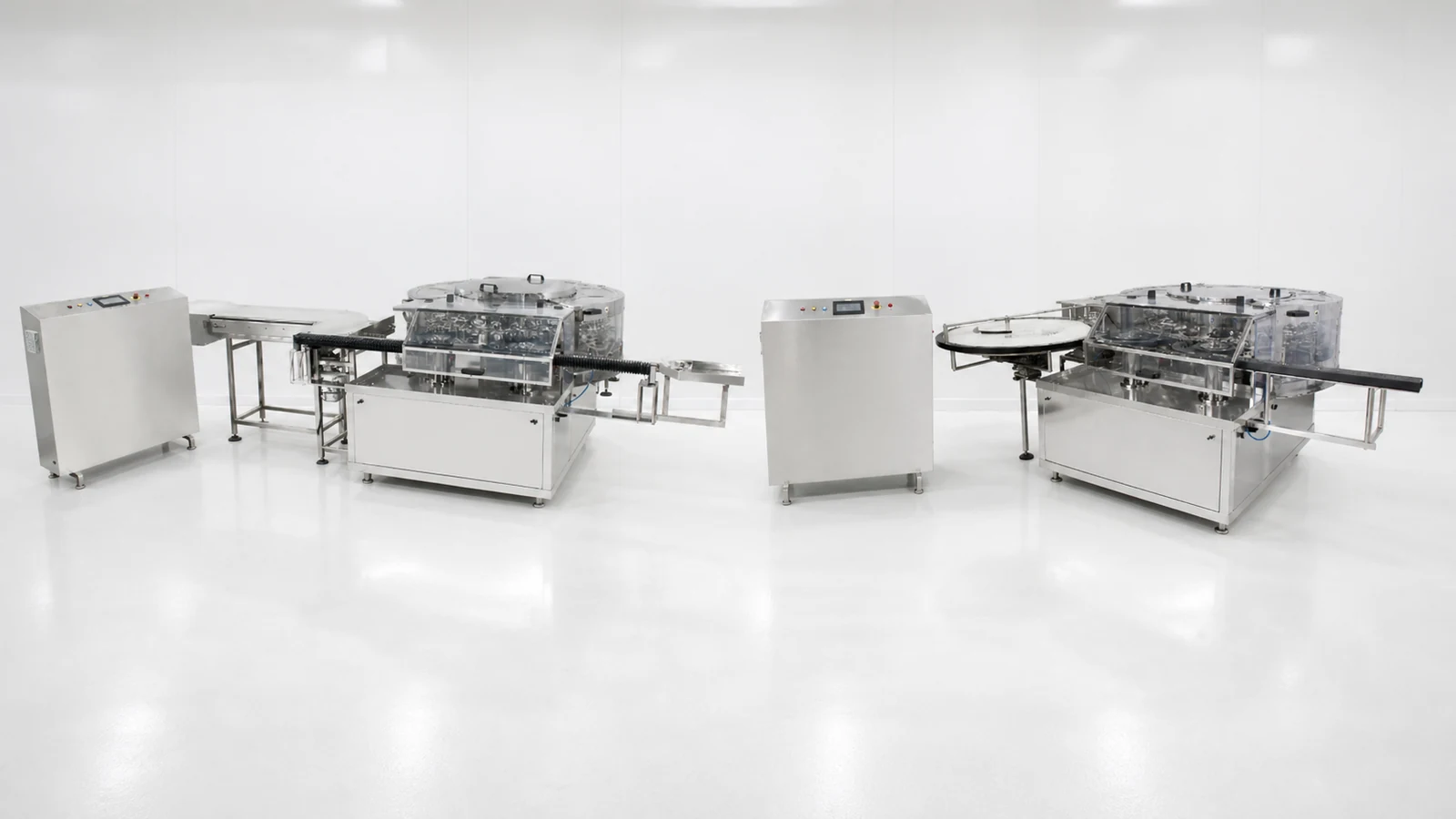
An enquiry described only as a 10 mL glass-container washer leaves an important question open: is the intended container an ampoule or a vial? Its capacity does not identify the opening, neck, body profile, base or downstream closing arrangement. Those references influence the handling parts and the application the supplier is being asked to approve.
This guide addresses that container decision. Once the project is confirmed as a vial application, use the rotary gripper versus linear tunnel vial washing guide to compare the two vial platforms. The distinction here is the evidence needed for an ampoule or vial format, rather than another model-rate or washing-stage comparison.
Identify the glass container family, retain a controlled drawing and sample for every format, and ask the supplier to approve the handling contacts, internal wash access and required discharge condition against those references. Matching nominal capacities do not establish interchangeable format parts or a shared machine application.
Identify the Empty Container That Enters the Washer
Use the incoming empty-glass drawing as the mechanical reference. A photograph of the finished medicine pack may show an ampoule after sealing or a vial after stoppering and capping; it does not describe every surface and opening the washing machine receives. Name the container supplier, drawing revision and sample reference together.
For an ampoule, identify the body and neck profile and the opening presented before filling and flame sealing. For a vial, identify the body, base and neck/opening reference used by the selected filling and closure arrangement. Record relevant dimensions and tolerances from the controlled reference instead of treating a measured sample as an automatically approved manufacturing specification.
Keep Capacity Separate from Geometry
Two containers can carry the same capacity description while having different height, diameter or neck geometry. Equally, a familiar supplier name does not establish that a later drawing revision uses the same physical format. List each planned ampoule or vial reference individually, including intermediate sizes and alternatives that the buyer expects to purchase.
Mark proposed containers separately from approved ones. If a second source is being considered, provide its own drawing or sample identity and ask what additional handling review is needed. Avoid silently merging several glass references into a single smallest-to-largest range: the machine's contact and transfer requirements follow the actual shape, not an interpolated volume label.
Shortlist the Dedicated Machine Family
The published ampoule washing range covers approved 1–20 mL glass ampoules. Its rotary gripper infeed uses a mesh conveyor, feed worm and star wheel. The vial washing range covers approved 2–100 mL glass vials and offers rotary-gripper and linear-tunnel platforms. These are catalog boundaries for discussion; the actual glass reference still needs approval.
Ask the technical proposal to name the container family and every format included in the review. Do not interpret the overlapping capacity range as evidence that one machine or one set of format parts accepts both container types. If the enquiry asks for an additional application, keep that request explicit and separate until the supplier confirms feasibility and the ordered scope.
Review Where the Glass Is Supported and Transferred
Ask the supplier to relate the proposed contact and support locations to the container drawing. Identify what spaces the incoming glass, what receives it at the next transfer and what holds it during the wash path. Keep the component references with the format: a part that looks similar in a machine photograph is not evidence that it matches a different neck or body profile.
The objective is an agreed geometry review before a configuration is committed. Later mechanical trial observations belong to the container-specific handling guides: ampoule glass handling and format parts and rotary vial format changeover. Keep any unreviewed contact location visible rather than treating the family shortlist as completed sample approval.
Connect the Opening and Outer Profile to Wash Access
Define the container surfaces and condition the buyer needs reviewed. Internal access depends on the actual opening and the proposed nozzle arrangement; external access must be considered against the body profile and support locations. Ask which surfaces are addressed by the ordered arrangement and which observations will be used for the application review.
Keep geometry acceptance separate from the process result. A nozzle that can approach the opening does not itself demonstrate the required cleaning outcome, and the number of wash positions does not identify every surface reached. Use the wash-media guide for process questions and the agreed project method for assessing the container's required condition.
Define Which Container Reference Reaches the Next Operation
The washer's outfeed must be discussed using the same approved glass as its infeed. Record the required presentation at the next machine, the receiving equipment reference and any separately specified treatment between washing and filling. An ampoule line's filling and flame-sealing destination differs from a vial line's selected filling and closing route; the buyer should identify the actual arrangement.
Ask the two equipment owners to confirm the handover for each container format. Keep the washer's supply boundary and the next operation's acceptance reference identifiable. This prevents a container being approved in isolation while its discharge presentation remains unresolved. Washing does not by itself establish the result of separately required sterilization or depyrogenation.
Issue an Approved Format List with Visible Open Items
Use the table below as an uncompleted comparison record for one ampoule and one vial enquiry. Enter the actual references and approval status; use a separate copy for other formats. The entries should tell a reviewer which container was assessed, what evidence supported that assessment and what still prevents a firm application commitment.
Carry the confirmed references into the quotation and format-part list. When a drawing, glass supplier or intended downstream presentation changes, ask which earlier approvals need review. The resulting machine scope should describe specific containers and conditions, rather than a broad statement that the equipment washes any glass within a nominal volume range.
| Reference to complete | Ampoule enquiry | Vial enquiry |
|---|---|---|
| Glass supplier, drawing revision and sample identity | To complete | To complete |
| Body, base, neck and opening dimensions/tolerances | To complete | To complete |
| Proposed handling contacts and format-part references | To confirm | To confirm |
| Internal/external surfaces included in the wash review | To confirm | To confirm |
| Required presentation and receiving equipment reference | To confirm | To confirm |
| Unreviewed item, evidence owner and approval status | To complete | To complete |
Container Selection Questions
Can the same 10 mL capacity identify an interchangeable ampoule and vial format?
No. Capacity does not identify the body, neck, opening or transfer requirements. H M Pharma Machines publishes dedicated ampoule and vial ranges; the proposed application and format parts require approval against the actual glass references.
Which glass reference should accompany a washer enquiry?
Provide the incoming empty-container drawing revision and representative sample identity for every planned format. Keep proposed or alternative-supplier references separate from containers already approved for the application.
Does a successful handling review also accept the wash result?
No. Handling fit and the required cleaning outcome are different decisions. Identify the surfaces included in the proposed arrangement and the agreed assessment method for the buyer's container condition.
Where should the two vial washing platforms be compared?
After confirming the vial application, use the dedicated rotary gripper versus linear tunnel guide to compare vial handling architecture, washing positions and published output choices against the project requirements.
Define Your Ampoule or Vial Format Scope
Send the glass drawings and sample references, the proposed container family and the next operation's required presentation. H M Pharma Machines can review the approved format scope for the machinery enquiry.
Request a Technical ReviewEmail Your Requirements