
In This Guide
- Start with a Defect List, Not a General Claim
- Understand the Published Bottle Inspection Method
- Understand What Carton Weight Checking Shows
- Trial Weighing Under Production Conditions
- Agree How Rejected and Uncertain Packs Are Controlled
- Build a defect, method and responsibility matrix
- Record wrong decisions and the final pack destination
- Buyer Questions
- Related practical guides
- Equipment scope and completeness-check reference
- Define the checks your line needs
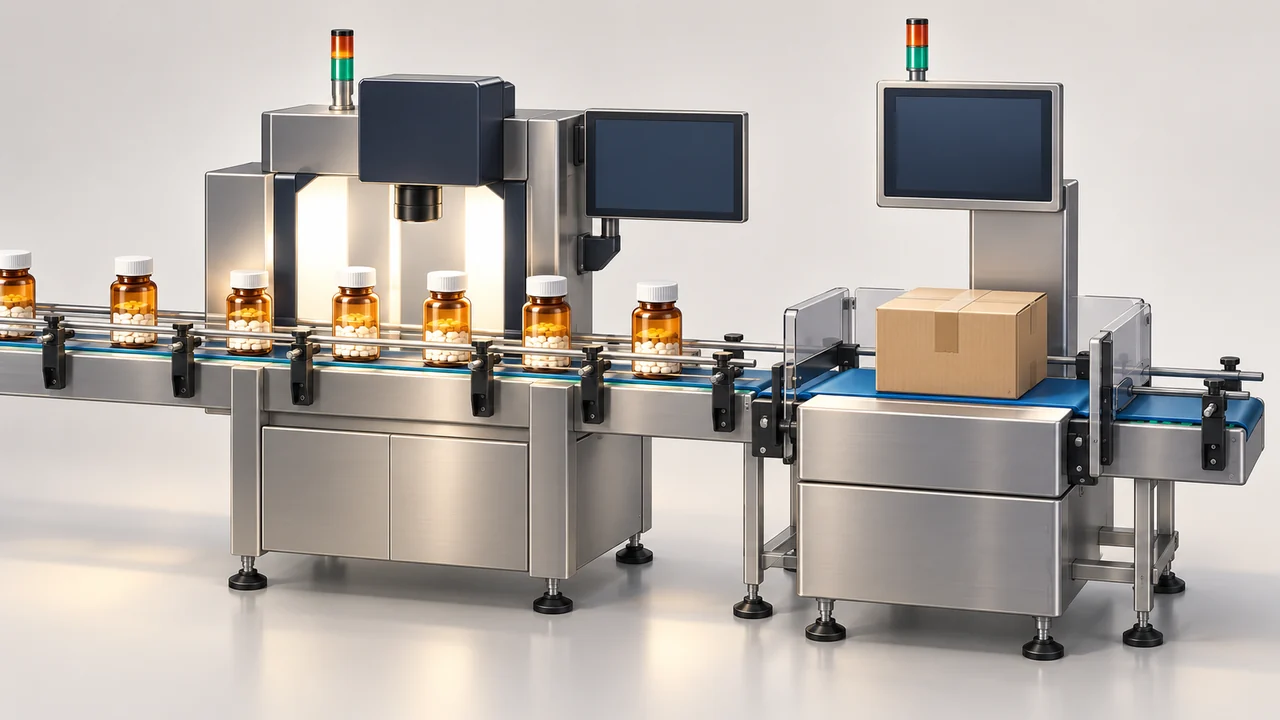
An inspection station is useful only when its task is clear. A bottle inspection machine and a carton weight checker can both support a packaging line, but they assess different characteristics. Calling either system a complete quality check leaves important gaps. Build the requirement around named defects, how they are detected and what happens to uncertain or rejected packs, then trial that requirement using representative samples.
Use bottle inspection to assess the specified visible conditions and carton checkweighing to assess gross pack mass against a defined recipe. Neither result proves every aspect of pack quality. Agree challenge samples, operating conditions and rejection responsibilities before comparing machines or accepting a demonstration.
Start with a Defect List, Not a General Claim
List the problems the checkpoint should identify and the condition of the pack when it reaches inspection. Examples can include visible container damage, an unacceptable closure appearance, missing decoration or gross weight outside the chosen limits. Define each defect with an accepted example and a known defective sample.
Identify defects that the proposed method cannot establish. Product identity, hidden contents and every closure characteristic cannot be inferred from one visible or weight result. The requirement should show which checks are performed elsewhere rather than leaving those responsibilities implicit.
Understand the Published Bottle Inspection Method
The H M Pharma bottle inspection page describes illuminated manual visual inspection: a variable-speed conveyor presents containers against contrasting backgrounds, and accepted and rejected containers are segregated through the operating procedure. It should not be described as an automatic camera inspection machine.
Review lighting, background, container presentation and the operator's view using the actual bottle and product. Decide whether all required surfaces can be examined in the proposed arrangement. Camera vision, container rotation, additional stations and data logging are separately configurable items, so specify them if required.
Understand What Carton Weight Checking Shows
The carton weight checker page describes spacing the incoming packs, weighing them dynamically and comparing the result with the selected recipe. Gross weight includes the product and packaging. Normal variation in cartons, inserts or containers therefore matters when selecting limits.
| Check | Possible observation | Limitation |
|---|---|---|
| Visual inspection | Defined visible damage or appearance defect | Depends on presentation and the specified method |
| Gross weight | Pack mass outside the recipe limits | Does not identify every missing, wrong or damaged component |
| Reject handling | Separation of a flagged pack | Requires correct tracking and collection arrangements |
Trial Weighing Under Production Conditions
Supply complete representative packs, including normal packaging variation. Compare known reference samples with the dynamic result at the intended line conditions. Review spacing, conveyor transfer, pack stability and the effect of repeated passes rather than selecting limits from a single demonstration.
A missing component may be detectable only when its mass difference can be distinguished from normal variation and the measurement conditions. A wrong item can also have a similar mass to the correct one. Do not promise universal content detection from gross weight; document the specific challenge packs and results.
Agree How Rejected and Uncertain Packs Are Controlled
Confirm whether the supplied system only indicates a result or also provides automatic rejection. The carton checker describes automatic rejection where configured. If included, test the path from the measurement point to the reject position with acceptable packs immediately before and after the challenge sample.
Define response to a full collection area, a failed reject action or loss of a required signal. Establish how manual-inspection rejects are kept separate. The operating procedure should identify who reviews uncertain packs and how they are prevented from returning to the accepted stream unnoticed.
Build a defect, method and responsibility matrix
Give each required defect its own row. Identify the known condition of the challenge sample independently of the inspection result, and retain who established it and how. Agree the method and acceptance rule before the trial; otherwise a demonstration can show that a pack moved through a station without showing that the required defect was controlled.
| Requirement | Evidence and proposed check | Owner and decision to record |
|---|---|---|
| Named visible bottle or product defect | Identified examples; lighting, background, presentation and operator procedure; observed decisions | Buyer defines defect classes; supplier demonstrates the agreed presentation; designated reviewer assesses the recorded decisions. |
| Named missing carton component | Identified complete and incomplete packs, ordinary packaging variation, recipe and dynamic readings | Buyer supplies the pack contents and variation samples; supplier tests discrimination; reviewer records the supported scope or an unresolved limitation. |
| Wrong component with similar gross mass | Correct/wrong identity references and the actual proposed identity check | Buyer defines the identity requirement; supplier confirms a suitable offered method. Gross weight alone does not establish identity. |
| Rejected pack reaches controlled collection | Sample ID, decision, intended destination, observed final destination and neighboring-pack IDs | Supplier demonstrates the quoted reject arrangement; site owner defines collection, access and disposition of rejected or uncertain material. |
Add format, recipe, speed/spacing, trial date, run ID, assessor and evidence reference to the record. Record repeated passes as passes of the same sample, not as new independent samples. Repeat the relevant checks after an authorized change and retain the earlier results.
Record wrong decisions and the final pack destination
Record the inspection decision separately from what physically happened to the pack. Use the following four outcomes for each named check. “Accepted” means accepted by that check; it does not mean that every other quality requirement has been assessed.
| Known condition for this check | Recorded decision | Meaning and follow-up |
|---|---|---|
| Acceptable | Accept | Correct acceptance for the specified check; retain the supporting record. |
| Acceptable | Reject | False reject; retain the reading or observation and investigate before changing the criterion. |
| Defective | Reject | Correct rejection decision; also verify that the intended sample reaches the controlled reject destination. |
| Defective | Accept | False accept; keep the affected scope open and investigate the sample, method and configuration. |
Use a separate unresolved entry if the known sample condition, observation or destination cannot be established. Keep that entry out of the confirmed-correct count. Small challenge sets are useful for finding a failure; their percentages alone do not establish long-run detection performance.
Invented tracking example — not an H M test result: challenge pack C-02 has a documented missing component. The checker records “reject”, but C-02 continues to the accepted lane while the following acceptable pack C-03 is diverted. The decision on C-02 was correct; the required physical segregation failed. Record both pack IDs, the decision and destination evidence, spacing and reject timing reference. Hold the affected trial conclusion and have the supplier investigate the tracking arrangement before repeating the agreed sequence.
For a manual station, record the operator’s classification and the actual segregated destination in the same way. Define who reviews an uncertain pack and how it remains separated until disposition. At the end of the challenge, reconcile the identified samples with the accepted, rejected and held groups.
Buyer Questions
Is the published bottle inspection machine an automatic vision system?
The page describes illuminated manual visual inspection. Camera vision and related functions are separately configurable and need a defined inspection scope.
Can a carton weight checker detect every missing item?
No universal claim is appropriate. Detection depends on the mass difference, normal pack variation and the weighing conditions. Test the particular missing-item samples you need to detect.
Does a correct carton weight prove the contents are correct?
No. A wrong or damaged item can have a similar mass. Use the other inspection or process controls required for that characteristic.
Related practical guides
- Agree closure acceptance separately — define the closing checks before deciding which visible defects an operator will assess.
- Approve label artwork and trial rolls — establish the correct label reference for any later appearance or identity check.
- Measure acceptable finished output — count only the defined accepted stream when reviewing line output.
Equipment scope and completeness-check reference
The published bottle inspection machine presents containers for manual visual assessment. The carton weight checker assesses gross mass against the configured recipe; the offer must identify the reject and tracking arrangement.
METTLER TOLEDO’s checkweighing guidance explains why variation in packaging and contents can prevent a missing-component check from separating complete and incomplete packs. Use that principle to select challenge samples, then establish the actual result from the proposed configuration. This guide states no detection percentage or weighing accuracy for an H M machine.
Define the checks your line needs
Send the pack configuration, named defect list, representative acceptable and defective samples, intended line conditions and the required segregation method. H M Pharma Machines can review which inspection or weight-checking scope should be quoted.
Request an inspection scope review