
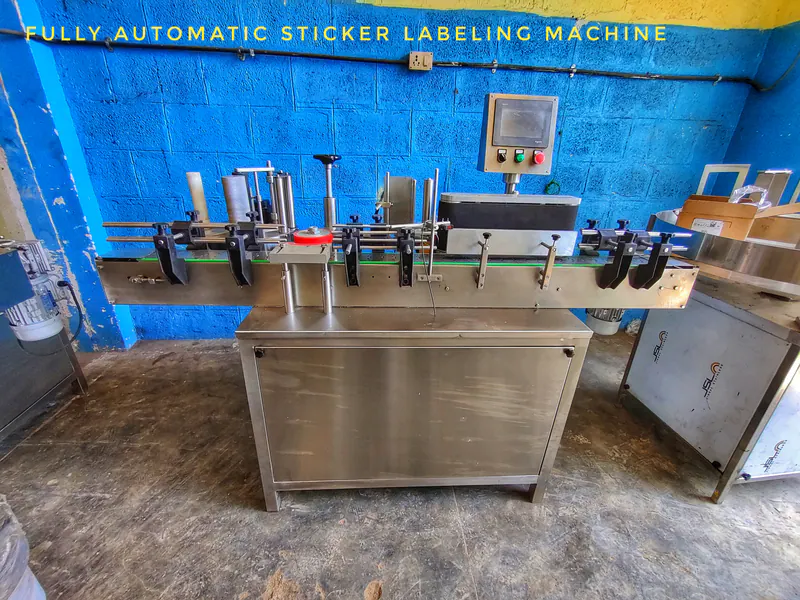
Begin with the physical container label panel
Approve a label against the actual bottle or pack, not only a drawing of the artwork. Record the container revision and the intended label panel, including features that affect placement. A label that fits a flat illustration may behave differently on a tapered shoulder, a curved panel or a moulded feature.
Use the ordered round-bottle labeler or double-side bottle labeler as part of that review. Give the machinery supplier physical samples where needed and confirm the approved handling and application scope. Do not extend a sample approval to a different bottle simply because the nominal capacity is the same.
Keep artwork dimensions separate from the die-cut label
The printed design, the finished label outline and the position of that label on the bottle are related but different records. Identify the artwork revision, finished die-cut dimensions and the intended orientation. Have the label supplier define the print production details needed for the selected stock and process.
Keep placement references understandable to both the printer and machinery supplier. Where two labels must align with each other or with a pack feature, show that relationship in the sample approval. This guide addresses mechanical preparation; it does not determine mandatory label text, medicine claims, barcode content or other regulatory requirements.
Request a sample-roll construction record
Ask for the face stock, liner, label gap, core and roll construction proposed by the label supplier. Confirm those details against the ordered machine requirements before a bulk print run. An artwork PDF by itself does not establish that the resulting roll can be threaded, detected and dispensed as intended.
Record the actual sample-roll reference used for the trial. If the printer changes the liner, finish, die cut or adhesive after approval, review the effect before treating the revised roll as equivalent. The winding and rewinding machine can be discussed within a defined roll-handling scope; it should not be assumed to correct every label-stock or print problem.
Confirm winding direction with an agreed threading reference
A roll-direction description is useful only when everyone interprets it the same way. Request the machine's approved threading or roll-orientation reference and identify the leading edge and printed face of the sample label. Agree the roll arrangement for each application station where more than one label is applied.
Use the supplied instructions for threading and adjustment. Keep the physical sample roll with its identification rather than relying on an informal arrow added to a photograph. If artwork orientation or roll direction changes, include both revisions in the review. A correct-looking label on a loose bottle is not a substitute for a roll trial on the intended arrangement.
Trial the finished stock and retain first-off packs
Use the actual proposed finish, liner and adhesive on representative containers during the agreed trial. Observe dispensing, label placement and the finished pack under the conditions relevant to the order. Record issues and agreed changes without assuming one adhesive or sensor arrangement suits every stock and bottle surface.
Keep first-off packs and the sample-roll reference with the artwork approval. The following blank worksheet links those items; it contains no approved dimensions, adhesive recommendation or successful test result.
| Approval field | Buyer, printer and machine supplier to complete |
|---|---|
| Container and label-panel reference | To be recorded |
| Artwork revision and finished label outline | To be confirmed |
| Face stock, finish, liner and gap | Sample-roll specification |
| Core, roll direction and threading reference | Machine requirements to confirm |
| Observed application and first-off pack | To be recorded during the trial |
| Approval, change or open action | Responsible party and revision |
Release one agreed revision for the print order
Before bulk printing, confirm which artwork, stock, roll construction and container have been approved and which questions remain open. Retain the sample pack and the approval reference. Changes after that point should have a clear review route rather than passing unnoticed between the bottle supplier, printer and labeler operator.
The labeling machine selection guide covers equipment choice, while the coding and rewinding guide addresses the broader print flow. Share your bottle samples, artwork outline and sample-roll specification to discuss the machine application before committing to a large printed batch.
Buyer Questions
Is an artwork PDF enough to approve a label roll?
No. Include the physical container and sample-roll construction, then assess the actual stock and application on the agreed machine arrangement.
Can a liner or adhesive change be treated as the same approved label?
Review the change. Stock construction can affect handling and application even when the artwork remains identical.
Does this guide approve regulatory label content?
No. It addresses physical artwork, roll and machine preparation. Required wording and regulatory approval remain separate responsibilities.
Related Equipment and Guides
Primary References
Review these published machine and support pages alongside the approved configuration, actual samples and project documents.
Discuss Your Machine Requirement
Share the machine duty, actual samples, required result and relevant site information with H M Pharma Machines for a technical review.
Request a Technical Review