
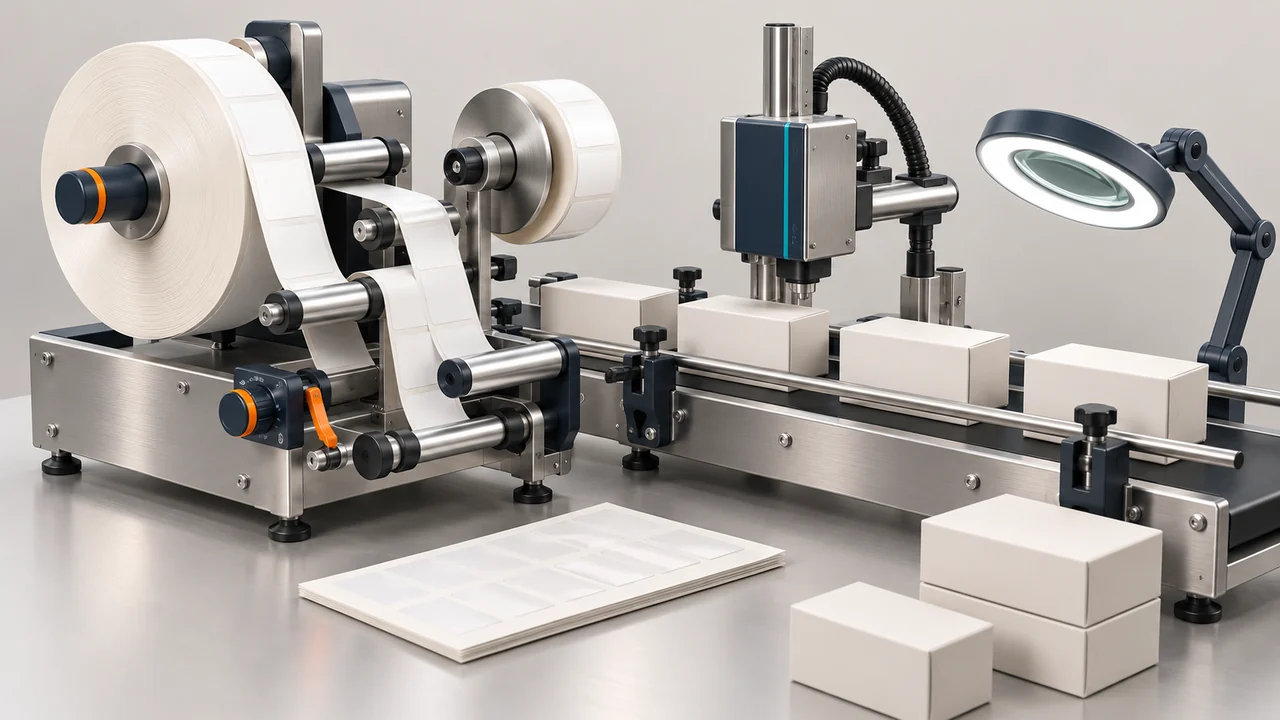
Rewinding and coding solve different problems, but their setup records often meet at the same label roll or package. A label winding rewinding machine manages the web and finished roll; a batch coding machine applies variable information using a selected coding technology. Before ordering either, map the route from blank substrate to released pack. This prevents an apparently suitable roll from reaching the applicator in the wrong direction or a readable test print from failing on the production material.
Specify the finished roll's direction, core and presentation, then test the coding method on the real substrate. Keep web handling, message approval, print verification and release decisions distinct. A rewinder or coder should not be assumed to include automatic inspection, rejection or electronic data controls.
Map Where Printing and Rewinding Happen
Draw the intended sequence: printing before rewinding, coding at the label applicator, or coding the container or carton after another process. Identify who loads the roll, selects the message and approves the first sample. Show any transfer of partly used rolls between departments.
A roll that is convenient for inspection may still need a different orientation for application. Agree which equipment determines the final presentation. If the coder is mounted on a conveyor, include its position relative to product guides, sensors and the inspection point.
Define the Finished Roll, Not Just Label Dimensions
Specify web width, label repeat and gap, core dimensions, intended roll diameter and unwind direction. Include a sketch showing which edge leads and whether labels face inward or outward. Identify the substrate and release liner, since an acceptable setting for one web may not suit another.
The published label roll winding rewinding machine handles compatible self-adhesive stock and paper, film or foil webs with controlled threading and tension. During a trial, examine edge alignment, loose winding, creases and the ease of feeding the completed roll into its next machine.
Select Coding Through a Substrate Trial
The batch coding page describes a choice of coding heads, including CIJ, TIJ, TTO, laser or a compatible alternative. Those names are options to evaluate, not interchangeable methods or an assertion that every quotation includes them all. Match the method to the actual print area, material and production presentation.
| Trial item | Record |
|---|---|
| Substrate | Material, finish and production condition |
| Message | Required fields, layout and character readability |
| Motion | Product speed, spacing and trigger position |
| Print result | Position, adhesion or mark suitability, and handling resistance |
Control the Message as Well as the Machine
Agree a procedure for entering, selecting and checking variable information. Identify which fields change by batch and which must remain fixed. Keep the accepted message layout with the job record so that an operator does not reconstruct it from memory.
Ask what the supplied controller actually supports: message storage, access levels, date functions, counters or external data interfaces can differ. Define who checks the displayed message against the physical first-off print. A correct electronic selection is insufficient if the print is displaced, incomplete or unreadable on the pack.
Define Inspection and Reject Responsibilities
Specify whether verification is manual or uses an additional inspection system. Check missing print, incorrect content, position and legibility as separate defects. If machine-readable codes are required, agree the appropriate verification method and equipment rather than judging them solely by appearance.
The presence of a product sensor or encoder synchronizes a coding cycle; it does not prove that the printed content is correct. Where automatic rejection is proposed, test tracking from the inspection point to the reject position and confirm how rejected packs are identified and kept separate.
Trial the Complete Start-and-Stop Sequence
Use the production roll and representative packs, with a full message rather than a simple test word. Include startup, ordinary stop and restart, material replacement and a partly used roll if that is part of the workflow.
- Confirm the finished roll feeds in the required direction.
- Inspect first-off printing after each setup intervention.
- Record the settings and any consumables used.
- Identify how unprinted, uncertain or rejected material is held.
- Release production only after the defined checks are complete.
Use the same trial record when comparing coding and label-handling suppliers so that differences in scope remain visible.
Buyer Questions
Does a label rewinder inspect every label automatically?
Not necessarily. Web handling and rewinding do not establish the presence of a camera, print reader or defect-rejection system. Specify the inspection task and confirm the offered equipment.
Can one batch coding method be chosen for every material?
A substrate trial is needed. Material, finish, required mark and product presentation can change which coding method is suitable.
Why record roll direction separately from label size?
The next machine must receive the correct leading edge and label face. Correct dimensions alone do not establish that the finished roll will feed and apply correctly.
Related Machine Guides
Product References and Further Details
These primary pages describe the published machine arrangements discussed in this guide. Use the actual product and component requirements when reviewing a configuration.
Discuss Your Machine Requirement
Share your product, container or closure samples, required output, process conditions and line layout with H M Pharma Machines for a technical review.
Request a Technical Review