
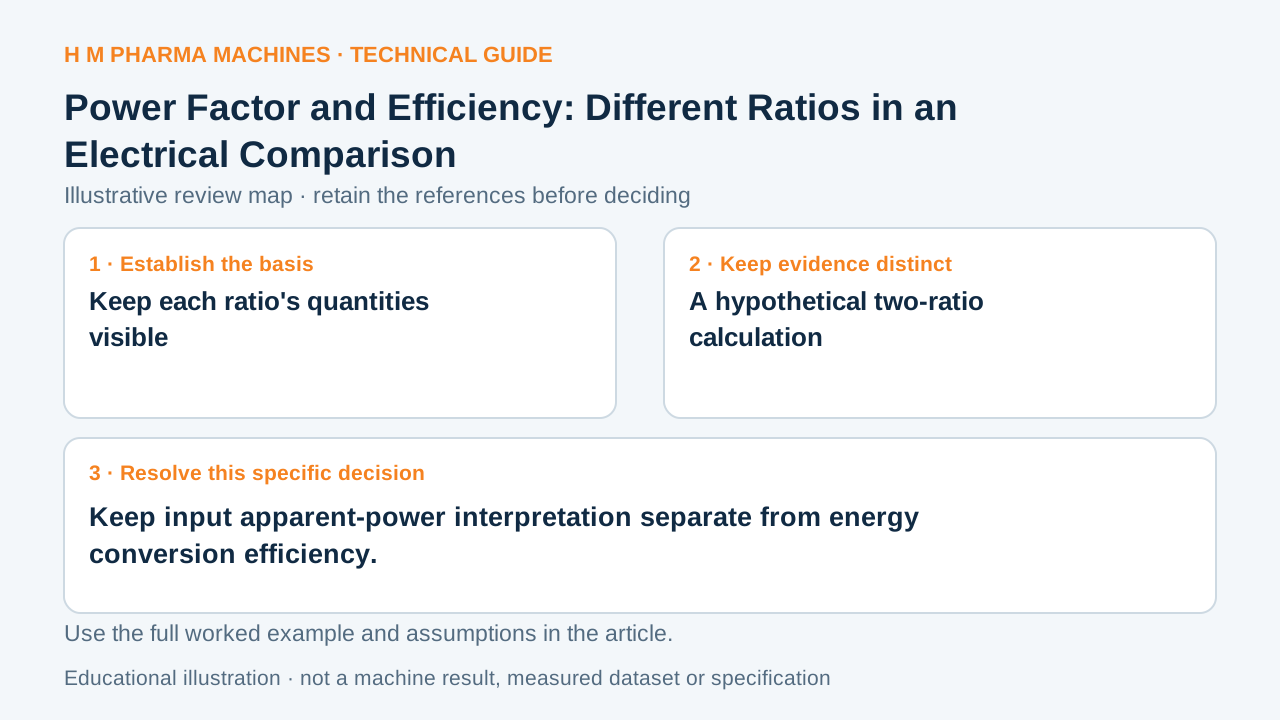
Two ratios can be dimensionless while describing different quantities.
Keep each ratio's quantities visible
Natural Resources Canada's motor guide distinguishes power-factor and efficiency behavior. Power factor concerns active and apparent input power; efficiency concerns output relative to input. Primary reference: NRCan motor-efficiency guide.
An offer should name the quantity and operating basis instead of writing one unexplained percentage. A power-factor figure should not be inserted into an efficiency field merely because both are ratios. Keep mechanical output and electrical input definitions recognizable in the worksheet.
A hypothetical two-ratio calculation
Assume a fictional input with 10 kW active power and 12.5 kVA apparent power, plus 8 kW shaft output. Power factor is 10/12.5 =0.8, while the stated conversion efficiency is 8/10 =0.8. The equal numerical results are a coincidence in this example; they do not make the definitions interchangeable.
If the invented apparent power changes while active input and shaft output are held in the model, the power-factor result changes without an implied change in that defined conversion efficiency. These assumptions are not HM measurements and establish no actual electrical performance.
Use the ratio needed by the decision
Ask whether the calculation concerns an apparent-power capacity requirement, energy conversion or another defined question. Retain the relevant operating condition and actual data source so the appropriate ratio enters the model.
When summarizing an offer, preserve kW, kVA and shaft-output meanings rather than reducing them to watts or efficient. This guide supplies a definitions worksheet without selecting correction equipment, claiming a tariff saving or asserting that improving one ratio automatically establishes a particular improvement in the other. The complete system's actual measurements and design remain separate evidence.
Customer Questions
Can equal numerical ratios have different meanings?
Yes. Preserve their numerator and denominator definitions.
Is power factor the same as motor efficiency?
No. They compare different quantities.
Does this example prescribe power-factor correction?
No. It is only an interpretation exercise.
Primary References
These references support the technical principles discussed in this guide. The worked examples and review questions are educational.
Discuss Your Machine Requirement
Share your product, container, required output and the evidence needed for your technical review.
Request a Technical Review