
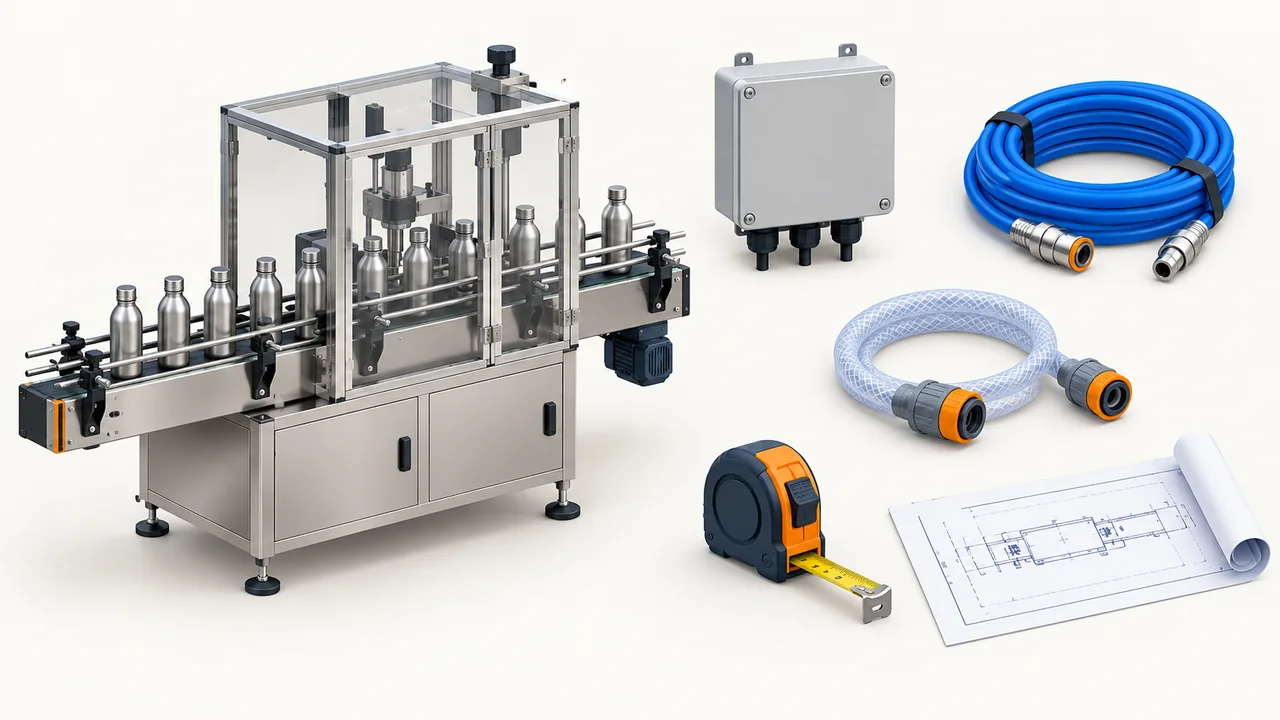
Freeze the Machine and Drawing Revision First
Installation planning should use the machine actually ordered. A general catalog specification can help frame an enquiry, but the site team needs the approved configuration, layout and utility requirements. Identify the equipment and the revision of every drawing used for preparation.
Changes made during manufacture may affect the connections or line interfaces. Ask how revised information will reach the buyer before dispatch. H M Pharma Machines describes installation and commissioning support as project-specific; confirm the purchased tasks rather than treating every activity at the site as automatically included.
Create One Row for Every Connection
A utility list is more useful when it names a connection rather than merely stating that air or water is available. Record the service, machine connection reference and condition required by the approved datasheet. Add the buyer's provision and the evidence used to check readiness.
Keep the schedule linked to the drawing. Identify customer-supplied regulators, connections or other interfaces as separate scope items where relevant. Avoid copying figures from a similar machine: a washer, gear-pump filler and processing vessel can have different service requirements even within the same project.
Separate Process Services from Machine Services
Electrical supply and compressed air support machine functions. Washing media, product supply and vessel thermal services have additional process duties. List them separately so that the presence of a service is not mistaken for confirmation that it meets the approved requirement.
For a washer, identify each specified medium and connection. For a filler, include the product-feed arrangement. For a process vessel, identify ordered heating or cooling interfaces. Ask the supplier and site specialists how the relevant conditions will be verified; this checklist does not provide electrical or utility hookup instructions.
Review Access, Position and the Connected Line
Use the approved layout to review delivery access, placement and the machine's operating space. Include adjoining conveyors and the elevations and directions of container transfer. Check whether doors, columns or other equipment constrain the planned location.
Record who handles unloading, positioning, supports and modifications to an existing line. These tasks need their own agreed methods and responsible personnel. A footprint that fits on paper may leave an unresolved interface or access problem, so carry those questions into the drawing review before dispatch.
Use a Blank Site Readiness Schedule
Complete the schedule with values from the approved project documents. A readiness entry should identify how it was checked and who will resolve an open item. Do not enter an estimated catalog figure in place of the ordered requirement.
| Schedule field | Buyer and supplier entry |
|---|---|
| Machine reference | Identification, configuration and drawing revision |
| Connection | Service and machine-side reference |
| Required condition | Requirement from the approved datasheet |
| Site provision | Available interface and responsible party |
| Readiness evidence | Agreed check, date and record reference |
| Physical interface | Access, position and adjoining equipment |
| Open action | Difference, owner and required completion stage |
Agree What Happens During Commissioning
Define the activities expected after the machine is positioned and the site is ready. The order may include setup, utility verification, trial assistance or operator orientation according to the agreed scope. Identify who supplies containers, product, closures and other trial materials.
State the checks to be performed and which records will be retained. A completed installation task does not automatically establish every process outcome. Separate functional demonstration, buyer acceptance and any further qualification activity, and keep responsibilities clear for each stage.
Close Readiness Gaps Before Arranging the Visit
Review the open-action list with the supplier before confirming the installation visit. Report changed utilities, layout or line equipment so their impact can be assessed. Confirm travel and site-service terms from the approved offer.
Keep the final schedule with the delivered drawings and handover records. When a future support issue occurs, that record helps explain the original site conditions and what subsequently changed. Send H M Pharma Machines the selected equipment, installation location and connection questions for a project-specific review.
Buyer Questions
Can a similar machine's utility figures be used for site preparation?
Use the approved datasheet and drawings for the ordered configuration. Similar names or appearances do not establish identical requirements.
Does installation support include every site activity?
No. Unloading, positioning, connections, modifications, trials and travel terms need a defined responsibility and commercial scope.
Who should make electrical and utility connections?
The appropriately qualified personnel identified in the project and site procedures, following approved drawings and machine-specific instructions.
Related Equipment and Guides
Primary References
Review these published machine and support pages alongside the approved configuration, actual samples and project documents.
Discuss Your Machine Requirement
Share the machine duty, actual samples, required result and relevant site information with H M Pharma Machines for a technical review.
Request a Technical Review