
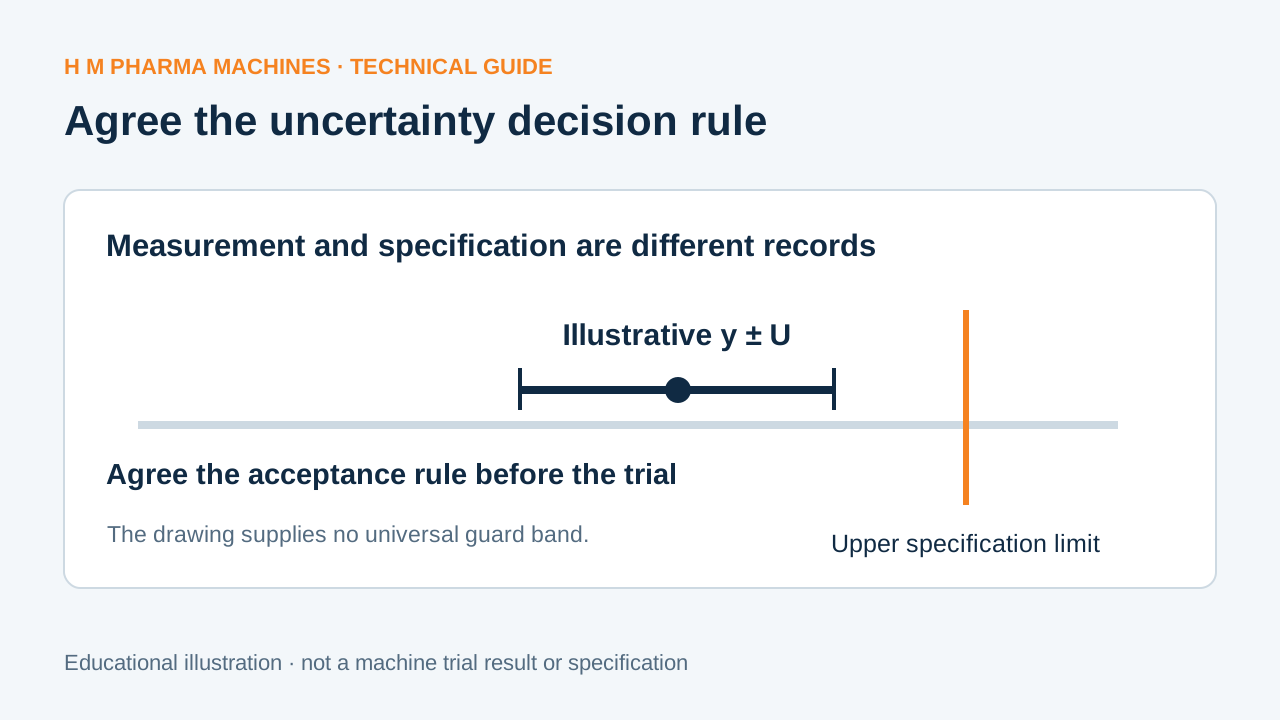
A measured value near a limit needs an agreed interpretation. Decide how uncertainty enters the acceptance rule before comparing trial results.
Keep Limits, Result and Rule Distinct
Identify the property being assessed, its specification limits, the measurement method and the rule used to reach a conformity statement. A displayed fill value is not the complete evidence record. The result needs its unit and relevant uncertainty information; the acceptance rule explains how that information affects the decision.
JCGM 106 distinguishes the interval of permitted property values from the interval of measured values accepted under a decision rule. The two intervals need not be identical. JCGM 106:2012, sections 8.1–8.3.
Agree the Rule with the Responsible Reviewer
Simple acceptance compares the measured value with the specification interval. Guarded acceptance uses acceptance limits inside that interval to reduce false-acceptance risk, with a corresponding trade-off. Neither label selects the correct rule for every machinery project. The responsible quality or metrology owner should identify the applicable requirement and approve the interpretation.
ILAC G8 provides guidance on decision rules and conformity statements, including communication of the selected rule. Use the actual agreed rule rather than choosing one after observing a borderline result. ILAC G8:09/2019.
Illustrative Example: The Same Value, Different Rules
Hypothetical quantity requirement: 98.0–102.0 g. Suppose the measured value is 101.7 g and the reported expanded uncertainty U is 0.6 g, with its basis supplied by the measurement method. These invented values are not HM filling results, calibration data or recommended limits.
Under simple acceptance, 101.7 g lies inside the stated interval. Under an illustrative guarded-acceptance rule chosen with guard band w = U, the acceptance interval is 98.6–101.4 g; the same result does not meet guarded acceptance. This arithmetic follows the declared example rules. It does not prove the product is nonconforming or authorize a filler adjustment.
The agreed procedure must define the reported disposition and treatment of unaccepted or uncertain results. Preserve the result and rule together so a later reviewer can reconstruct the decision.
Request the Uncertainty Basis
Ask the measurement owner to identify the uncertainty statement appropriate to the method, including its units and coverage information. Instrument resolution alone is not a supplied uncertainty evaluation. Tare, conversion, sampling and other relevant method steps belong in that review, rather than being replaced by a guessed allowance.
Where a load-cell filler is discussed, distinguish the controlled filling action from the independent acceptance measurement. If the requirement uses volume but the method measures mass, retain the approved conversion basis; do not mix units at the boundary.
Compare Reports on One Declared Basis
Complete the worksheet before the trial. Record rule revisions and exclusions with the approved acceptance plan. When comparing factory and site reports, check that they assessed the same property, unit, method and decision rule. Otherwise different pass labels may reflect different interpretations rather than changed equipment behavior.
This guide explains a purchase-evidence question. It does not assign a laboratory accreditation status, replace a process validation method or prescribe a universal guard band. The approved project references determine the actual decision.
Blank trial decision-rule agreement
This blank worksheet is for your own project. It contains no H M machine trial result.
| Reference | To be agreed | Owner/revision |
|---|---|---|
| Property, unit and specification limits | To complete | To complete |
| Measurement method and uncertainty statement | To complete | To complete |
| Acceptance limits/rule and disposition terms | To complete | To complete |
| Factory/site comparison and changes | To complete | To complete |
Customer Questions
Does a value inside the specification always pass?
Its disposition depends on the agreed decision rule. Keep specification and acceptance limits distinguishable.
Should every trial use a guard band equal to U?
No. That is one illustrative rule here. The applicable project method must define and approve the actual rule.
Is the balance display increment its measurement uncertainty?
No. Request the method's uncertainty evaluation and relevant coverage information from the responsible measurement owner.
Related Equipment References
Review the actual offered equipment and application separately from this educational example.
Primary References
These references support the technical principles discussed in this guide. The worked examples and review questions are educational.
Discuss Your Machine Requirement
Share your product, container, required output and the evidence needed for your technical review.
Request a Technical Review