
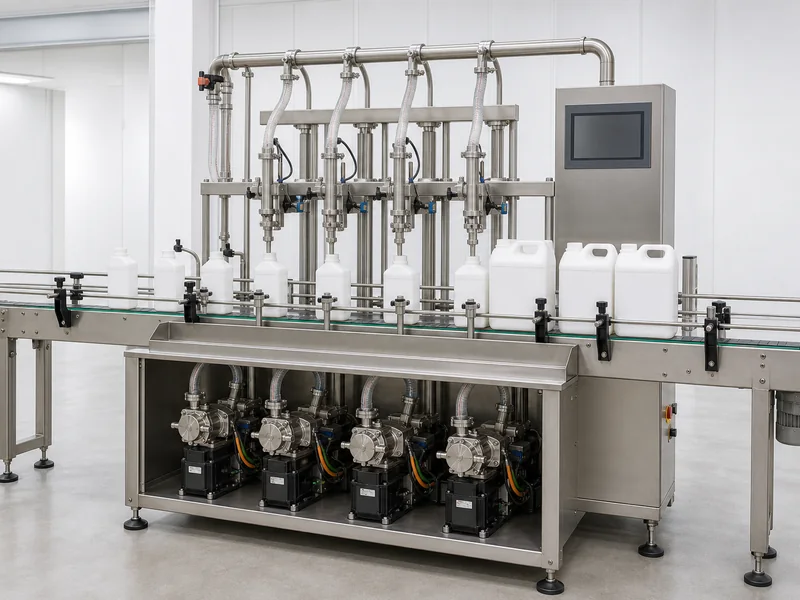
Identify the pilot equipment and actual trial conditions
Pilot packaging records often describe an operation that was helped by an attentive operator: product was topped up, containers were positioned individually or the run paused between small groups. Those observations can be useful, but the enquiry should retain the actions that made them possible. Record the pilot equipment, pack reference and actual operating sequence.
Focus the comparison on the packaging sequence: product supply, container handling, filling, closing and transitions between those operations. Identify which pilot observations were made under a representative condition and which relied on extra assistance. The enquiry should give the supplier a useful history of those actions, pauses and observations.
Separate product behaviour from the pilot handling method
Write the manual interventions in the same chronology as the observations. Note top-ups, pauses, repositioning and other assistance using the buyer’s actual records. Avoid rewriting an assisted demonstration as an uninterrupted automated run. If the record is incomplete, state what is unknown rather than infer the missing sequence.
The operating-method guide supports discussion of the operator’s role. Use it to compare the pilot sequence with the intended commercial arrangement. A product observation may still be relevant even when the handling method changes, but the limits of that relevance need to remain visible.
A timeline is often more informative than a summary statement. Place an observation beside the preceding top-up, pause or container-handling action, using recorded events only. If the observer did not record those actions, identify the gap. Do not reconstruct precise timing later from a vague recollection of an apparently smooth demonstration.
Keep product holding history as information to review, not as an invented limit. Ask the buyer’s responsible team which history matters to the formulation and supply the actual available record. The machinery discussion can then separate a packaging-sequence question from a product-condition question without attributing a result to either prematurely.
Record commercial pack and duty differences
Compare the proposed pack, supply arrangement and duty with the pilot baseline. Identify changes in container, closure, format sequence or product preparation that could affect what the earlier record demonstrates. Keep those changes as questions for review; do not assign a technical cause or declare compatibility from an unrelated trial.
Condition history also matters to the evidence. Record when observations were made relative to preparation, holding and interruptions, if that information is available. The syrup filling guide provides useful product-and-run questions, but its discussion cannot substitute for observations of the actual formulation and proposed pack.
Choose observations needing a representative supplier trial
Select the questions that need a representative supplier review. Some may concern the commercial feeding/handling sequence; others may concern the actual product or restart condition. Describe the decision sought for each question so that the supplier can explain the relevant trial scope rather than simply repeat a convenient demonstration.
For a selected filling arrangement, keep channel or station identity with its observations. The channel trial guide supports that traceability. It does not prove that earlier pilot evidence transfers to another configuration. Mark substitute product, limited run history and unobserved cases clearly.
Build an evidence-transfer map without a scale-up guarantee
An evidence-transfer map should connect each pilot observation to its condition, the commercial difference and the confirmation needed. Keep existing evidence and proposed evidence in separate fields. Leave unsupported conclusions open until a suitable review establishes their basis.
Send this map with the commercial enquiry rather than send an unexplained photograph or a single “trial passed” statement. Retain the supplier’s scope response against each row. The result is a more precise packaging discussion, with neither an invented scale-up factor nor a promise that the commercial cycle will behave like an assisted pilot operation.
Blank planning worksheet — complete it with your own references. No observations or results are supplied.
| pilot observation | pilot condition | commercial requirement | important difference | transfer assumption | confirmation method | owner |
|---|---|---|---|---|---|---|
| To complete | To complete | To complete | To complete | To complete | To complete | To complete |
Buyer Questions
Can assisted pilot observations still be useful?
Yes, when the assistance and conditions are recorded. Keep operator interventions, pauses and pack identity with the observation so the supplier can distinguish product information from evidence about an automated sequence.
Does this method establish manufacturing scale-up?
No. It addresses the representativeness of packaging observations for a machine enquiry. Vessel geometry, agitation and manufacturing-process scale-up need their own appropriately defined review.
Should the pilot be repeated exactly on the proposed machine?
Identify the decision sought first. The supplier can explain which representative conditions are relevant to the selected configuration. An exact repeat may not answer the questions created by changed commercial handling or duty.
Related Equipment and Guides
Primary References
Review these published machine and support pages alongside the approved configuration, actual samples and project documents.
Discuss Your Machine Requirement
Share the machine duty, actual samples, required result and relevant site information with H M Pharma Machines for a technical review.
Request a Technical Review