
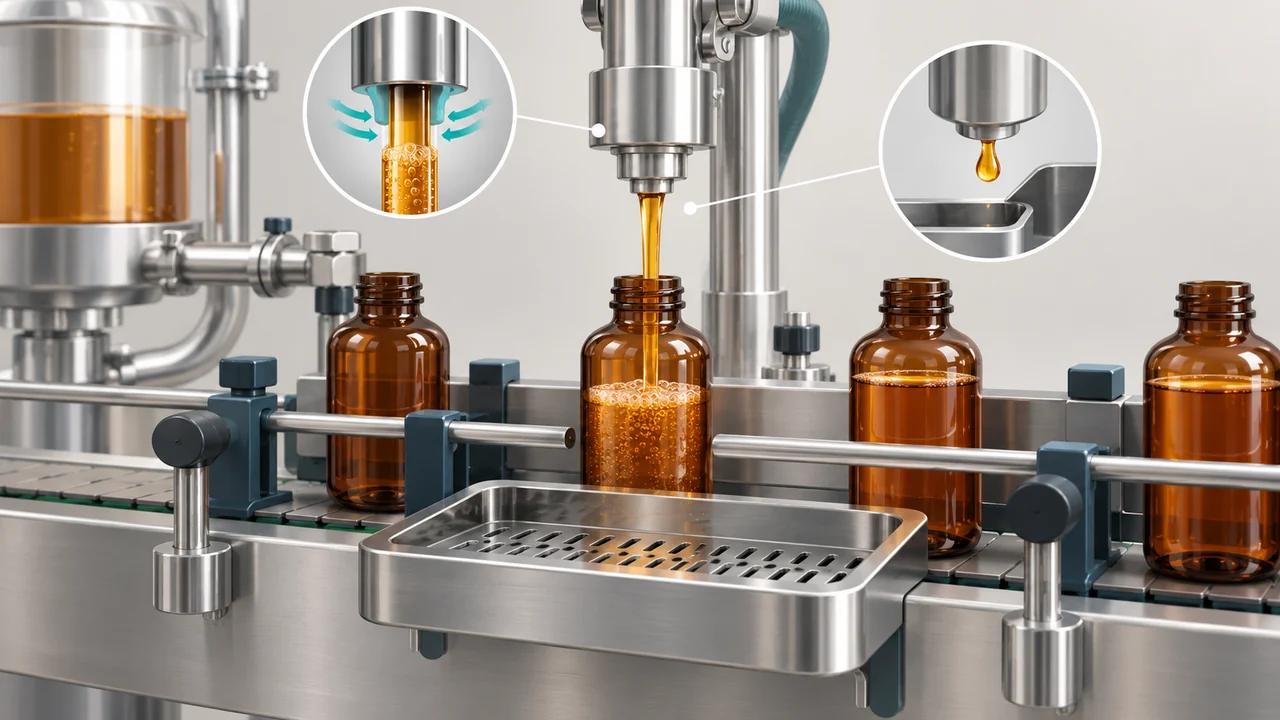
A syrup filling trial should follow the product beyond the moment it leaves the nozzle. Foam can occupy headspace, sticky liquid can remain on the neck, and an unstable bottle can disturb the next operation. For a syrup liquid filling machine or a bottle liquid filling machine, the useful result is a correctly filled container that reaches closing in a suitable condition.
Test the actual syrup at its intended filling temperature, using production bottles and closures. Record dose results separately from foam, dripping and bottle handling. Compare the complete cycle, including stops and restarts. Choose nozzle movement, dosing profiles and supply arrangements from the observed product behavior rather than assuming that more filling heads solve every limitation.
Make the syrup sample representative
Send product from the intended formulation and describe its filling temperature, viscosity, foaming tendency and any suspended ingredients. Explain whether different products will share the equipment. A substitute liquid can demonstrate bottle movement, but it should not be treated as proof of the production syrup's filling behavior.
Bring the range of bottle openings, heights and fill quantities that must be tested. Include the closure because a sticky neck can affect the handover to capping. Record the condition in which the sample arrived and how it was supplied to the machine during the trial.
Keep the two syrup references separate
The syrup liquid filling machine page lists volumetric and servo gear-pump reference configurations separately. Their output, utilities and hardware belong to different arrangements. Do not combine the most attractive entries from both columns into an imagined single machine.
The bottle liquid filling machine describes bottle sensing, indexing, dosing and release, with the filling method selected for the product. Ask which actual dosing equipment the syrup trial uses. A general bottle-filling demonstration can explain handling while leaving the formulation-specific method undecided.
Observe foam where it affects the next operation
Record foam immediately after filling and at the time the bottle reaches the closing position. These are different observations. Note the liquid supply, nozzle position and fill profile used, alongside the quantity measurement and visible headspace.
Ask the supplier to compare suitable nozzle arrangements or motion profiles with the actual syrup. Diving or other controlled nozzle movement should be documented if selected. Also check whether upstream handling introduces air. A trial should establish a workable filling and transfer sequence; it should not hide a foam problem by testing only an isolated bottle after a long settling period.
Check the bottle neck after cut-off and restart
Sticky drips and strings need their own acceptance observations. Inspect the nozzle, bottle neck and outside wall after a normal fill, a machine pause and the first restart. Identify whether residue appears during cut-off, nozzle withdrawal or bottle release.
Review shut-off design and any proposed pump reversal or nozzle-control functions as separate technical choices. Keep the dosing setting and the finish-setting changes in the record. A cleaner-looking bottle does not prove that dose quantity remained unchanged, so repeat the quantity check after adjustments and retain the settings that produced both acceptable results.
Record the whole bottle cycle
| Stage | Check |
|---|---|
| Infeed | Bottle separation, stability and opening alignment |
| Dosing | Quantity, product temperature and filling profile |
| Cut-off | Drip, string and neck condition |
| Transfer | Foam condition and filled-bottle stability |
| Closing | Suitable handover with the actual closure |
| Restart | First-container results after the recorded pause |
Count conforming bottles separately from rejects or bottles requiring manual cleaning. State whether the output observation includes routine supply replenishment and downstream stops.
Specify the demonstrated arrangement in the order
For a bottle filling machine enquiry in India, describe the syrup, bottle formats, dose targets and closing interface in one application record. Ask H M Pharma Machines to identify the dosing method and the nozzle arrangement selected from the trial, including any product supply or temperature-control equipment required.
Separate demonstrated behavior from optional functions still to be evaluated. The order should identify format parts, cleaning access, utilities and the acceptance record, not just the machine category. Keep recipe values with the corresponding product and bottle so a future changeover is based on a traceable setup.
Buyer Questions
Does a larger head count automatically solve syrup foaming?
No. Head count does not establish product supply, nozzle behavior or bottle transfer suitability. Evaluate these conditions alongside the desired production output.
Can the syrup references be combined in one quotation?
A quotation can compare alternatives, but each reference must remain a distinct hardware and specification set. Ask which arrangement is proposed and which was used for the product trial.
Why include closures in a filling trial?
The filled bottle must reach closing in a suitable condition. Actual closures help reveal whether neck residue, foam or transfer handling creates problems beyond the filling station.
Related Machine Guides
Product References and Further Details
These primary pages describe the published machine arrangements discussed in this guide. Use the actual product and component requirements when reviewing a configuration.
Discuss Your Machine Requirement
Share your product, container or closure samples, required output, process conditions and line layout with H M Pharma Machines for a technical review.
Request a Technical Review