
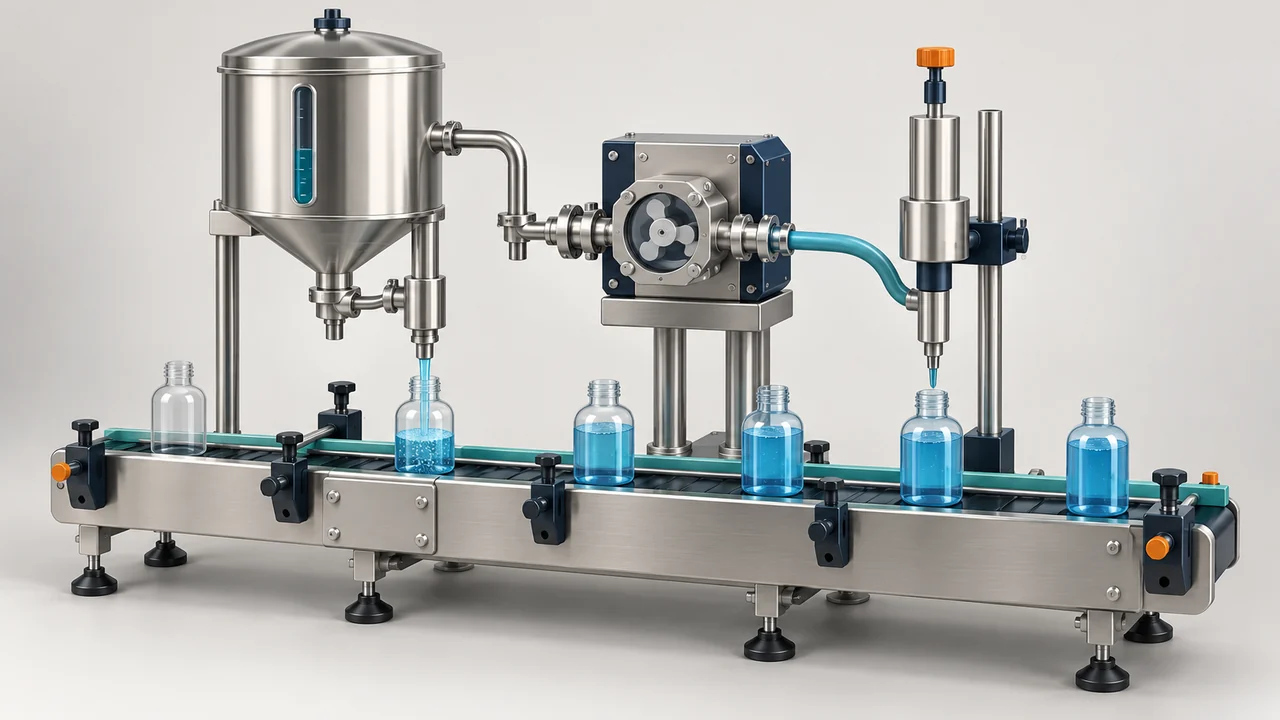
A machine described as volumetric does not necessarily use the same mechanism as another machine with that description. Flow measurement, a calibrated metering chamber and a gravity-fed timed outlet respond to different operating conditions. For a useful buying trial, identify the measurement principle first, then record the liquid supply, bottle and settings that produced the result.
A flowmeter liquid filling machine measures product passing through a selected meter. The listed volumetric filler uses a piston or metering chamber. A gravity liquid filling machine relies on an elevated supply and suitable fill control. Compare them with the same liquid and container while testing the conditions most likely to change during production.
Separate the quantity from the mechanism
Volume describes a quantity; it does not identify a single machine design. The volumetric liquid filling machine listed by H M Pharma Machines draws a charge into a piston or metering chamber before discharging it. Its suitability depends on the chamber, valves, product and dose.
Ask how an offered system establishes the quantity and what stops the fill. Record whether the setting represents chamber displacement, a meter reading or a calibrated time. This makes trial records comparable and prevents a quoted accuracy statement from being applied to a different dosing arrangement.
Choose the flow meter for the liquid
A flowmeter liquid filling machine reports delivered product through its measuring channel, allowing the controller to stop a pump or close a valve at the target. The meter technology is selected after reviewing the liquid; the product page does not imply that one meter works for every formulation.
Provide viscosity, density, temperature and other relevant product properties. Ask the supplier to explain the chosen meter's operating conditions, calibration basis and cleaning requirements. Include the supply piping, valve response and nozzle cut-off in the test, because a meter reading alone is not the finished-container result.
Evaluate chamber filling through suction and discharge
A chamber-based trial should show that the metering space fills consistently before its contents are delivered. Compare the fill range with the selected chamber size and inspect the product supply conditions used during testing. A setting that works at one dose is not evidence that every requested format has been covered.
Observe the full cycle with the actual liquid: intake, valve switching, discharge and bottle release. Ask which changes are recipes and which need different tooling. If cleaning involves removing valves or seals, include that access in the buying review rather than assessing only a continuous filling run.
Gravity trials need a recorded reservoir condition
The gravity filler uses the height difference between the supply reservoir and outlet. In a timed arrangement, quantity depends on liquid behavior and supply conditions as well as the valve-open setting. A reservoir that changes level during a run can change the conditions behind the calibration.
Specify how supply level is maintained and replenished, then examine filling after pauses and refills. Review foam, dripping, neck clearance and the available installation height. A visually consistent liquid level and a specified delivered quantity are different objectives; tell the supplier which result the process requires.
Use a trial log that exposes changing conditions
Agree the sampling method before testing and record observations at identified points in the run. Keep the independent fill checks linked to the machine setup rather than collecting an unexplained list of weights.
| Record | Reason |
|---|---|
| Liquid batch and temperature | Defines the tested product condition |
| Feed pressure, level or supply arrangement | Shows how the machine was supplied |
| Dose, bottle and nozzle | Identifies the filling format |
| Settings and calibration method | Allows the result to be traced |
| Start, steady run and restart results | Separates operating conditions |
Request evidence for the quoted filling arrangement
For a filling machine enquiry in India, send the process data and ask which dosing arrangement the supplier proposes to test. The quotation should connect the result to the selected equipment, bottle range, utilities and measurement method. Describe any required reporting, reject handling and interface to closing equipment explicitly.
A useful comparison separates confirmed trial results from items still awaiting samples or engineering review. Ask how calibration is checked after maintenance or a product change, and which operating instructions and drawings are included. These details explain how the tested arrangement can be set up again at the buyer's site.
Buyer Questions
Is flowmeter filling also volumetric filling?
Some systems use flow measurement to establish a volume, but the words alone do not identify the meter or controls. Specify the measurement basis and actual mechanism in the enquiry.
Can gravity filling be selected only from low viscosity?
No. Supply level, foaming, valve behavior, bottle opening and product compatibility also matter. Test representative liquid under the intended feed and installation conditions.
Should every trial use the same machine settings?
Use the same acceptance requirement and product samples, but record the settings needed by each mechanism. Forcing identical settings on different designs does not create a fair comparison.
Related Machine Guides
Product References and Further Details
These primary pages describe the published machine arrangements discussed in this guide. Use the actual product and component requirements when reviewing a configuration.
Discuss Your Machine Requirement
Share your product, container or closure samples, required output, process conditions and line layout with H M Pharma Machines for a technical review.
Request a Technical Review