
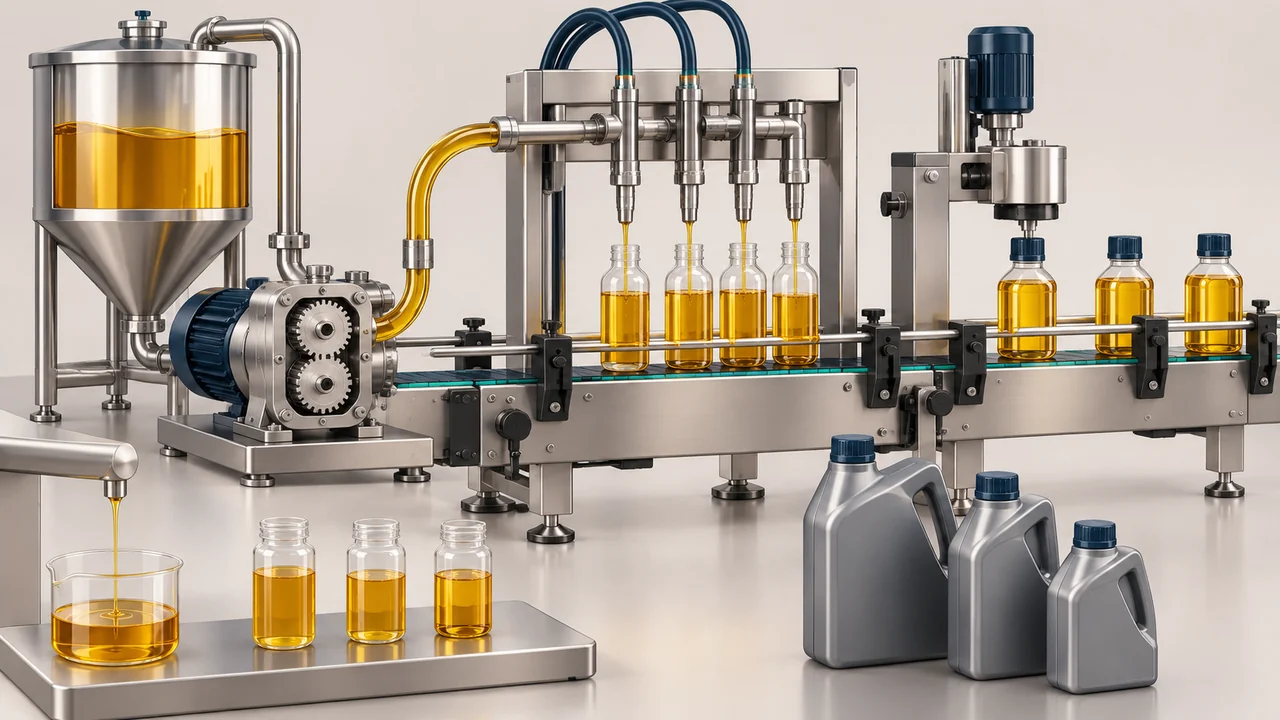
Oil filling requirements differ between a clear edible oil in a bottle and a lubricant supplied in a larger container. The word oil does not establish a dosing method, nozzle arrangement or production rate. A useful review starts with the particular product and its filling temperature, then follows it through the supply path, dosing equipment, nozzle and container transfer.
Provide viscosity at the intended filling temperature, product compatibility information, fill quantities and container samples. Test nozzle cut-off and supply conditions with the actual oil. A gear pump liquid filling machine is one option, alongside other methods listed for oil applications; select the arrangement from evidence rather than assuming all oils need the same pump.
Describe the oil at the point of filling
Give the supplier the oil grade and its operating condition, not only a product name or a viscosity value without a temperature. Describe any expected variation between delivery, storage and filling. Include density when the trial will compare weight and volume, and explain whether the product can contain additives or suspended material.
For an edible oil filling machine, review the chosen oil and cleaning requirements. For a lubricant oil filling machine, identify the specific formulation and pack. Neither application page represents one universal machine specification.
Review pump compatibility before using a reference rating
A servo gear pump doses compatible liquid through controlled pump rotation. The published gear pump liquid filling machine is a particular reference arrangement, with its own pumps, containers and operating limits. Its data should not be transferred automatically to every oil product or pack size.
Ask how the pump, seals and product-contact path suit the oil being tested. Review intake conditions, piping and the nozzle together. The broader oil selection page also lists flow measurement, load cell and servo piston options; a request for quotation should allow a different method when the sample points to one.
Measure the fill and observe the finish
An acceptable dose can still leave oil on the neck, conveyor or outside of the bottle. Record end-of-fill dripping, stringing and the condition of the closure area separately from quantity results. Observe the first bottle after a pause as well as bottles produced during steady running.
Discuss the proposed shut-off nozzle and any selected motion or pump-control functions with the supplier. Do not assume anti-drip behavior from the pump type alone. Use a trial record to show which nozzle, dose and product condition produced a clean finish, and which adjustments or components were required.
Bring the actual container and closure to the trial
Container necks, handles, shoulders and wall stiffness can affect how a pack sits beneath the nozzle and moves toward closing. Submit drawings and samples covering the intended formats, including the container that is hardest to position. Check opening clearance, nozzle alignment, bottle stability and transfer to the next machine.
A format change may involve guides, stops, nozzle position and dedicated parts as well as a dosing recipe. Ask how each part is identified and stored. Review the filled container with the actual closure so an oil smear or handling problem is discovered before the purchase scope is finalized.
Keep the oil trial record specific
| Observation | Record alongside it |
|---|---|
| Delivered quantity | Oil batch, temperature, dose and measuring method |
| Neck and bottle cleanliness | Nozzle, cut-off settings and pause condition |
| Stable product supply | Tank, line and replenishment arrangement |
| Container handling | Format parts, support and downstream transfer |
| Changeover | Cleaning steps and parts changed |
Keep rejected or reworked containers in the count. Compare useful output under the tested conditions rather than the number of mechanical cycles displayed on a control screen.
Write the quotation around the tested duty
When contacting an oil filling machine manufacturer or supplier in India, distinguish the required oil application from the desired automation level. H M Pharma Machines lists oil filling solutions selected through product and pack review, rather than one fixed oil filler model.
Specify the selected dosing method, product supply, container formats and nozzle arrangement in the quotation. List any temperature control, capping interfaces, cleaning equipment and inspection functions separately. Ask which sample conditions support the stated output and fill tolerance, and which future formats need another trial.
Buyer Questions
Does every lubricant require a gear pump filler?
No. Review the specific oil, filling temperature, quantity basis and container. The listed oil solutions include several dosing methods, and the sample trial should determine the suitable arrangement.
Why test filling after a pause?
A restart can expose supply, nozzle or cut-off behavior that a steady run does not show. Include the pause duration and restart condition in the record so results can be compared.
Can edible oils and lubricants share the same product path?
Do not assume that they can. Product compatibility, cleaning, segregation and the intended manufacturing requirements need a separate review before planning shared equipment.
Related Machine Guides
Product References and Further Details
These primary pages describe the published machine arrangements discussed in this guide. Use the actual product and component requirements when reviewing a configuration.
Discuss Your Machine Requirement
Share your product, container or closure samples, required output, process conditions and line layout with H M Pharma Machines for a technical review.
Request a Technical Review