
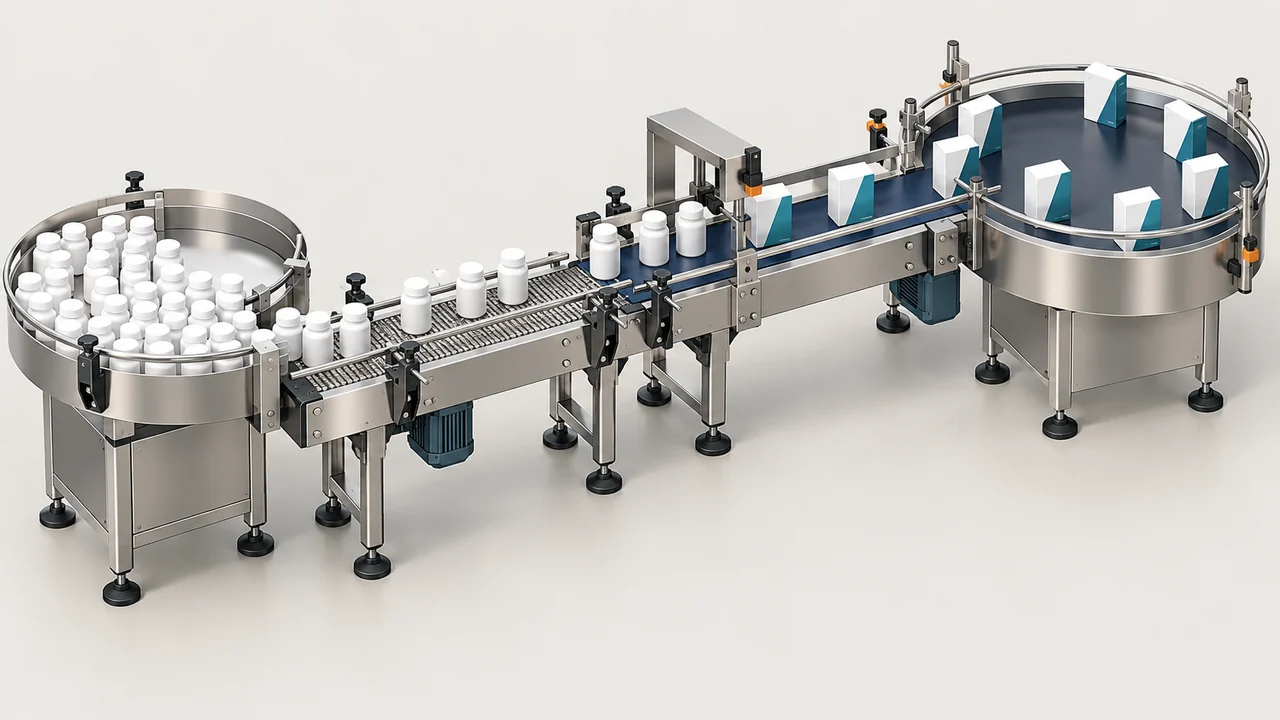
A conveyor is part of the process interface, not simply a length of moving belt. Poor transfer geometry or uncontrolled accumulation can interrupt otherwise capable machines. An infeed conveyor, wire mesh conveyor, packing conveyor and turntable have different jobs, so their selection should start with the products and operating conditions at each handoff. Assess both normal flow and what happens when the next machine pauses.
Specify the product, transfer geometry and stop-response at each connection. Size a short buffer from usable accumulation and the expected interruption, then trial it with actual containers. Confirm whether the conveyor is feeding, carrying through a process, supporting packing or collecting output; those duties need different arrangements.
Make an Interface Record for Every Transfer
Record the upstream exit and downstream entry positions, surface heights, travel direction and available floor space. Include product dimensions, mass, base shape and whether it arrives wet, warm, filled or closed. Identify the smallest and least stable formats rather than checking only the largest pack.
Review gaps, transfer plates, guide continuation and any change in direction using real samples. A container can stand on each individual conveyor yet tip at the connection. Include access for clearing an interruption without reaching into moving equipment.
Choose the Surface Around the Duty
The infeed conveyor page describes controlled presentation and spacing to a connected machine. A packing conveyor carries products between machines or workstations. Wire mesh offers an open belt for duties involving drainage, airflow or thermal exposure. A turntable uses a rotating deck and guides for feeding, accumulation or collection.
| Equipment | Primary review |
|---|---|
| Infeed conveyor | Spacing, release and downstream demand |
| Wire mesh conveyor | Product support and process exposure |
| Packing conveyor | Transfers, workstation access and pack handling |
| Turntable | Stable accumulation and controlled exit |
Calculate Usable Buffer Capacity
For a simple steady arrival, a first estimate is arrival rate multiplied by the interruption time to be absorbed, using consistent units. That is a planning estimate, not a machine capacity guarantee. Compare it with the number of containers the proposed arrangement can actually hold while maintaining acceptable spacing and handling.
Exclude inaccessible or unusable areas of a turntable from the count. Test how containers leave after accumulation, not only how many fit on the deck. Fragile, unstable or easily marked packs may limit useful buffering before the physical area is full.
Define What Happens When Flow Stops
Write down the response to downstream blockage, an empty infeed and a full accumulation point. Decide which equipment slows or stops, which sensor initiates the response and how restart is coordinated. Request the signal list and responsibility for wiring between separately supplied machines.
Variable speed alone does not establish a coordinated line. Product sensing and line-handshake control are described as application-dependent on the conveyor pages. If these functions are needed, identify them explicitly and demonstrate their behaviour rather than assuming they are part of a basic standalone conveyor.
Check Process Exposure and Operator Access
For wire mesh, review the supported product footprint, belt openings and the intended wash, drain, dry, cool or heat duty. Agree the operating environment and cleaning method before selecting belt and support materials. An open belt is not proof that a required process result will be achieved.
For packing stations, consider where operators receive, inspect and remove packs. Keep room for materials and rejected products without blocking guides or sensors. Specify work tables, lighting or coding mounts as actual requirements; the packing conveyor page treats these as configurable scope.
Trial Accumulation and Recovery
Use the proposed layout to check normal transfer, short downstream stops and restart with accumulated containers. Observe tipping, rubbing, jams, uncontrolled release and the first packs entering the next machine. Repeat with materially different formats and record guide changes.
- Confirm the usable buffer count with real packs.
- Check safe access, cleaning access and maintenance clearance.
- Identify rejected or damaged containers after the stop.
- Record sensor positions and restart conditions.
- Keep the accepted layout with the machine interface drawings.
This evidence is more useful than comparing conveyor length or turntable diameter alone.
Buyer Questions
Can a turntable guarantee uninterrupted production?
No. It can absorb a limited interruption when products remain stable and the exit is controlled. Once usable capacity is reached, the upstream process still needs an appropriate stop response.
Is a wire mesh conveyor a washing or drying machine?
The belt can support process exposure, but the required washing, draining or thermal duty depends on the complete arrangement. Specify the process equipment and acceptance result separately.
Do standalone conveyors automatically communicate with adjacent machines?
Do not assume so. Confirm sensors, signals, controls and wiring responsibility for each interface in the quotation and layout review.
Related Machine Guides
Product References and Further Details
These primary pages describe the published machine arrangements discussed in this guide. Use the actual product and component requirements when reviewing a configuration.
Discuss Your Machine Requirement
Share your product, container or closure samples, required output, process conditions and line layout with H M Pharma Machines for a technical review.
Request a Technical Review