Dissolved-Gas Uptake and Transfer: A Dynamic Trace Can Contain Two Rates
A dissolved-gas trace measures accumulation; transfer into the liquid and consumption within it can both contribute.
Read Full Article →
Practical guides for selecting, planning, operating and maintaining pharmaceutical manufacturing and packaging machinery.
Latest articles
Practical guides to washing, filling, capping, labeling and machine planning. Each card has a distinct Library date; actual publication and revision dates remain inside the article.
Machine guide library
Browse guides by their distinct Library date. These collection labels are separate from actual publication and revision dates shown inside each article.
A dissolved-gas trace measures accumulation; transfer into the liquid and consumption within it can both contribute.
Read Full Article →Henry constants can be reciprocal quantities; preserve the equation and units before using a reported number.
Read Full Article →Compare advection and diffusion over the same distance before drawing conclusions about a transport problem.
Read Full Article →Mass and thermal transport analogies need their own diffusivities, even for the same fluid.
Read Full Article →A Sherwood-number correlation carries a coefficient and characteristic-length convention, not just a dimensionless name.
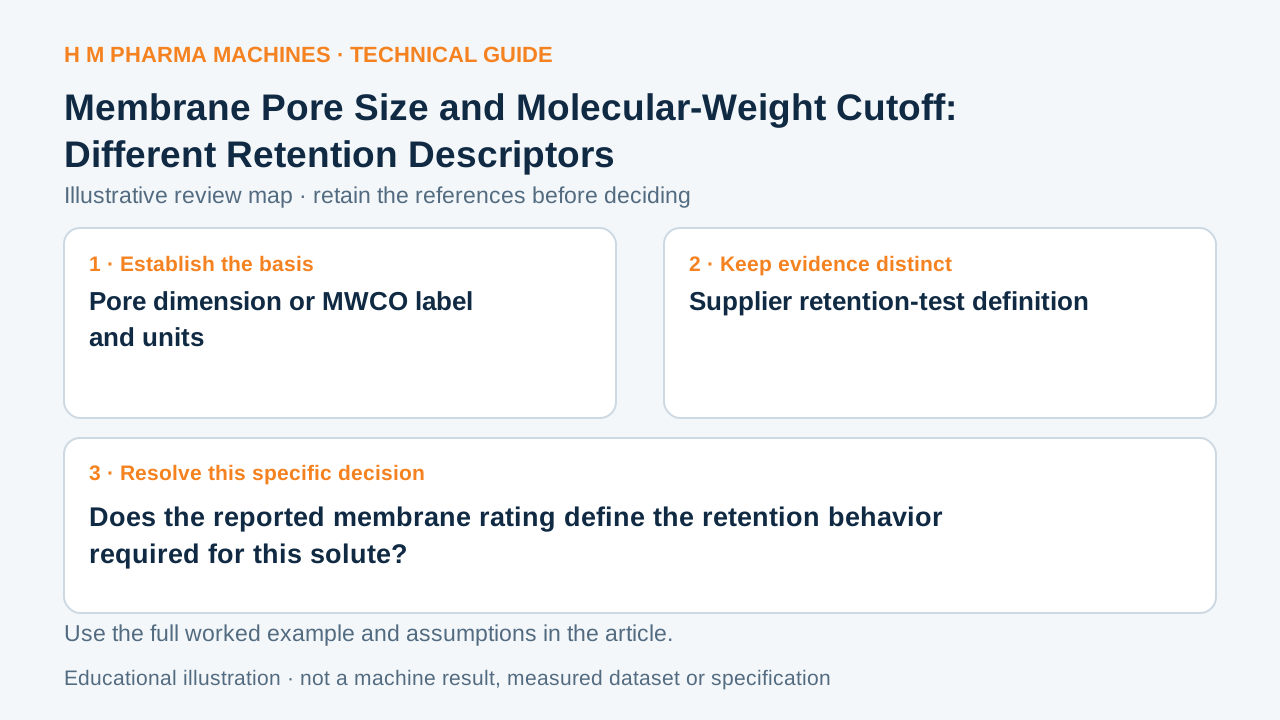
Read Full Article →A membrane rating expressed as molecular weight is not a direct conversion of a pore dimension in micrometres.
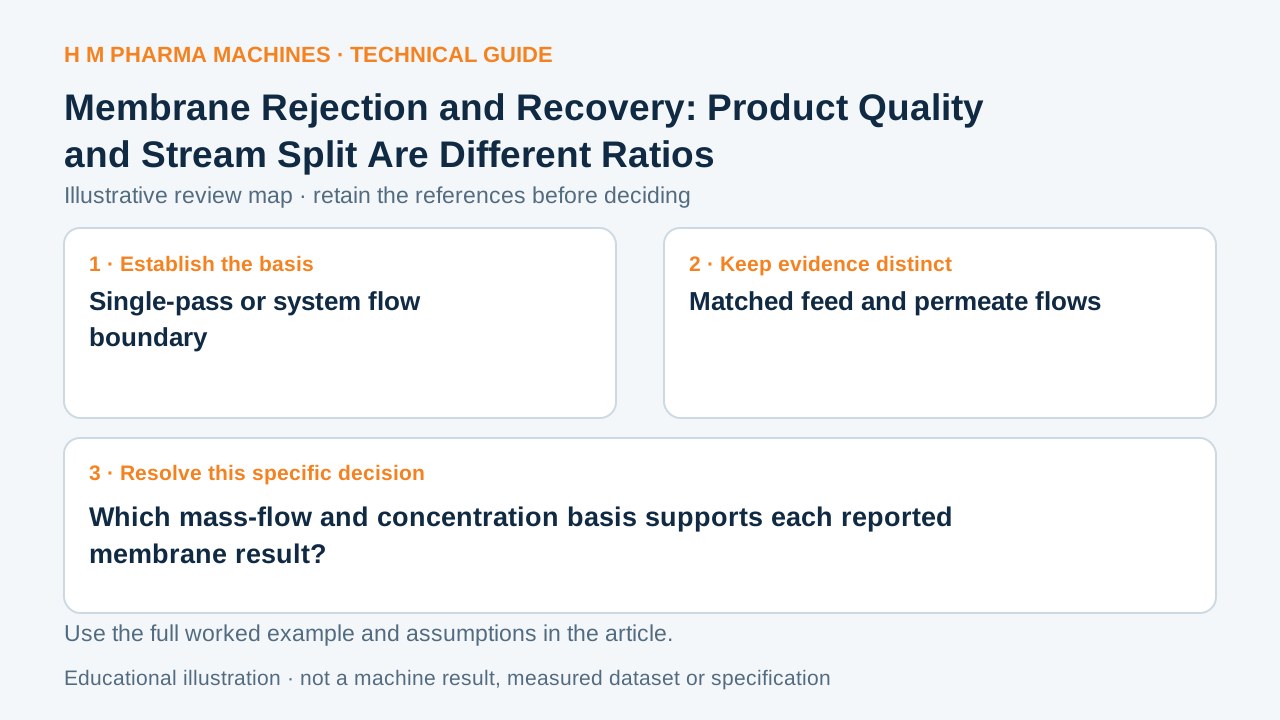
Read Full Article →Keep the fraction of feed becoming permeate separate from how strongly the permeate concentration differs from feed.
Read Full Article →Collect measured and proposed machine-room conditions, then ask for configuration-specific suitability evidence without inventing ambient operating limits.
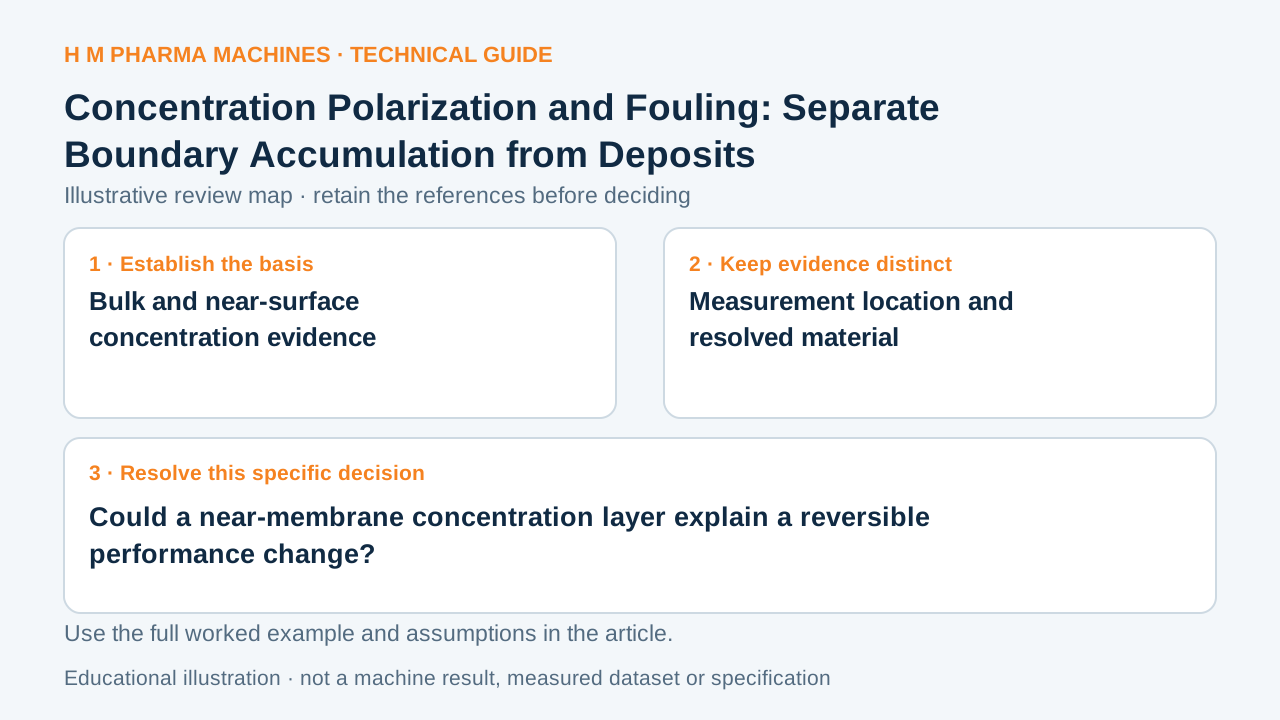
Read Full Article →A concentration layer near a membrane can affect performance before a deposit or persistent surface change is established.
Read Full Article →A crossflow module has feed, retentate and permeate pressures; the axial pressure loss and transmembrane comparison are different.
Read Full Article →Follow the retained-material route when comparing crossflow and dead-end filtration.
Read Full Article →For the stated reverse-osmosis transport model, hydraulic pressure difference is only part of the driving term.
Read Full Article →A pressure-flow review can assign resistance to the medium and to deposited cake rather than hiding both in one number.
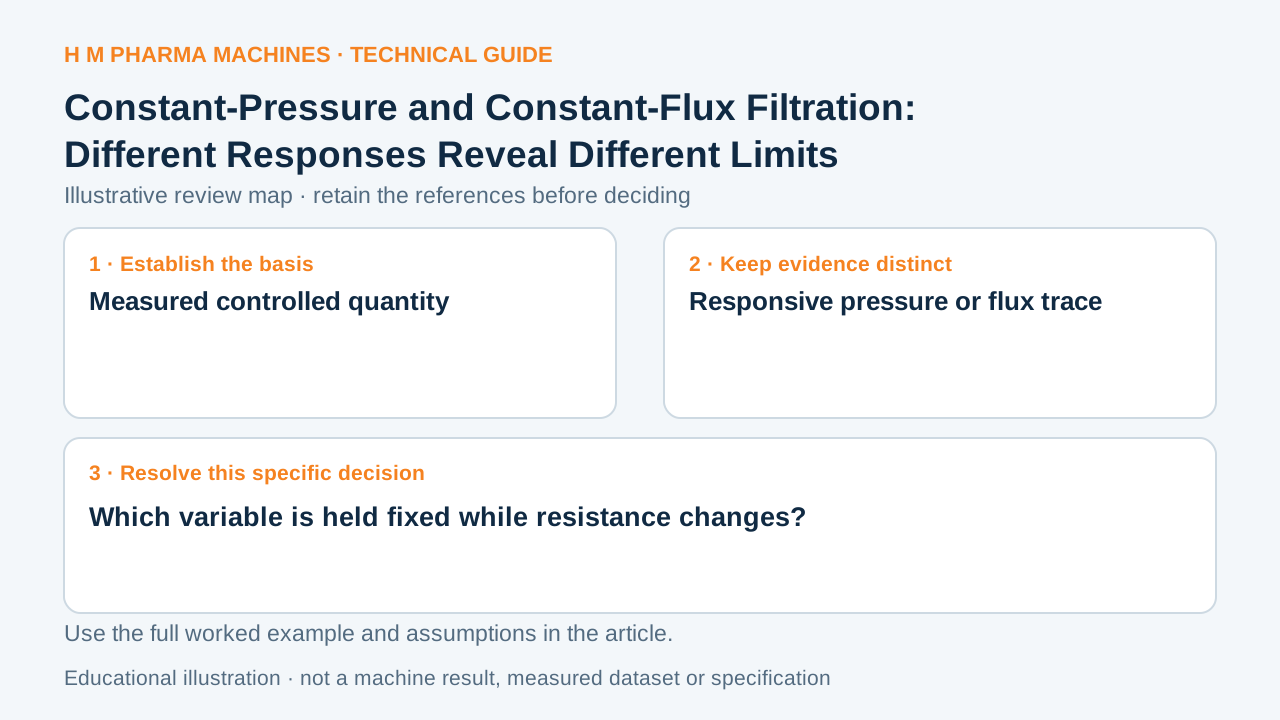
Read Full Article →Changing resistance appears as different measured responses when a filtration review holds pressure or flux fixed.
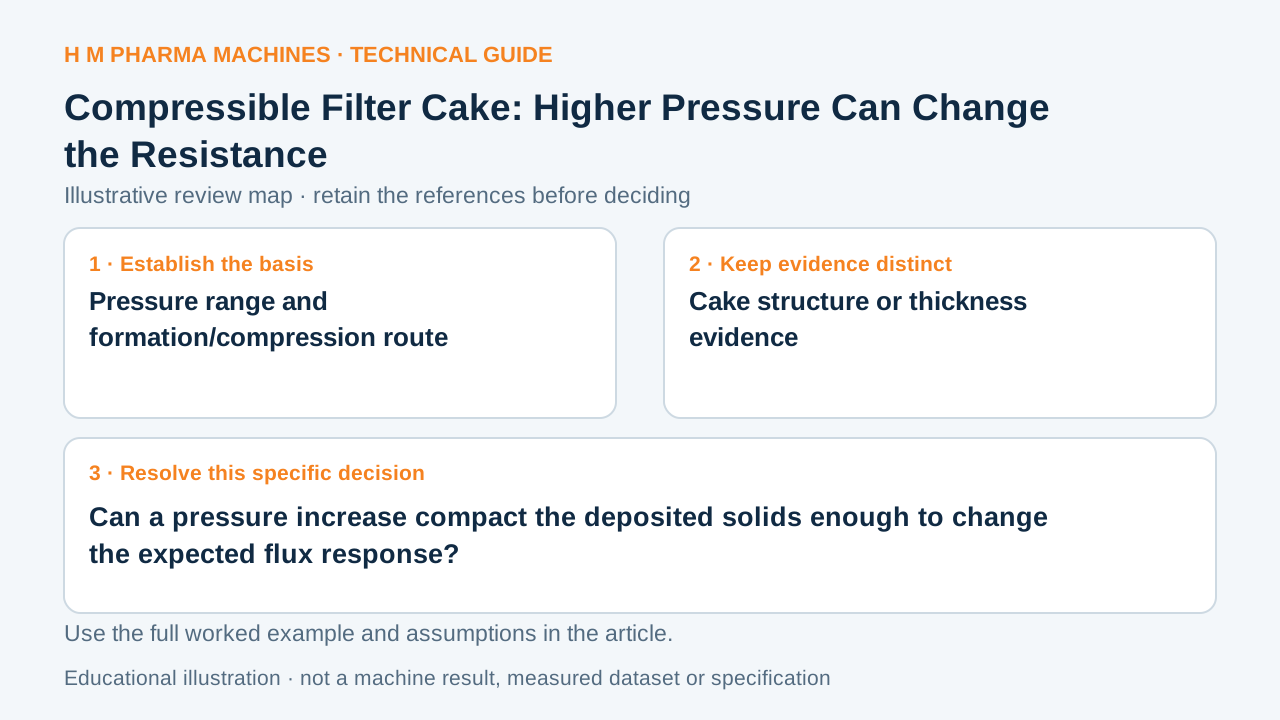
Read Full Article →Raising pressure can also compact a cake, so a fixed-resistance extrapolation needs evidence.
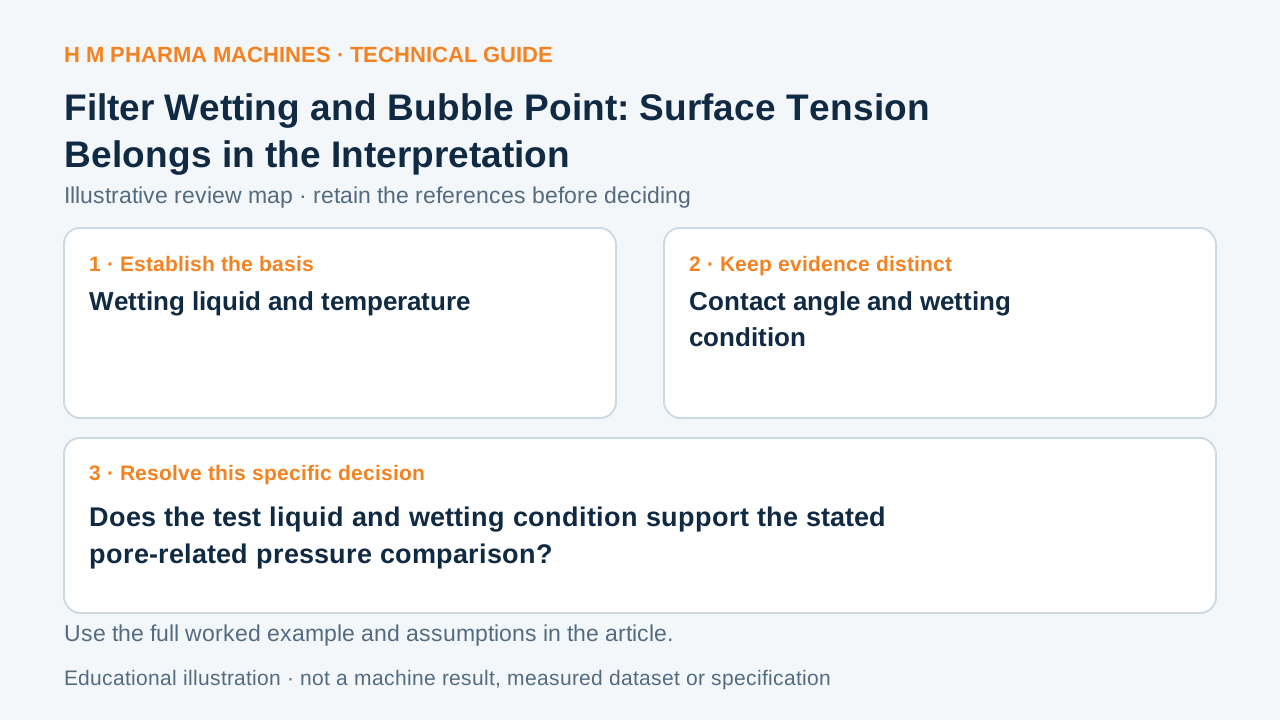
Read Full Article →A bubble-point comparison includes the wetting liquid and contact condition, not only a pore-related dimension.
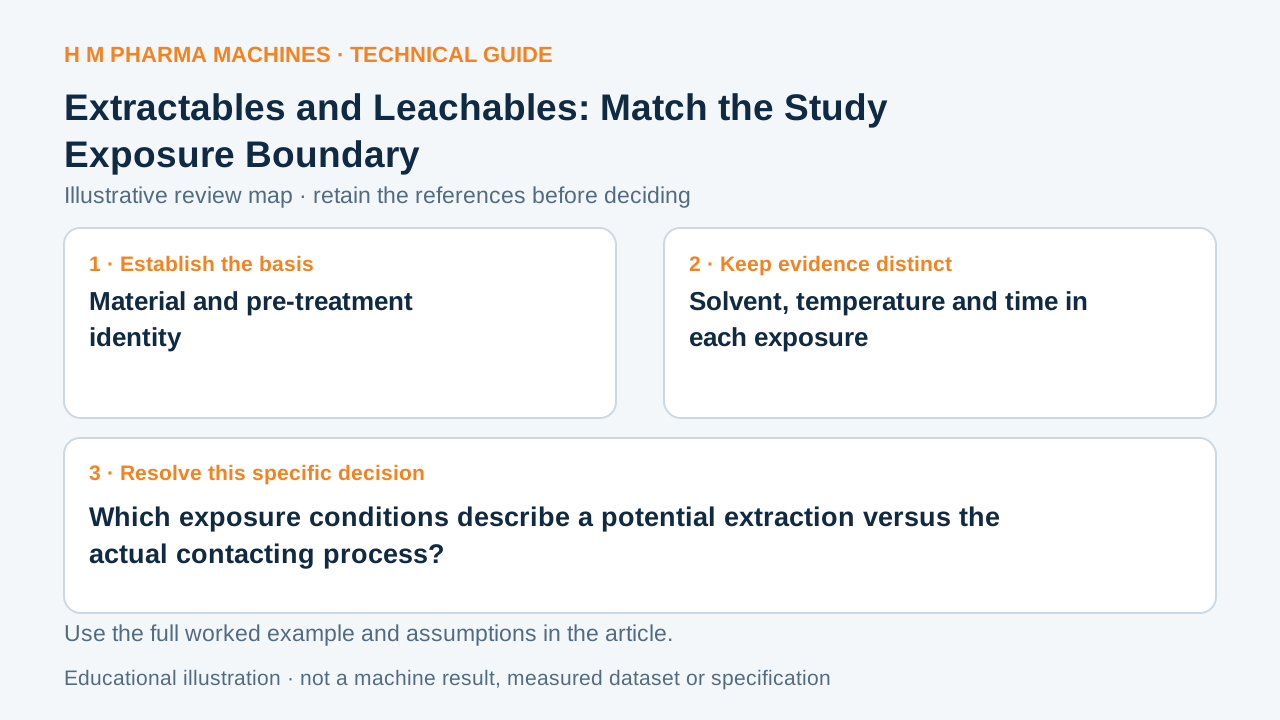
Read Full Article →An extraction study and an actual contacting process can describe different exposure boundaries.
Read Full Article →Missing solute after filtration may remain in held liquid or associate with contacted surfaces; check both routes.
Read Full Article →Rotational speed becomes a relative centrifugal acceleration only after the location radius is specified.
Read Full Article →A concentration copied into a tank trial sheet needs its denominator. A litre of solution and a kilogram of solvent describe different inventories.
Read Full Article →A mass-percent liquid specification cannot be converted into moles per litre from the percent number alone. The density and solute formula belong in the calculation.
Read Full Article →A trace result labelled ppm needs the underlying ratio. Milligrams per kilogram and milligrams per litre coincide numerically only under an additional density condition.
Read Full Article →A component’s amount fraction depends on what is counted. Molecules, formula units and dissolved ionic species cannot be exchanged without redefining the mixture inventory.
Read Full Article →A weighed crystalline reagent can include water within its formula. A mass calculation must use that hydrated formula before it is compared with an anhydrous-solute amount.
Read Full Article →Blog overview · Latest articles · Machine guide library
Application-based guidance for selecting equipment according to product, container, closure and output.
Practical considerations for connecting washing, filling, capping, labeling and conveying machinery.
Useful information for changeovers, cleaning, preventive maintenance and dependable machine performance.
Share your product, container, closure, required output and process details with our engineering team.