Cake-Wash Channeling: Collected Wash Volume Does Not Prove Uniform Contact
Total wash volume does not reveal whether wash liquid contacted every region of a filter cake.
Read Full Article →
Practical guides for selecting, planning, operating and maintaining pharmaceutical manufacturing and packaging machinery.
Latest articles
Practical guides to washing, filling, capping, labeling and machine planning. Each card has a distinct Library date; actual publication and revision dates remain inside the article.
Machine guide library
Browse guides by their distinct Library date. These collection labels are separate from actual publication and revision dates shown inside each article.
Total wash volume does not reveal whether wash liquid contacted every region of a filter cake.
Read Full Article →Relative humidity and water per mass of dry air have different denominators and respond differently to pressure.
Read Full Article →Use a stated dry-air mass basis when comparing the energy content of moist-air streams.
Read Full Article →A wetted temperature sensor reports an evaporation-cooling state rather than simply another dry temperature.
Read Full Article →Saturation can be reached by adding evaporated water or by cooling toward condensation; those paths change different inventories.
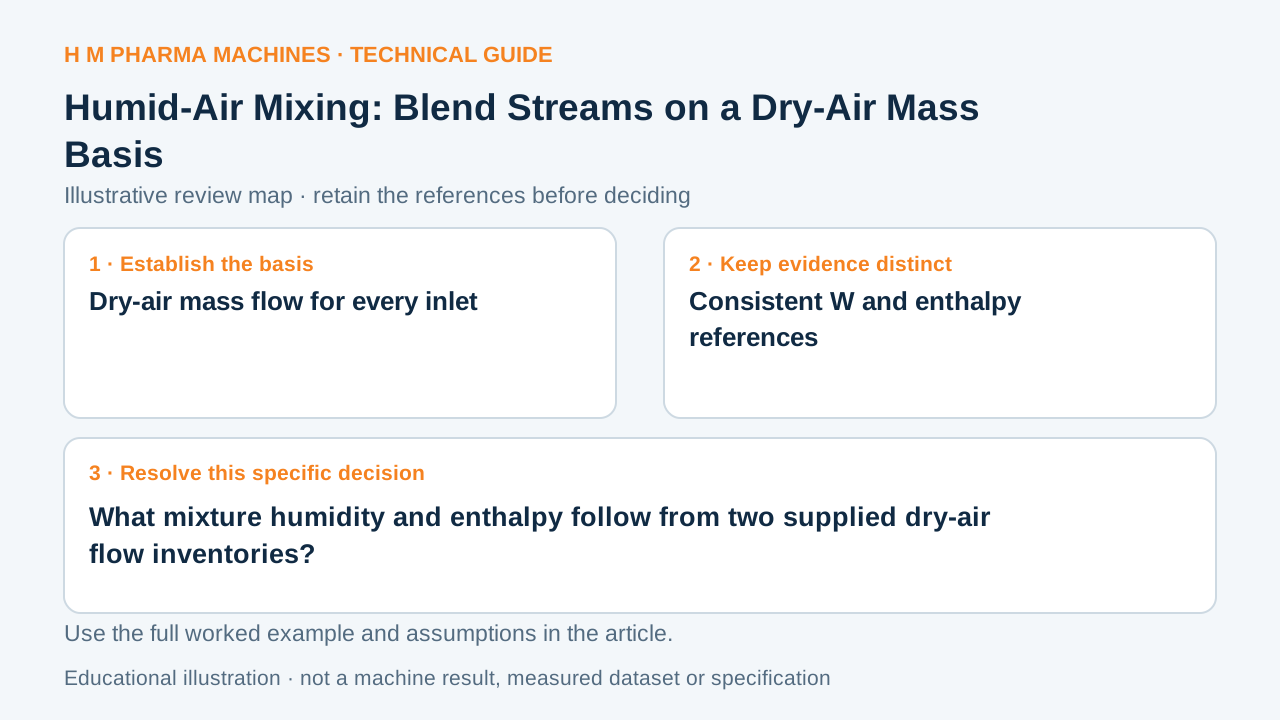
Read Full Article →Mix moist-air streams using dry-air mass fractions and retain both water and energy balances.
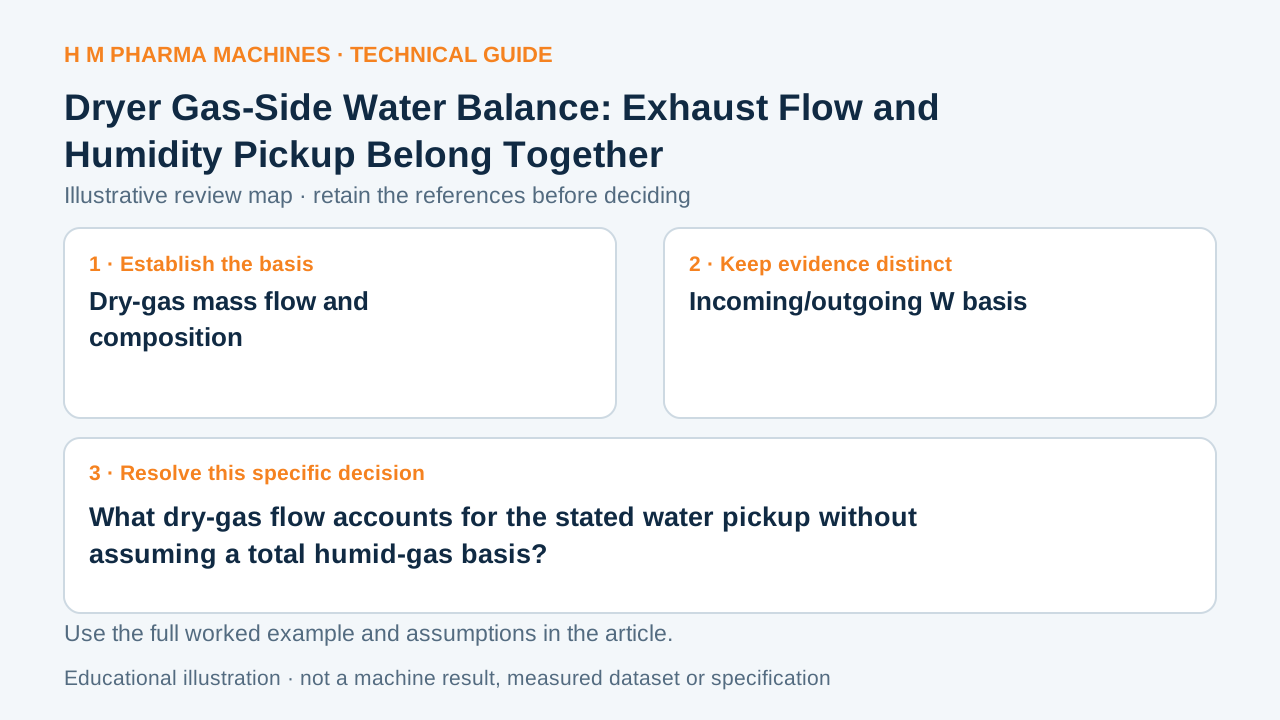
Read Full Article →Close the water balance across drying gas and solids before judging the apparent moisture removal.
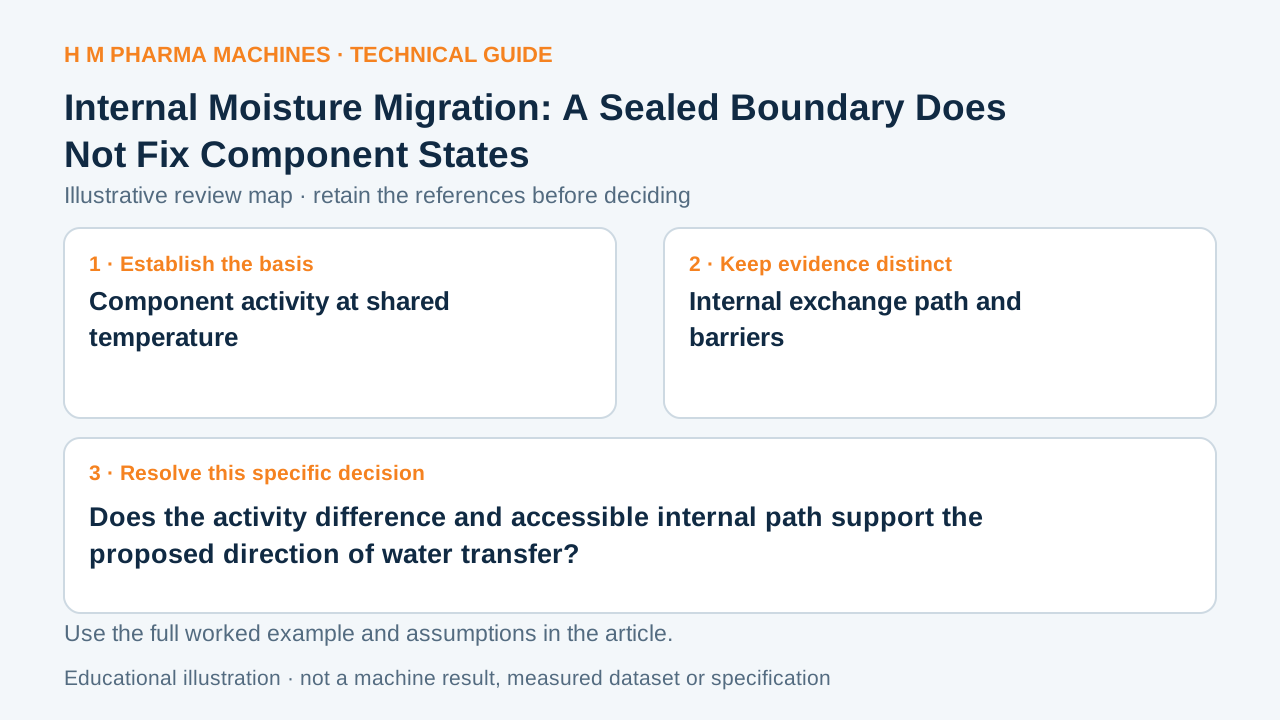
Read Full Article →Review the direction of water exchange between connected components instead of assuming that a sealed outer package stops internal redistribution.
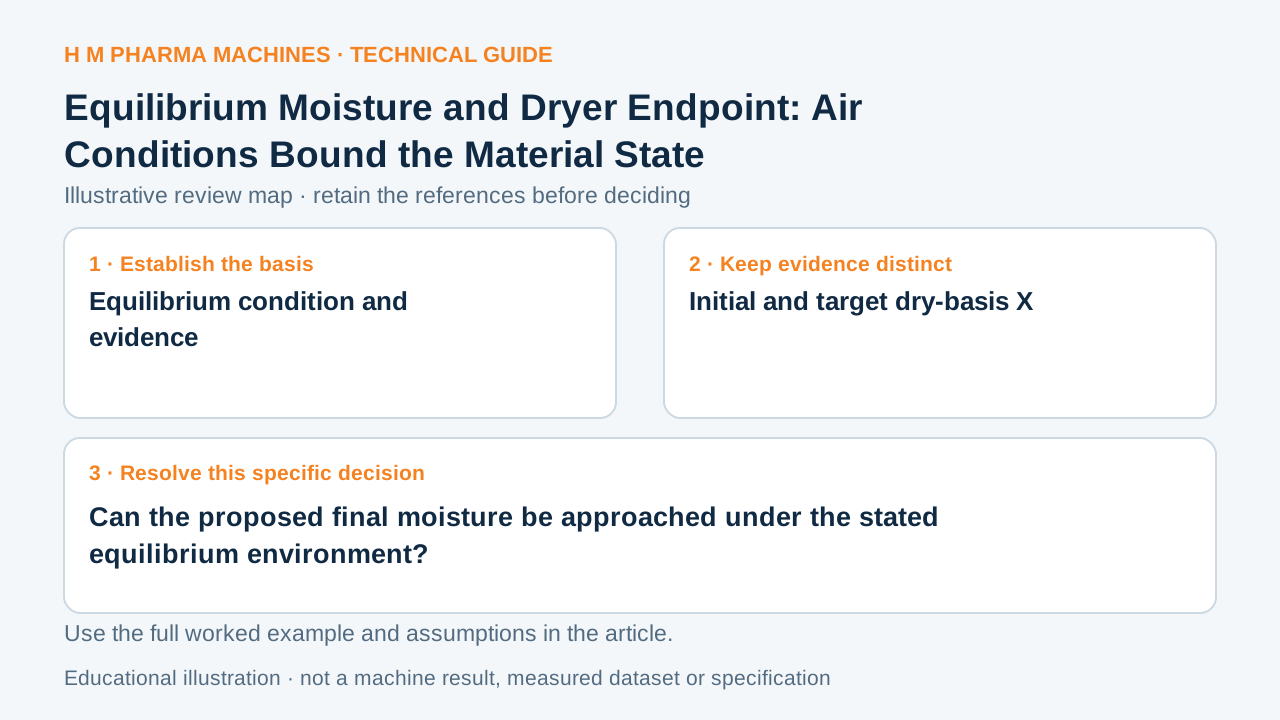
Read Full Article →Compare a requested endpoint with equilibrium moisture at the actual gas condition before extending the drying time.
Read Full Article →Check the concentration basis and units before using a mass-transfer Biot number to compare resistances.
Read Full Article →An internal air circuit carries water around the dryer; the external purge must account for its net removal.
Read Full Article →Record changing dimensions during drying before keeping area and diffusion length fixed in a model.
Read Full Article →A stiffening outer skin can constrain continued core shrinkage; assess that mechanical condition separately from a drying-rate curve.
Read Full Article →Identify the phase carrying water through the porous material before assigning one transport coefficient to the whole drying path.
Read Full Article →Track the internal evaporation boundary when a receding-front model is proposed; a dry outer surface does not locate the remaining wet region.
Read Full Article →Identify which water state is removed before interpreting a freeze-drying stage or an endpoint.
Read Full Article →Treat shelf temperature as an external thermal condition and product temperature as a material response during sublimation.
Read Full Article →Name the material transition being assessed before applying a critical temperature to a freeze-drying interpretation.
Read Full Article →A pressure difference can drive sublimation vapour through a dry layer only in conjunction with a defined transport resistance.
Read Full Article →Separate gas-mediated heat transfer from contact and radiation when interpreting a pressure change in a freeze dryer.
Read Full Article →Convert droplet solids inventory into particle geometry only after stating what structure the particle retains.
Read Full Article →A wall-deposition explanation needs the material state at contact and the contact history, not only an outlet temperature.
Read Full Article →Keep liquid-pressure power and atomizing-gas input separate when comparing hydraulic and two-fluid spray routes.
Read Full Article →Check the disturbance wavelength before interpreting the growth rate of an ideal capillary instability.
Read Full Article →Blog overview · Latest articles · Machine guide library
Application-based guidance for selecting equipment according to product, container, closure and output.
Practical considerations for connecting washing, filling, capping, labeling and conveying machinery.
Useful information for changeovers, cleaning, preventive maintenance and dependable machine performance.
Share your product, container, closure, required output and process details with our engineering team.