
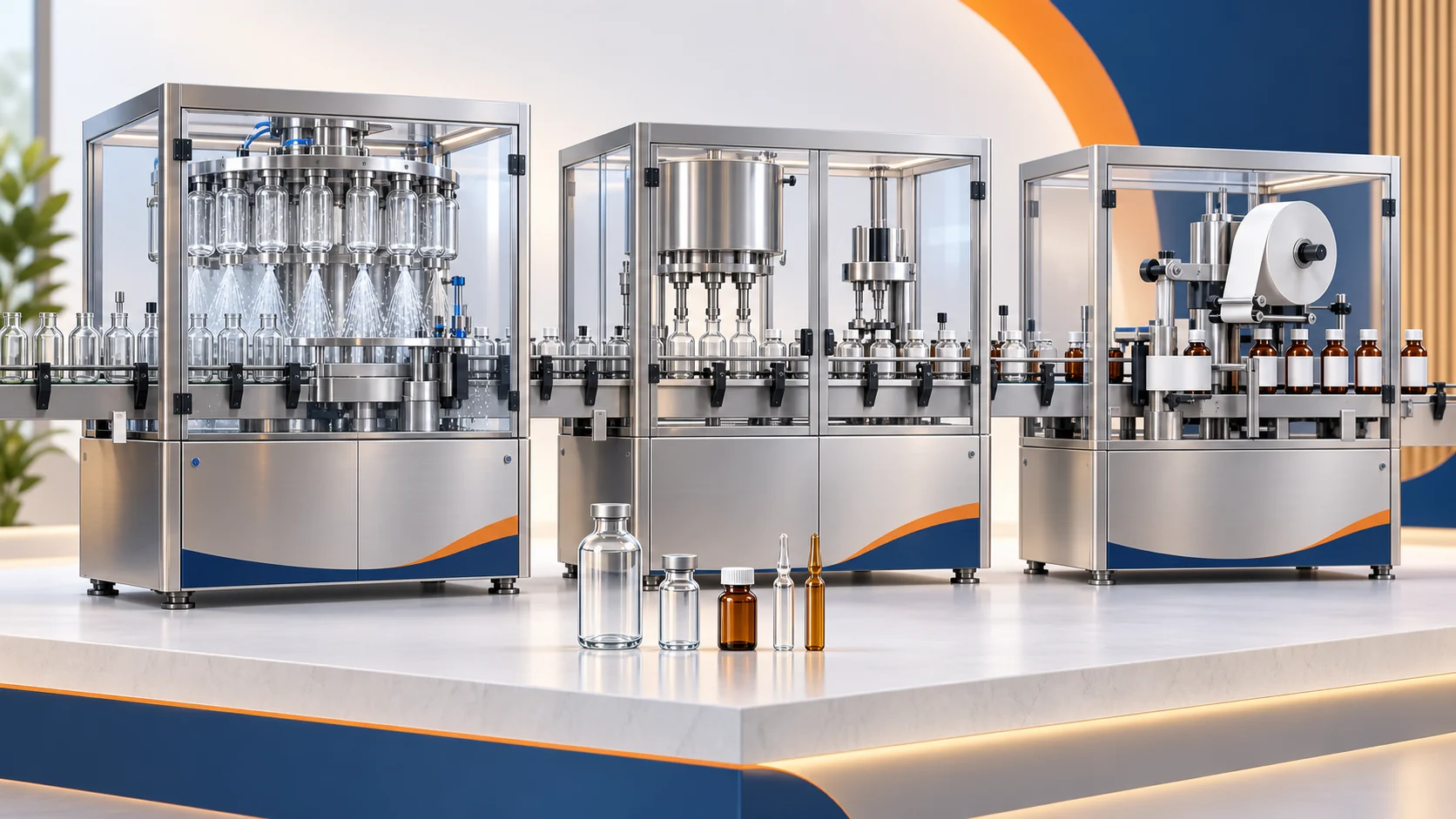
A pharmaceutical bottle washing machine and a bottle labeling machine sit at different stages, but they depend on the same container. Its dimensions affect washer handling; its filled weight affects transfer; its shape and surface affect label application. Buying these machines separately without a common format review can leave problems between otherwise suitable machines.
This guide uses non-sterile oral-liquid bottles as its planning example. It connects the bottle washing machine options with the bottle labeling machine range, while identifying what filling, capping and conveying must contribute. It is a compatibility checklist for a technical discussion, not an approved process design or a description of an installed customer line.
1. Start with One Bottle-Format Record
Create one controlled record for every bottle format and use it across all machine inquiries. “Round bottle” and nominal capacity leave too much undefined. Record the body diameter or width and depth, overall height, neck finish, base profile, material, dimensional tolerances and the intended labeling panel.
Include empty and filled samples, the intended liquid, actual closures and production-quality labels on their specified liner and roll. A light empty bottle can behave differently after filling. A stable bottle can still have a tapered or recessed panel that complicates labeling. Samples should represent the formats you intend to run, rather than only the easiest example.
- Product: fill quantity, viscosity, foaming behavior, temperature and cleaning requirements.
- Closure: cap type, neck compatibility, orientation and agreed closing requirement.
- Label: dimensions, material, application position, roll details and permitted placement variation.
- Handling: machine direction, conveyor height, transfer gaps and format-specific guides.
Use the machine change-parts guide to identify where grippers, star wheels, feed worms or guides need a format-specific review. A common bottle specification does not mean every machine uses the same change parts.
2. Confirm the Washing-to-Filling Handoff
Select bottle washing from the approved cleaning requirement and handling method. Compare the rotary gripper bottle washer and linear tunnel bottle washer against the actual container. Confirm bottle support, inversion where applicable, nozzle access, washing media, discharge orientation and the proposed transfer arrangement.
The key question at discharge is: what condition must the bottle be in before the next operation? Agree the required drainage, any residual-water limit, handling protection and allowable waiting conditions with the site's process team. Do not assume that washing includes a drying stage, or that an air stage proves a container is dry enough for the intended liquid.
Define water and compressed-air requirements at the machine connection, along with drains, utility monitoring and access for cleaning. If the filler pauses, agree how bottle discharge stops and how waiting containers are managed. The pharmaceutical bottle washing guide covers the washing process and utility review in greater detail.
3. Match Filling and Capping to That Same Bottle
Review bottle filling technologies using the actual liquid and fill requirement. A dosing method suitable for one viscosity or foaming behavior may need a different configuration for another product. The liquid filling machine selection guide explains that decision without reducing it to bottle size alone.
At the outlet, confirm filled-bottle stability, transfer spacing and the condition of the neck and exterior before closing and labeling. Assess the proposed screw, ROPP and other capping options with the actual closure and bottle neck. Define how missing, incorrectly presented or unsuccessfully closed containers should be handled; do not assume a detection or rejection function is included.
Where coding or inspection is required, agree its position in the process and who supplies the interface. Write these decisions into the scope so that an optional accessory does not become an unresolved installation dependency.
4. Approve the Bottle as It Reaches the Labeler
Labeling suitability should be checked with the bottle in its intended production condition, including the filled weight and fitted closure. Agree the acceptable exterior condition, label position and presentation before the dispensing point. The machine supplier and label supplier should review adhesion or application concerns involving moisture, product residue, a difficult surface or a changed label stock.
A round bottle sticker labeling machine rotates an approved cylindrical container during wrap-around application. A square bottle double-side labeler must present the correct faces, while an oval bottle labeling machine requires the appropriate control of bottle orientation. These are different handling problems, even when nominal bottle capacities match.
Confirm the label width and length, liner, winding direction, roll details and the dispensing sensor using the intended labels. Specify whether labels must align with a bottle feature, another label or printed information. Changes to the bottle supplier, label material or roll construction should trigger a compatibility review before routine production.
Use the existing bottle labeling machine selection guide for the full geometry and label checklist. During line review, concentrate on the additional question: will the upstream equipment deliver a stable, correctly presented bottle at the agreed rate?
5. Compare Sustainable Line Output
Ask every supplier to state the conditions behind an output figure: approved bottle, product, fill quantity, closure, label and operating arrangement. Compare rates for the same format. A maximum machine rating obtained under different conditions is not a finished-line commitment.
Also review stops for replenishment, format changes and clearing faults. A bottle infeed or collection turntable may support the agreed handling arrangement, but temporary accumulation does not remove a sustained capacity mismatch. Define how adjacent machines pause and restart when one section stops.
6. Use a Machine-Handoff Approval Matrix
Record each interface once and have both connected equipment suppliers review it. Keep unresolved conditions visible instead of assuming a shared conveyor will solve them.
| Handoff | What the Next Stage Needs | What to Confirm Together |
|---|---|---|
| Washing to filling | Approved bottle condition and orientation | Drainage, waiting conditions, transfer height and stop response |
| Filling to capping | Stable filled bottle and compatible neck/closure | Spacing, closure presentation and agreed fault handling |
| Capping to labeling | Closed bottle with acceptable exterior and label panel | Orientation, surface condition, spacing and label registration |
| Labeling to collection | Controlled discharge of the labeled bottle | Collection capacity, inspection scope and blocked-outlet response |
For each row, name the responsible party and the evidence needed for approval. That evidence may include a drawing, interface description or an agreed sample trial; it should not be inferred from an illustration or a general brochure.
For an existing line, record the equipment that will remain in place. Share its actual transfer dimensions, operating direction and available interface information before fixing the new layout. Identify who supplies connecting conveyors, guides and control connections. A quotation for a standalone machine should not be read as approval of those surrounding interfaces.
7. Prepare a Focused Review and Trial Checklist
Turn the interface decisions into a User Requirements Specification (URS) and an agreed review plan. Discuss the required machine documentation and qualification support before ordering, including which records and tests are included in the project.
- Approve every bottle, product, closure and label combination in scope.
- Check the complete layout, operating direction, access and transfer heights.
- Confirm utility conditions and responsibility for site connections.
- Agree trial materials, operating conditions and acceptance criteria in advance.
- Review start, stop, restart and downstream-blockage behavior across interfaces.
- Confirm change parts, format settings, cleaning access and operator training scope.
- Record unresolved items and who must close them before acceptance.
Use an agreed trial to check connected behavior, rather than only whether each individual machine runs. A single successful demonstration does not approve untested formats or establish performance under every production condition.
Record which bottle, product, closure and label were used, the settings tested and any adjustments required. Include representative starts and stops as well as continuous running. Where one format needs different guides or settings, identify them in the format record. This makes the approved result traceable and gives operators a clearer basis for setup and later change review.
Where Ampoules and Vials Need a Different Review
Do not transfer this oral-liquid bottle sequence directly to injectable containers. Dedicated ampoule washing machines and vial washing machines have their own container handling and downstream interfaces. Filling, sealing or closure arrangements and any required sterilization or depyrogenation must follow the approved process. The ampoule versus vial washing guide explains the platform differences and the information needed for that separate review.
Frequently Asked Questions
Can machines from different suppliers form one bottle line?
They may be integrated when the approved formats, transfer dimensions, direction, output and control interfaces are compatible. Assign responsibility for integration and confirm it through the agreed drawings and trials.
Does bottle washing automatically prepare the surface for labeling?
No. Washing occurs earlier in the process. Filling, handling and the bottle material also affect the condition reaching the labeler. Agree the required surface condition and assess the actual bottle with its intended label.
Can one labeler handle round, square and oval bottles?
Do not assume this from a broad bottle-size range. Container rotation, face orientation and stabilization differ. Every geometry and label application requires a review of the proposed machine configuration.
What should be sent before requesting a complete-line quotation?
Send controlled bottle drawings and samples, liquid details, fill quantity, closures, label rolls, target output, utilities and available layout. Identify existing equipment and clearly list which operations the new supply must include.
Plan Your Bottle Washing and Labeling Line Together
Share your bottle formats, liquid, closures, label samples and proposed layout. H M Pharma Machines can review the required washing, filling, capping and labeling equipment against the application and agreed project scope.
Request a Bottle-Line Review Email Your Requirements