Variance Homogeneity: Distribution Shape Matters to the Test Choice
An equal-variance test depends on the distributional assumptions behind it. A different outcome can reflect method sensitivity rather than an arithmetic error.
Read Full Article →
Practical guides for selecting, planning, operating and maintaining pharmaceutical manufacturing and packaging machinery.
Latest articles
Practical guides to washing, filling, capping, labeling and machine planning. Each card has a distinct Library date; actual publication and revision dates remain inside the article.
Machine guide library
Browse guides by their distinct Library date. These collection labels are separate from actual publication and revision dates shown inside each article.
An equal-variance test depends on the distributional assumptions behind it. A different outcome can reflect method sensitivity rather than an arithmetic error.
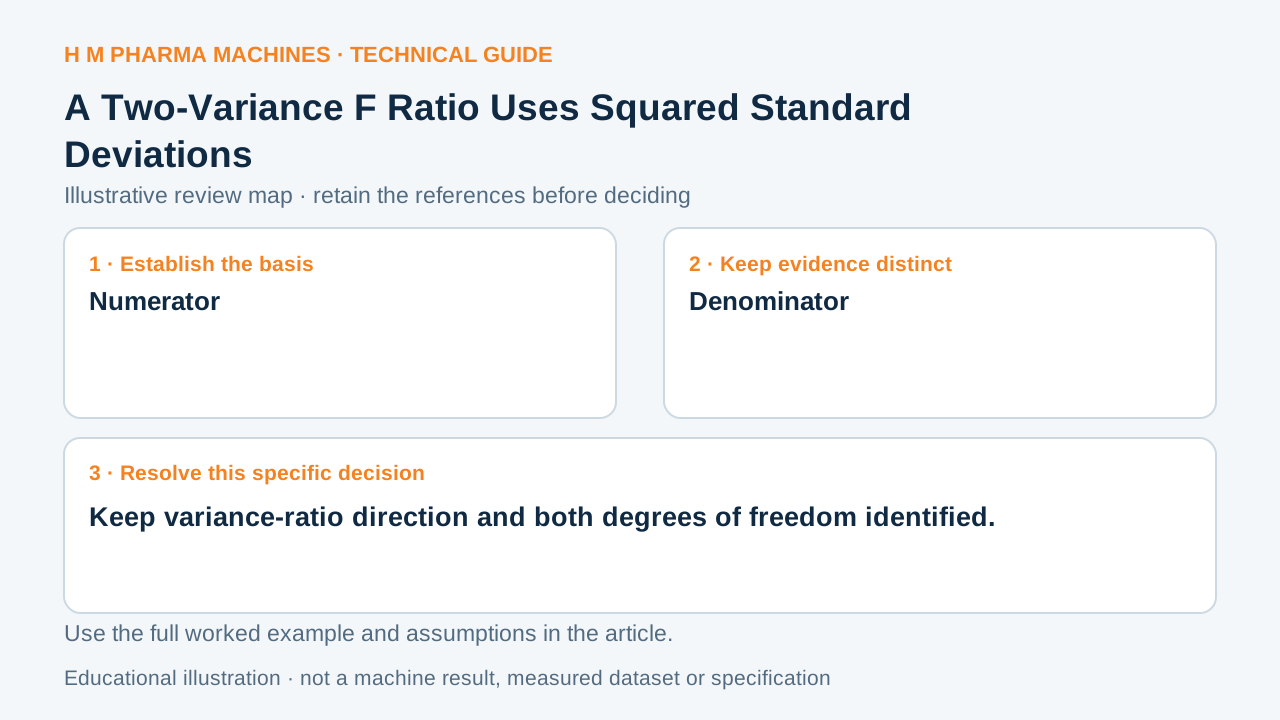
Read Full Article →When comparing two spreads with an F ratio, retain squared units, numerator identity and the degrees of freedom associated with both samples.
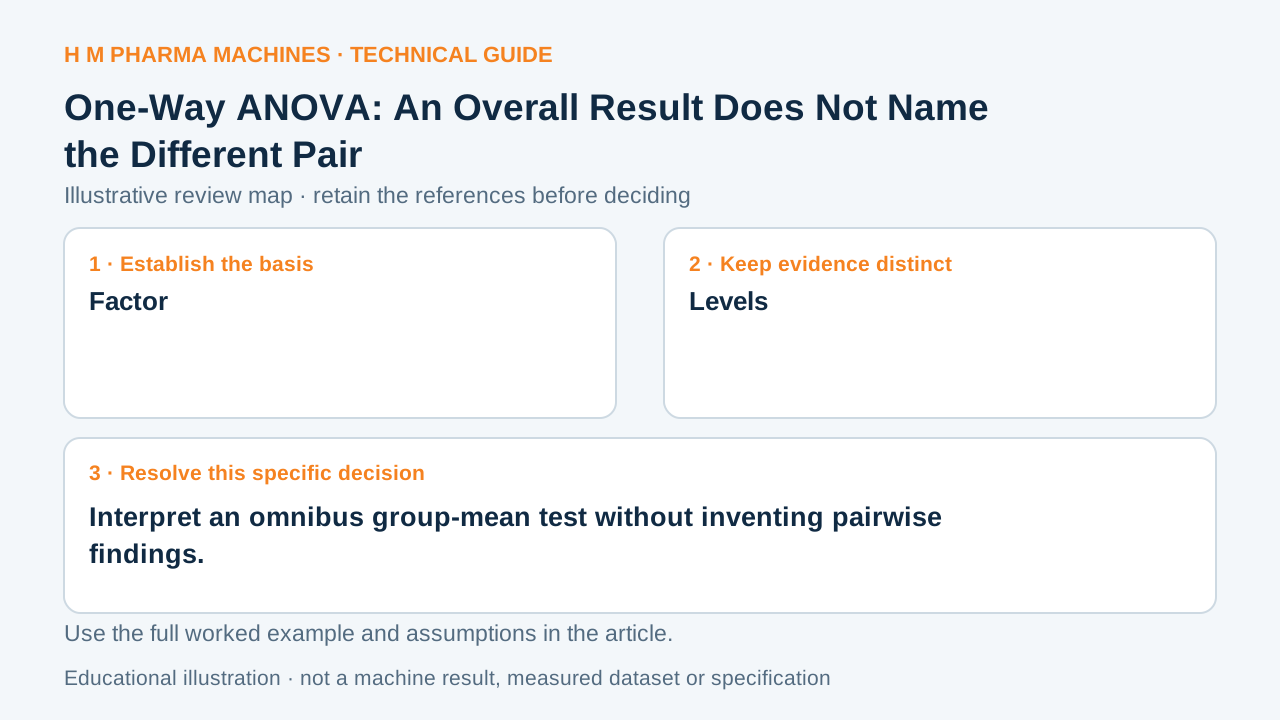
Read Full Article →An overall group-mean test can show evidence of a difference somewhere without identifying every pair. Preserve that scope in the trial conclusion.
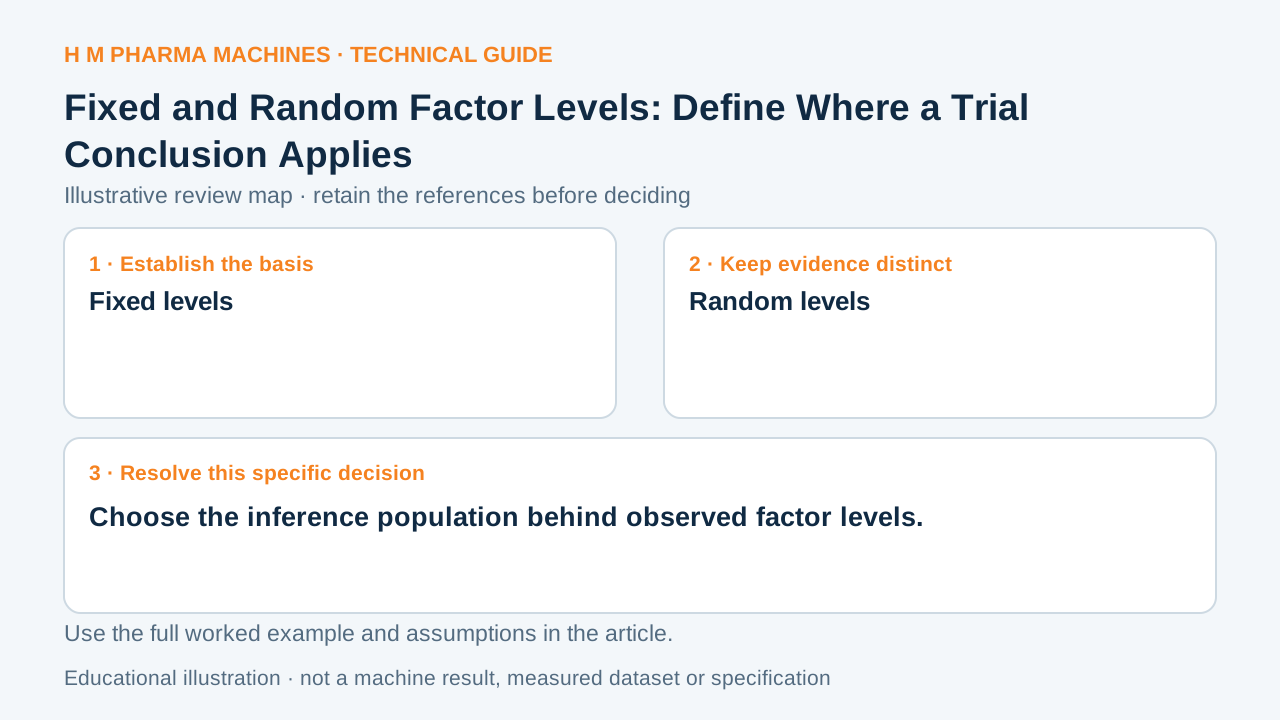
Read Full Article →Comparing particular settings and estimating variability across a wider population of batches require different inference scopes, even with similar-looking tables.
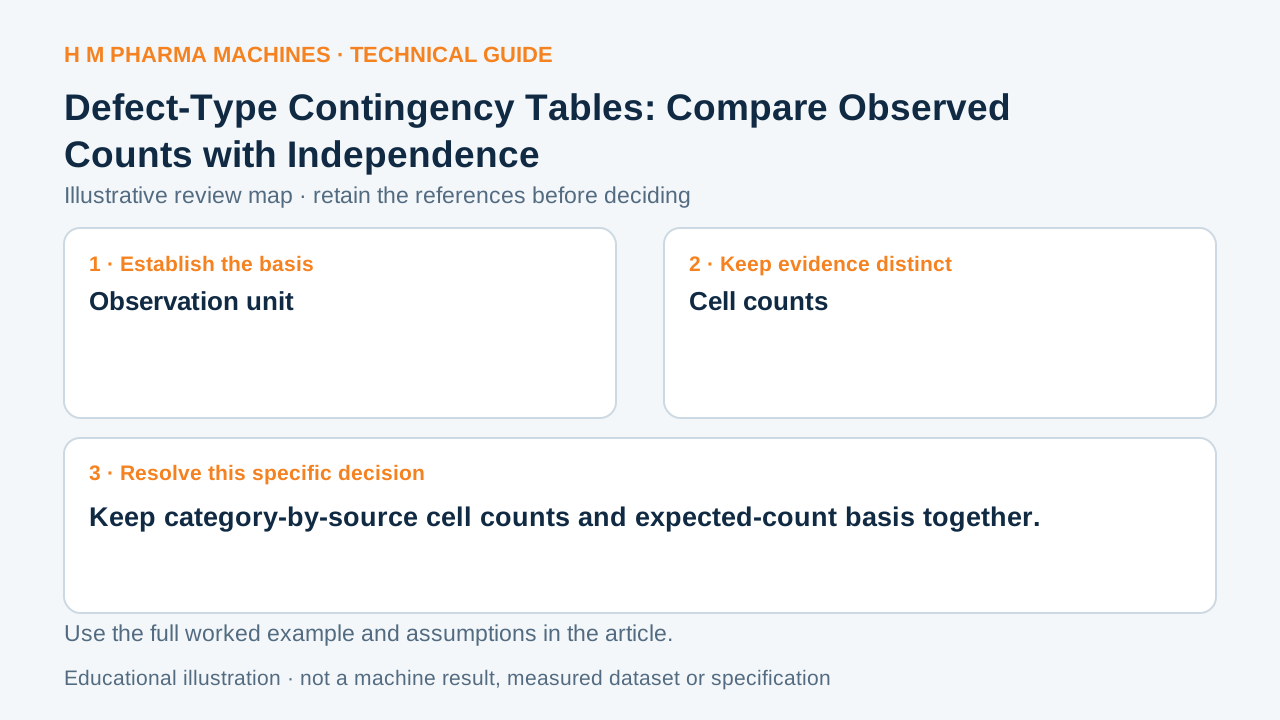
Read Full Article →A defect-type-by-source table asks whether classifications are associated. Preserve cell counts and expected counts instead of comparing percentages without their totals.
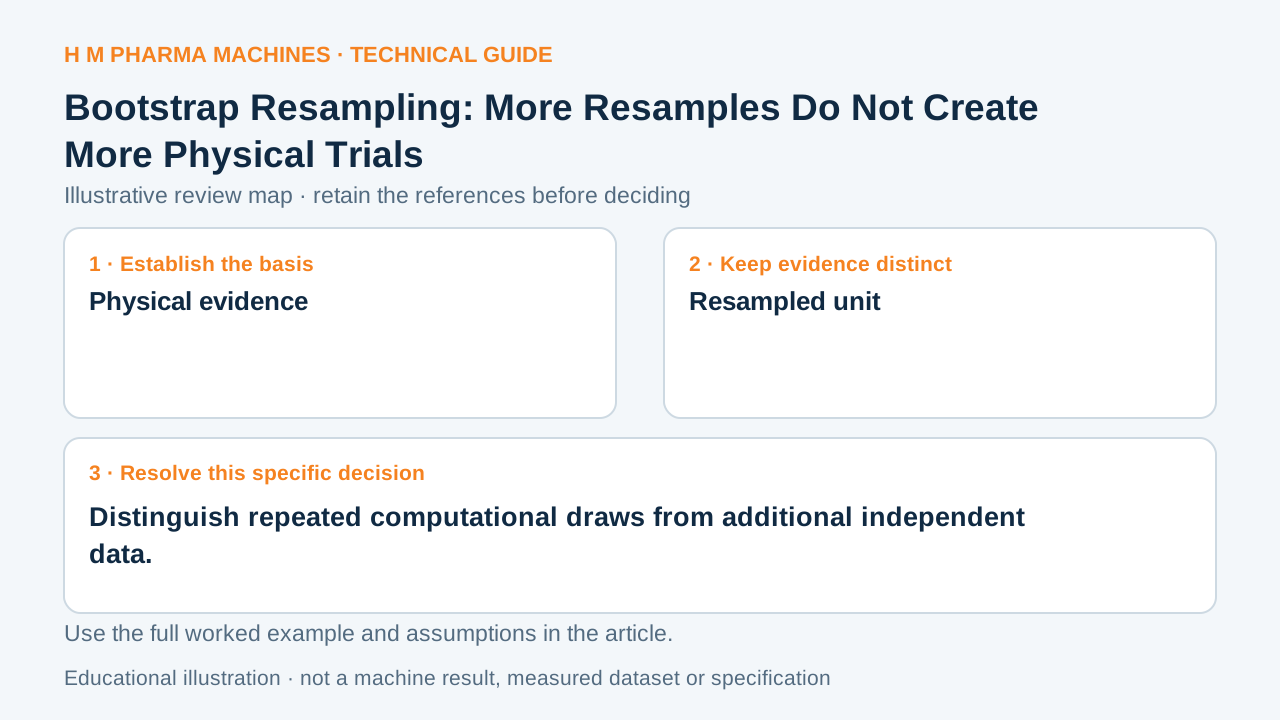
Read Full Article →Bootstrap draws reuse the observed data. A large number of computational resamples should never be reported as a large number of independent machine trials.
Read Full Article →Review a post-order machine change against the accepted scope, affected interfaces, trial and document needs, and the supplier's revised confirmation.
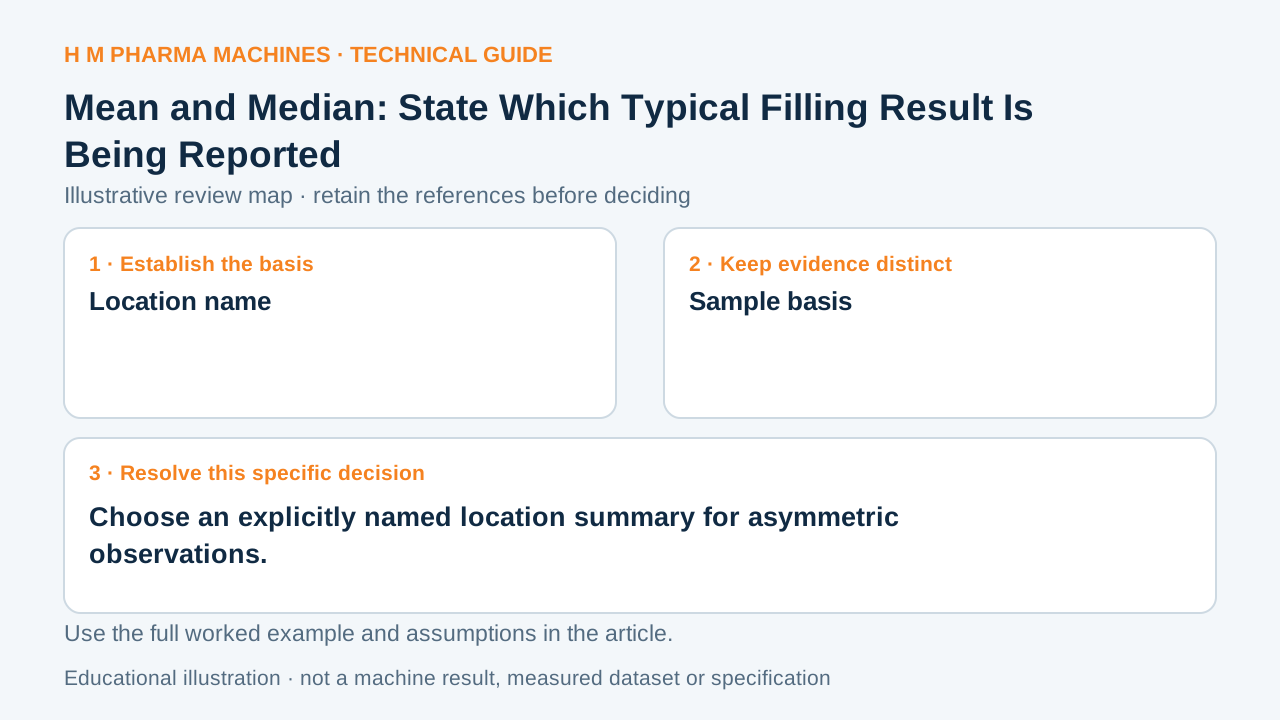
Read Full Article →A mean and a median answer different summary questions. Name the statistic when sharing a typical reading, especially when a trial sample has an asymmetric tail.
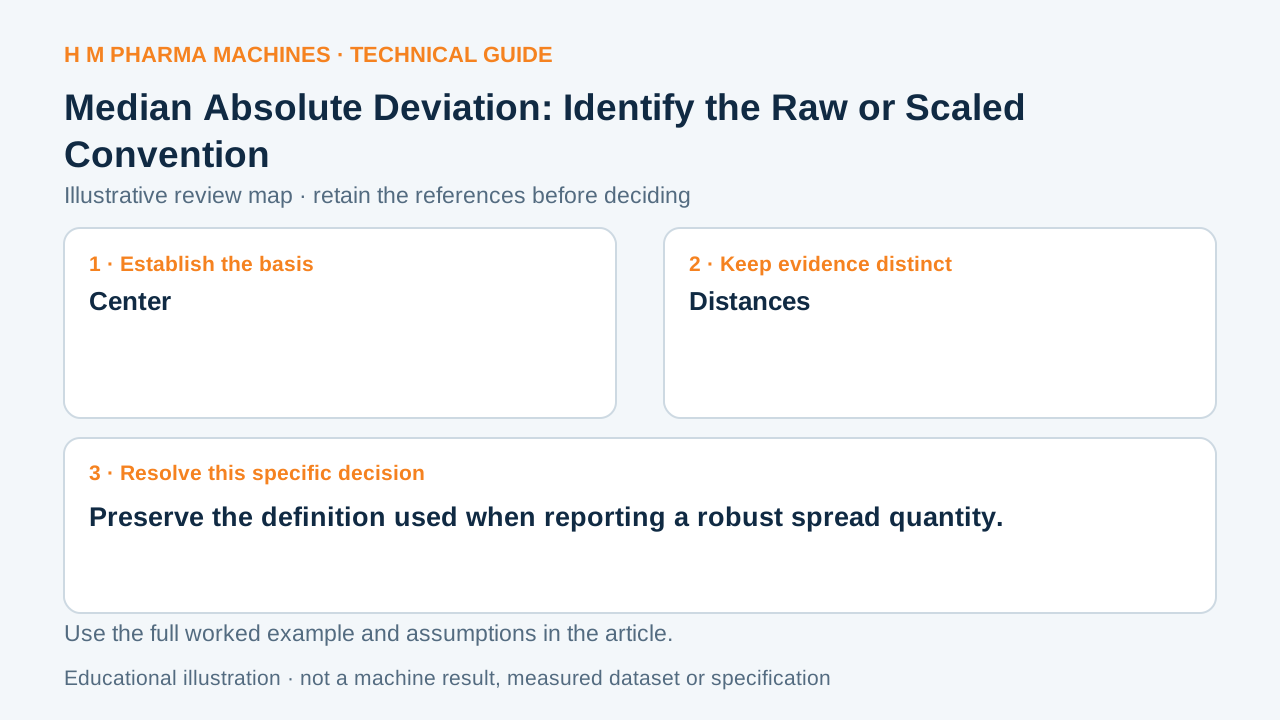
Read Full Article →A report labeled MAD may use a raw median absolute deviation or an adjusted value. Retain the exact definition before comparing the robust spread with a standard deviation.
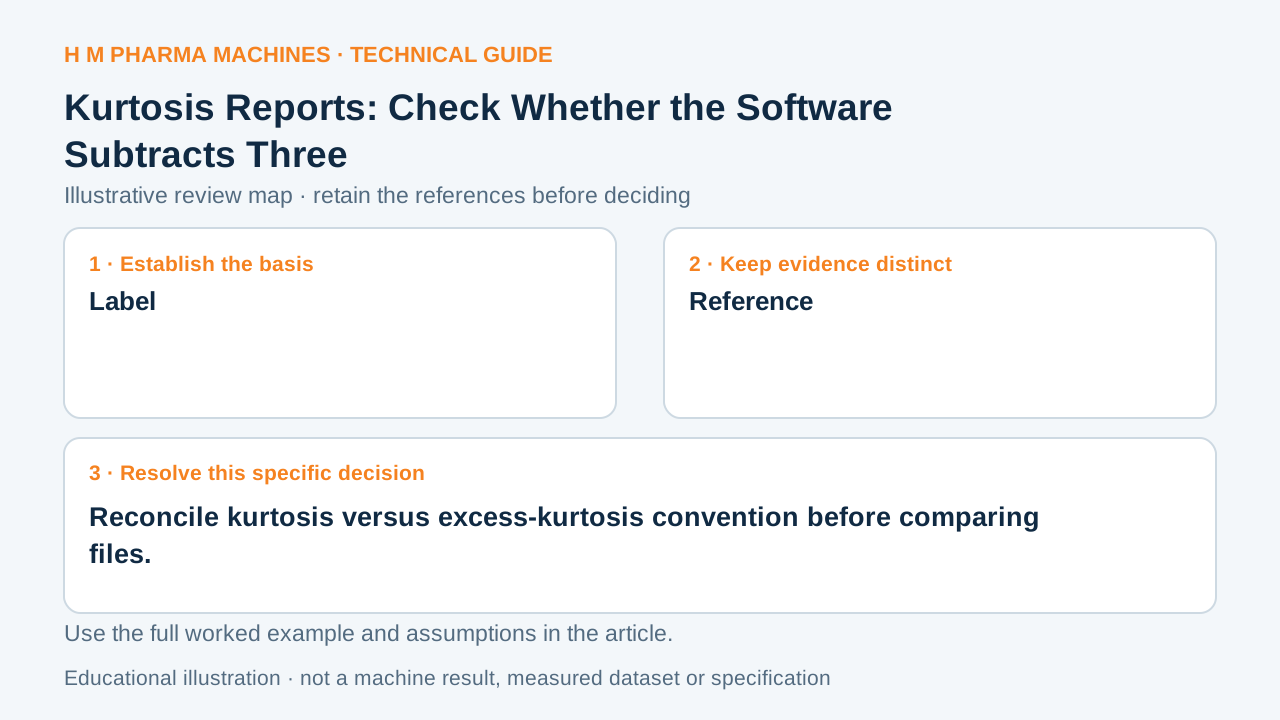
Read Full Article →A three-unit difference between kurtosis outputs can be a definition change. Check the convention and finite-sample adjustment before attributing it to process behavior.
Read Full Article →A median-based runs test counts stretches of the same binary label in physical order. Sorting the readings before counting changes the question.
Read Full Article →A standard Kolmogorov-Smirnov comparison needs a fully specified continuous reference distribution. Fitting its parameters from the same data changes the calibration.
Read Full Article →Anderson-Darling output needs the tested distribution and its matching statistic adjustment. A numerical cutoff copied from another model can mislead the review.
Read Full Article →A binned goodness-of-fit test needs declared bin boundaries, model probabilities and parameter-estimation treatment. A frequency table alone does not identify the test.
Read Full Article →Factorial codes are coordinates in a design, not machine settings. Translate every coded row using the correct factor-specific units before discussing a trial.
Read Full Article →Center responses can reveal a curvature question that a two-level fit misses. The comparison must still account for variability and changes during the experiment.
Read Full Article →Quadratic models add squared-factor terms to represent curvature. Seeing an interaction or adding a center point does not establish that each curvature term can be fitted.
Read Full Article →A proposed central composite plan can introduce factor settings beyond earlier low/high levels. Review the physical axial points before treating a matrix as executable.
Read Full Article →A three-factor Box-Behnken plan uses edge-midpoint and center combinations. Its data should not be described as direct observations of every simultaneous extreme.
Read Full Article →A three-level full factorial grows as three raised to the number of factors. Count all combinations, repetitions and practical preparation work before booking the trial.
Read Full Article →An independent-mean comparison with unequal spreads keeps each group variance contribution separate. One shared spread number can hide the intended method.
Read Full Article →Replicates at identical predictor settings provide a pure-error reference for lack-of-fit analysis. Unique settings alone cannot supply that same comparison.
Read Full Article →Calculate the physical dimensions represented by a raster image and its pixels-per-inch setting before comparing print previews.
Read Full Article →Keep vector geometry and raster samples distinct when requesting a larger or smaller packaging graphic.
Read Full Article →Blog overview · Latest articles · Machine guide library
Application-based guidance for selecting equipment according to product, container, closure and output.
Practical considerations for connecting washing, filling, capping, labeling and conveying machinery.
Useful information for changeovers, cleaning, preventive maintenance and dependable machine performance.
Share your product, container, closure, required output and process details with our engineering team.