Applied engineering reference
Sinusoidal RMS Voltage: The Heating Equivalent Differs from the Peak
Convert a stated sinusoidal peak into RMS before comparing ideal resistive heating.
Read Full Article →
Applied engineering reading, separated from practical machine selection guides.
Browse by task
Start with the machine or task you are planning. Each topic brings together selection guides, practical checks and relevant engineering references.
Compare container handling, wash access, cleaning utilities and acceptance checks before selecting a washer.
Choose a dosing method and prepare product, container, nozzle and repeatability checks for the machine trial.
Compare cap presentation, closure methods and the evidence needed to approve the finished pack.
Match the container and label format, approve the sample roll, and define coding or inspection evidence.
Define format kits, container references and transfer interfaces for each planned product and pack size.
Prepare the site, utility connections and line interfaces before confirming the machine scope.
Agree trial evidence, dispatch checks, operator training and the spares required for the supplied machine.
Search practical Machine guides first, or choose the separate Engineering reference archive. Use a keyword, a topic, or both.
Search all 737 articles by keyword, topic, or both.
Or browse Machine guides and the Engineering reference archive.
Reference reading
Applied engineering background. These references are separate from machine selection guides.
Engineering references
Background reading is labelled by scope. For practical machine selection, use the separate Machine guides.
Applied engineering reference
Convert a stated sinusoidal peak into RMS before comparing ideal resistive heating.
Read Full Article →Applied engineering reference
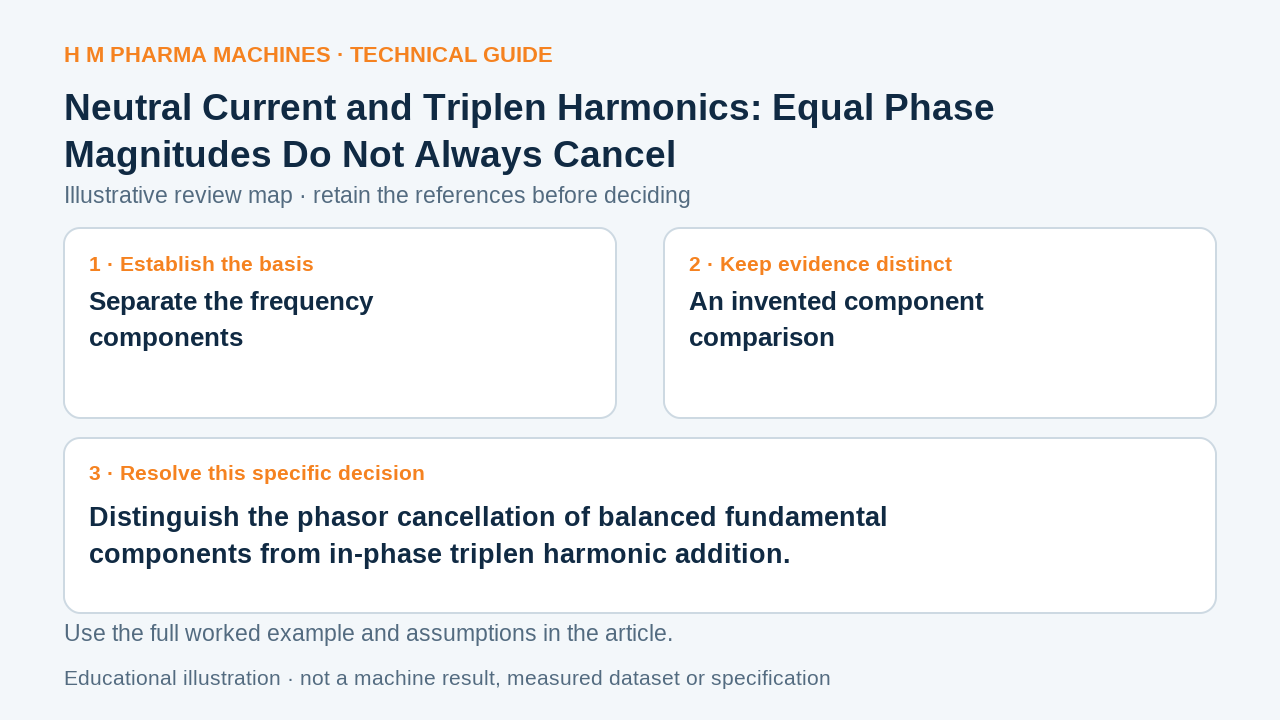
Distinguish fundamental-current cancellation from triplen-harmonic addition in a stated three-phase model.
Read Full Article →Applied engineering reference
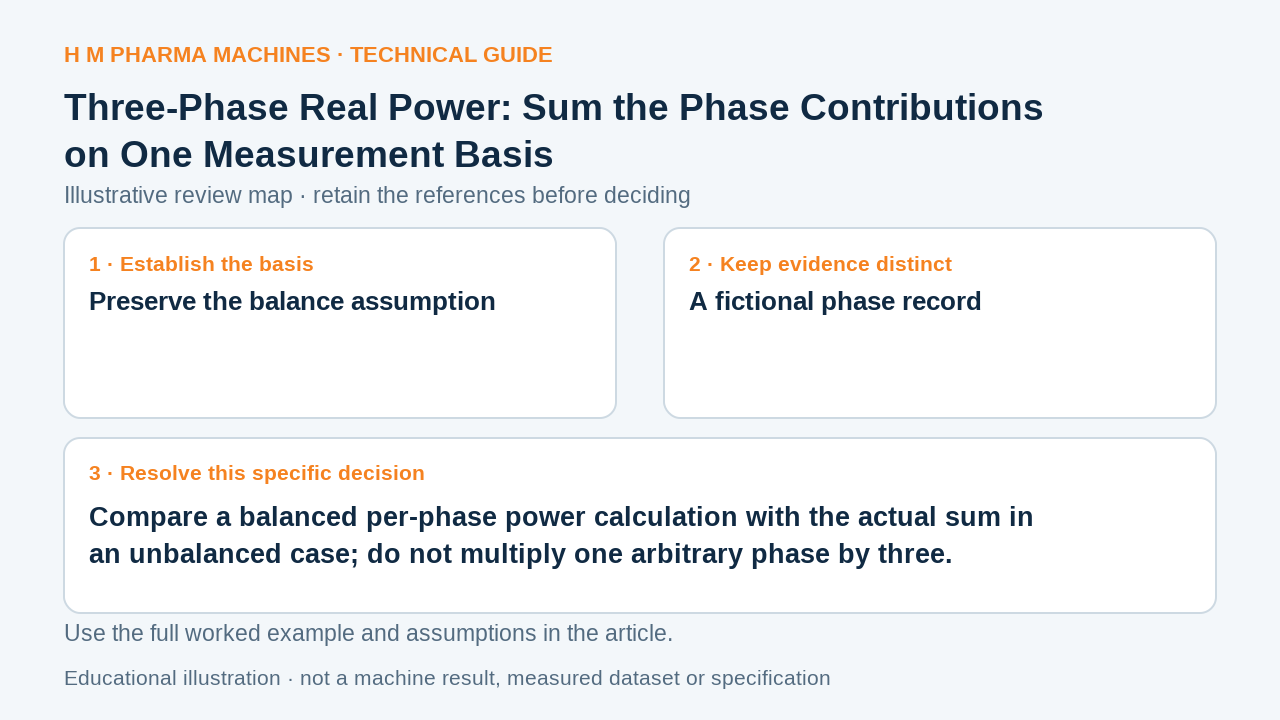
Add the actual phase real-power contributions instead of multiplying one arbitrary phase by three.
Read Full Article →Applied engineering reference
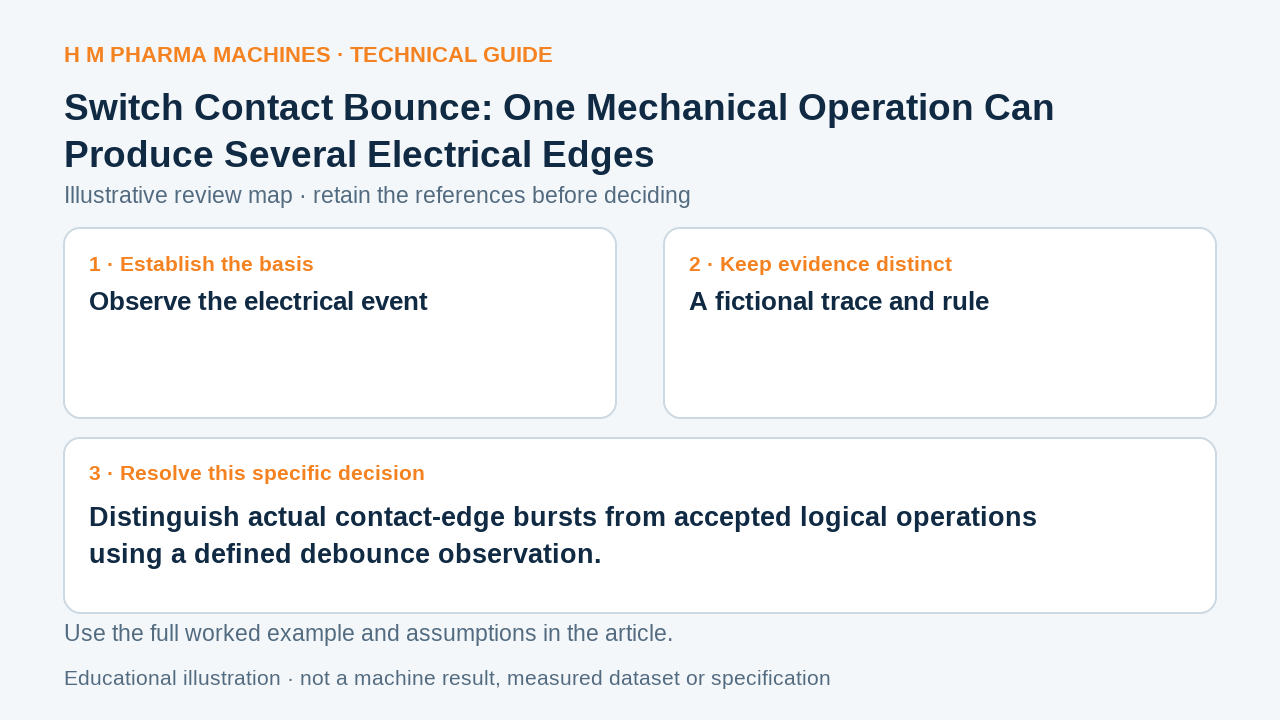
Separate a contact’s electrical transition burst from the logical operation the application intends to count.
Read Full Article →Applied engineering reference
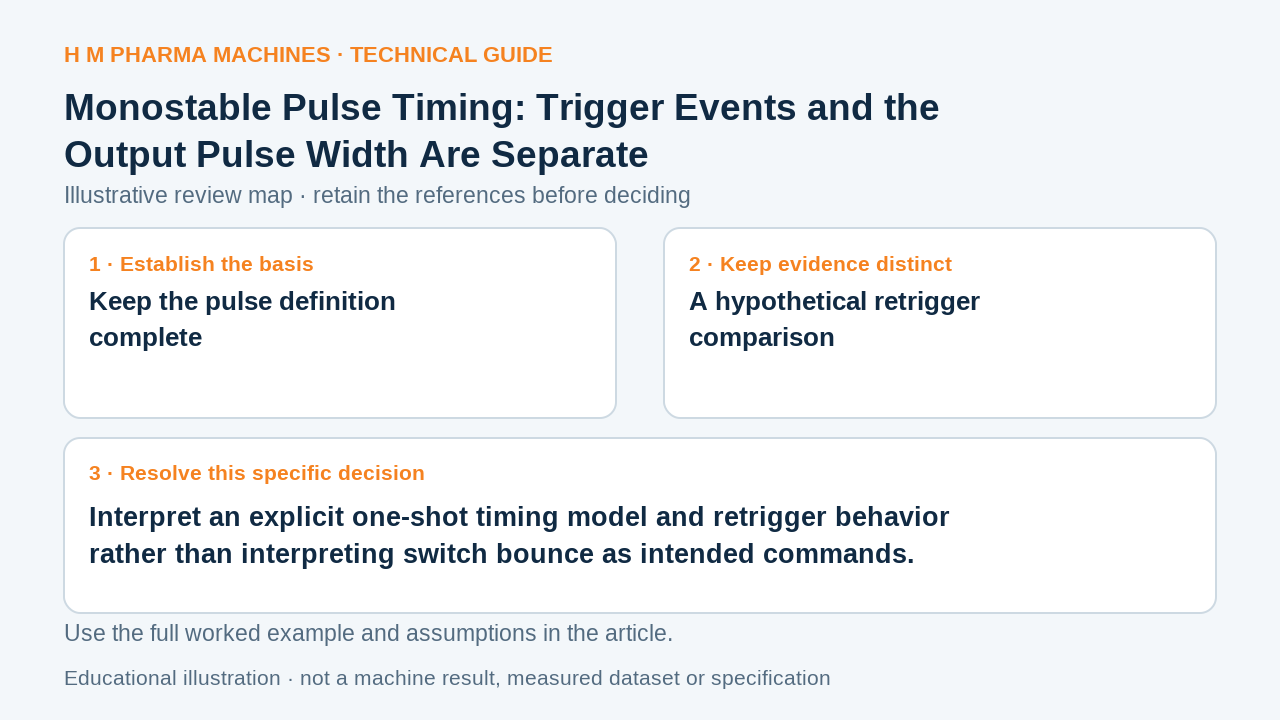
Identify trigger, timing interval and retrigger behavior when reviewing a one-shot pulse.
Read Full Article →Applied engineering reference
Compare bit changes between adjacent position codewords before treating Gray and binary patterns as interchangeable.
Read Full Article →Applied engineering reference
Identify decimal-coded nibbles before converting a raw byte into a reported number.
Read Full Article →Applied engineering reference
Extract named status flags with their documented bit masks rather than interpreting the complete word as one flag.
Read Full Article →Applied engineering reference
Check the both-true input case when comparing set-dominant and reset-dominant Boolean memory.
Read Full Article →Applied engineering reference
Trace the input transition that initiates an on-delay or off-delay timer.
Read Full Article →Applied engineering reference
Separate a task’s periodic scheduling interval from the watchdog condition supervising its execution.
Read Full Article →Applied engineering reference
A tension result needs the time since its interface was created, especially when newly formed surfaces matter in processing.
Read Full Article →Applied engineering reference
A contact-angle comparison can change with the direction in which the liquid boundary moves across a solid.
Read Full Article →Applied engineering reference
A spreading assessment needs the energy balance for the particular liquid and contacting phase.
Read Full Article →Applied engineering reference
Decide whether the question concerns liquid-phase formation or the finite amount of a substance that dissolves.
Read Full Article →Applied engineering reference
When a report says phase inversion, specify whether phase continuity changed or the density order changed.
Read Full Article →Applied engineering reference
Droplets can become larger by molecular transfer or by merging; a size trend alone does not identify the route.
Read Full Article →Applied engineering reference
An equilibrium dispersed state and a mechanically prepared emulsion require different evidence, even when both look uniform.
Read Full Article →Applied engineering reference
The work associated with additional liquid-liquid area is only one contribution to an emulsification energy review.
Read Full Article →Applied engineering reference
A solid particle at a liquid-liquid interface has a wetting position that is different from its bulk powder handling behavior.
Read Full Article →Applied engineering reference
A foam can lose liquid without losing the same proportion of gas bubbles, so keep the instability observations separate.
Read Full Article →Applied engineering reference
Foam-control screening needs evidence that an additive can reach and disrupt the relevant gas-liquid boundary.
Read Full Article →Applied engineering reference
A coefficient per liquid volume includes the interfacial area available for transfer, while an area-based coefficient does not.
Read Full Article →Applied engineering reference
A dissolved-gas trace measures accumulation; transfer into the liquid and consumption within it can both contribute.
Read Full Article →Share your product, container, closure, required output and process details with our engineering team.