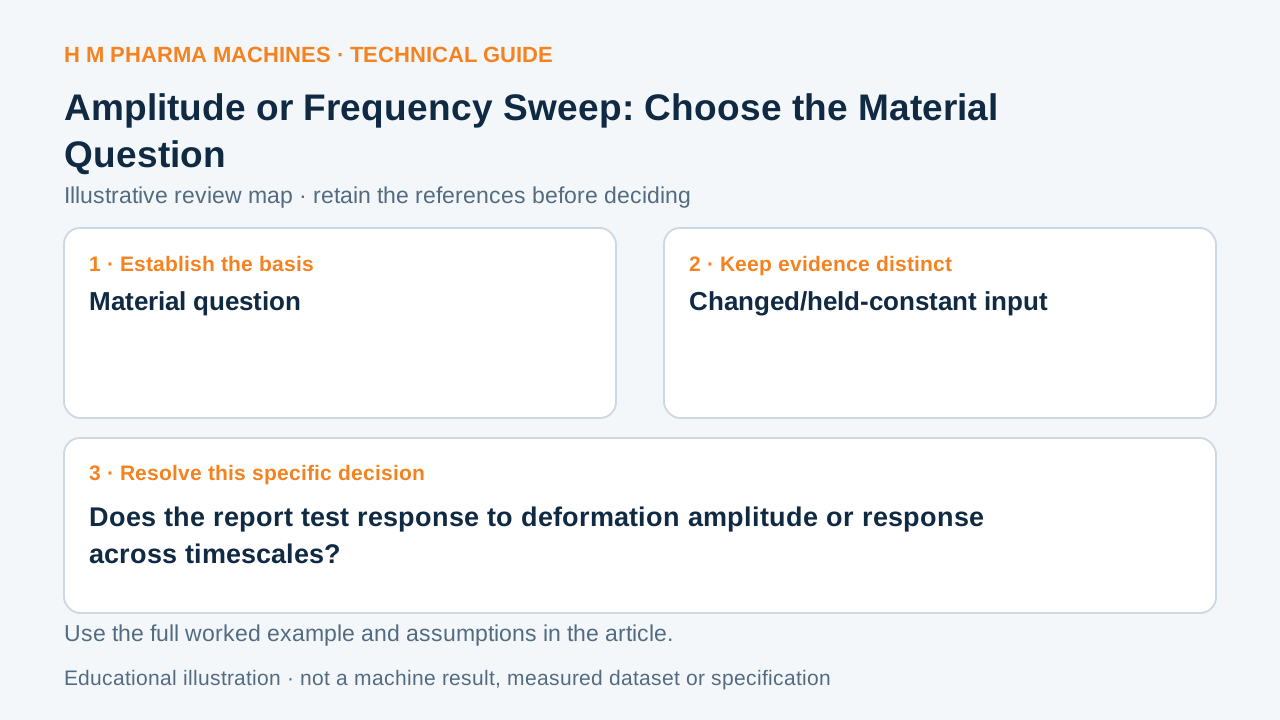
Amplitude or Frequency Sweep: Choose the Material Question
Amplitude and frequency sweeps change different inputs. Choose the test that answers the intended characterization question.
Read Full Article →
Practical guides for selecting, planning, operating and maintaining pharmaceutical manufacturing and packaging machinery.
Latest articles
Practical guides to washing, filling, capping, labeling and machine planning. Each card has a distinct Library date; actual publication and revision dates remain inside the article.
Machine guide library
Browse guides by their distinct Library date. These collection labels are separate from actual publication and revision dates shown inside each article.
Amplitude and frequency sweeps change different inputs. Choose the test that answers the intended characterization question.
Read Full Article →A low apparent viscosity can reflect a measurement-boundary effect. Preserve the geometry evidence before attributing it to the formulation.
Read Full Article →A yield-stress label is incomplete when its pretreatment, test and evaluation method are missing.
Read Full Article →Different powder density values can be valid while describing different volumes. Identify the definition before using one in a filling discussion.
Read Full Article →A compressibility index or Hausner ratio summarizes a defined volume comparison. It is not a universal powder-filler performance rating.
Read Full Article →Number-weighted and volume-weighted particle distributions can emphasize different parts of the same sample.
Read Full Article →A median or upper percentile summarizes a distribution. It should not be presented as the largest particle in the material.
Read Full Article →Dispersion conditions can change which particle structures the measurement represents. Decide the intended material state before comparing results.
Read Full Article →A single equivalent diameter can summarize a measurement while leaving the particle’s length, width or shape unresolved.
Read Full Article →A shear-test flow function describes strength under a defined stress history. It does not replace every powder-handling test.
Read Full Article →A powder’s interaction with equipment walls is a different measurement question from its internal shear behaviour.
Read Full Article →A powder-bed pressure-drop measurement needs its airflow, bed geometry and consolidation basis before two results can be compared.
Read Full Article →A moisture percentage and a water-activity value describe different aspects of a material. Preserve that distinction in the powder record.
Read Full Article →An instrument comparison needs sample identities before it needs a test button. Preserve genuine pairs when both instruments measure the same item.
Read Full Article →A precise estimate of the average can coexist with widely varying individual fills. State which quantity the summary describes.
Read Full Article →A single average can conceal two clusters. Use a histogram as a prompt to investigate sample groups and sequence.
Read Full Article →An interval around the average does not describe the same thing as an interval for future individual outcomes.
Read Full Article →A capability summary needs a defensible process basis. Keep time order so drift and changes remain visible.
Read Full Article →Two processes can have similar spread and different risk near a specification boundary. Interpret capability indices with their basis.
Read Full Article →If each setup is tested in a different lot, the comparison may mix setup effects with lot effects.
Read Full Article →A setting that helps under one condition may behave differently under another. Keep the joint combinations visible.
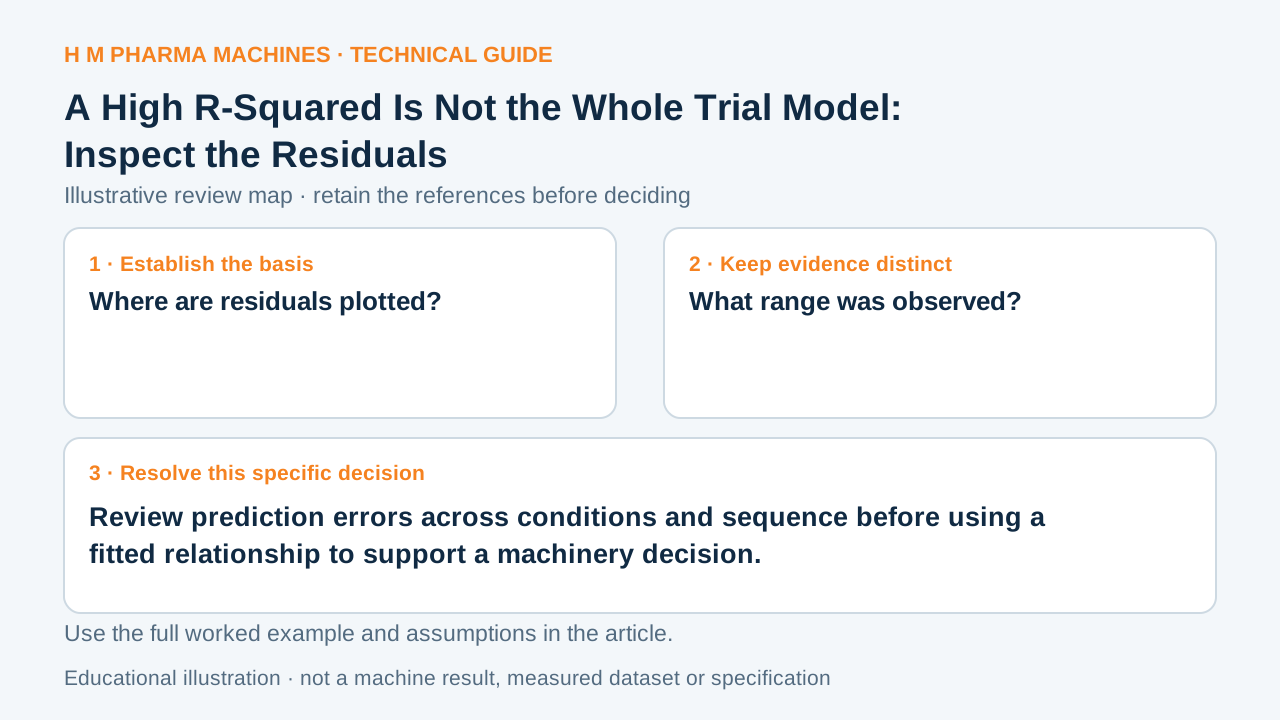
Read Full Article →A summary fit number can conceal a curved relationship, changing error spread or time pattern.
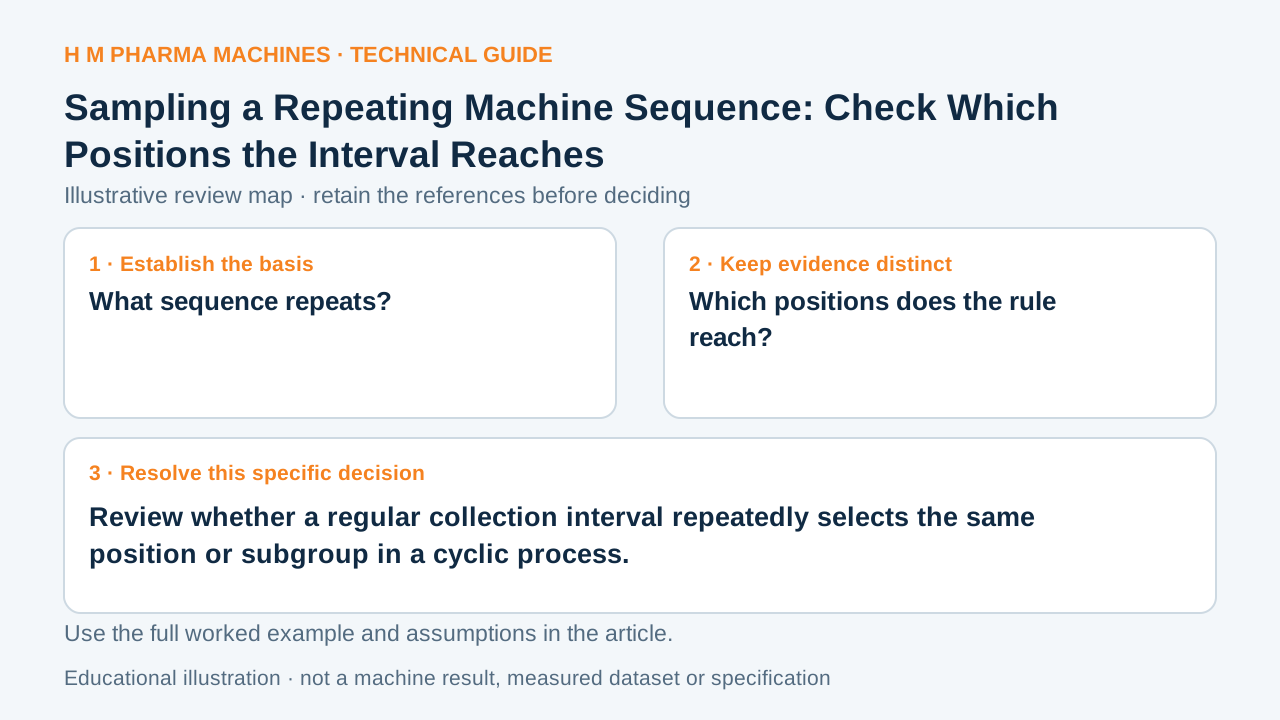
Read Full Article →A large sample can still overlook parts of a repeating sequence. Check the collection interval against the positions you need to represent.
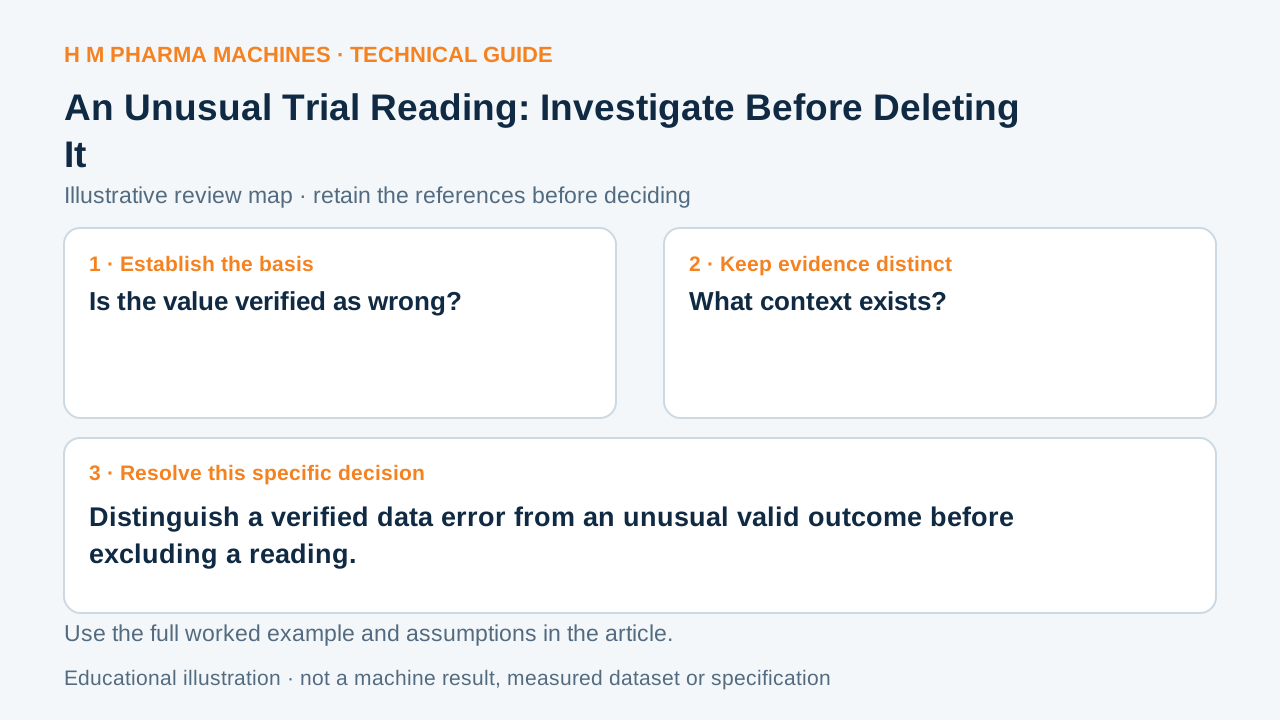
Read Full Article →A distant reading may be a transcription error, a real event or evidence that the proposed model is unsuitable.
Read Full Article →Blog overview · Latest articles · Machine guide library
Application-based guidance for selecting equipment according to product, container, closure and output.
Practical considerations for connecting washing, filling, capping, labeling and conveying machinery.
Useful information for changeovers, cleaning, preventive maintenance and dependable machine performance.
Share your product, container, closure, required output and process details with our engineering team.