Work-In-Progress Limits: Release Control Is Different from Buffer Space
Separate a system-wide work-admission limit from the capacities of individual physical waiting locations.
Read Full Article →
Practical guides for selecting, planning, operating and maintaining pharmaceutical manufacturing and packaging machinery.
Latest articles
Practical guides to washing, filling, capping, labeling and machine planning. Each card has a distinct Library date; actual publication and revision dates remain inside the article.
Machine guide library
Browse guides by their distinct Library date. These collection labels are separate from actual publication and revision dates shown inside each article.
Separate a system-wide work-admission limit from the capacities of individual physical waiting locations.
Read Full Article →Trace acquisition and release of a shared modeled resource around loading and automatic processing.
Read Full Article →Separate one setup per lot from repeated per-piece service when comparing fictional lot sizes.
Read Full Article →Check a unit-weight Petri transition’s input tokens and update the marking after one defined firing.
Read Full Article →Calculate a fictional exponential mission-survival probability while keeping the mean failure interval’s assumptions explicit.
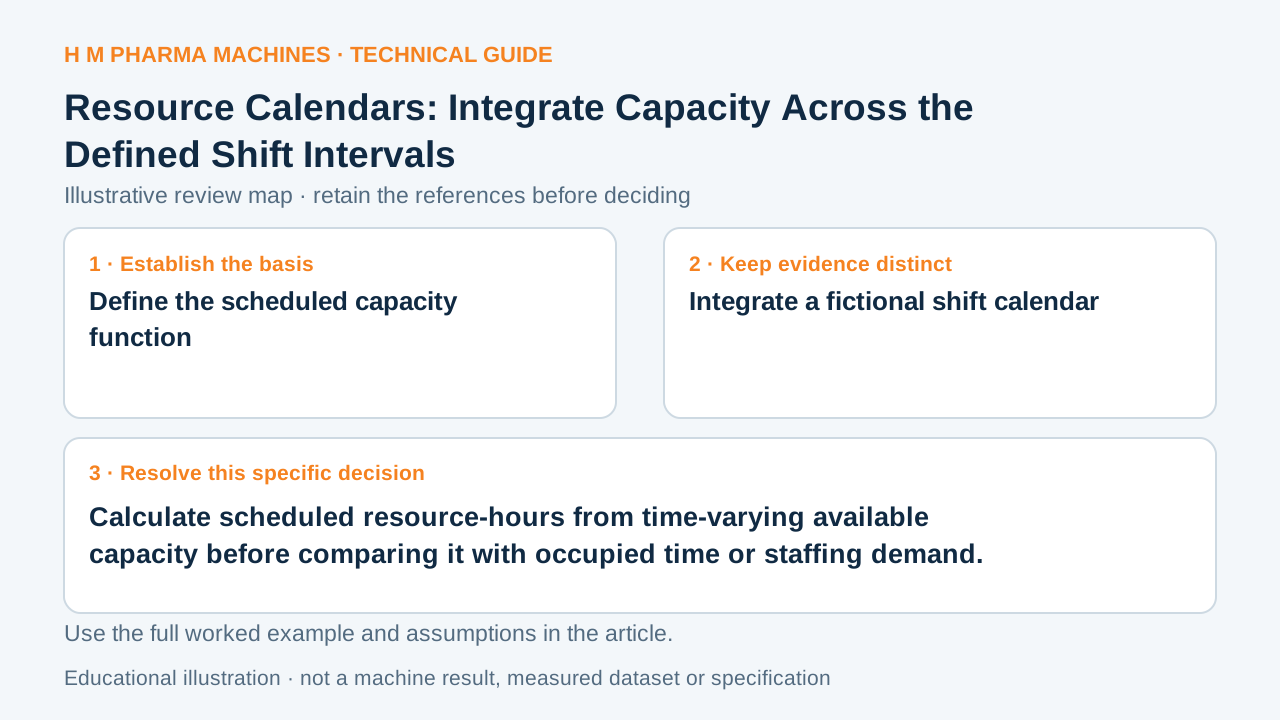
Read Full Article →Sum time-varying resource capacity across explicit shift intervals to calculate scheduled resource-hours.
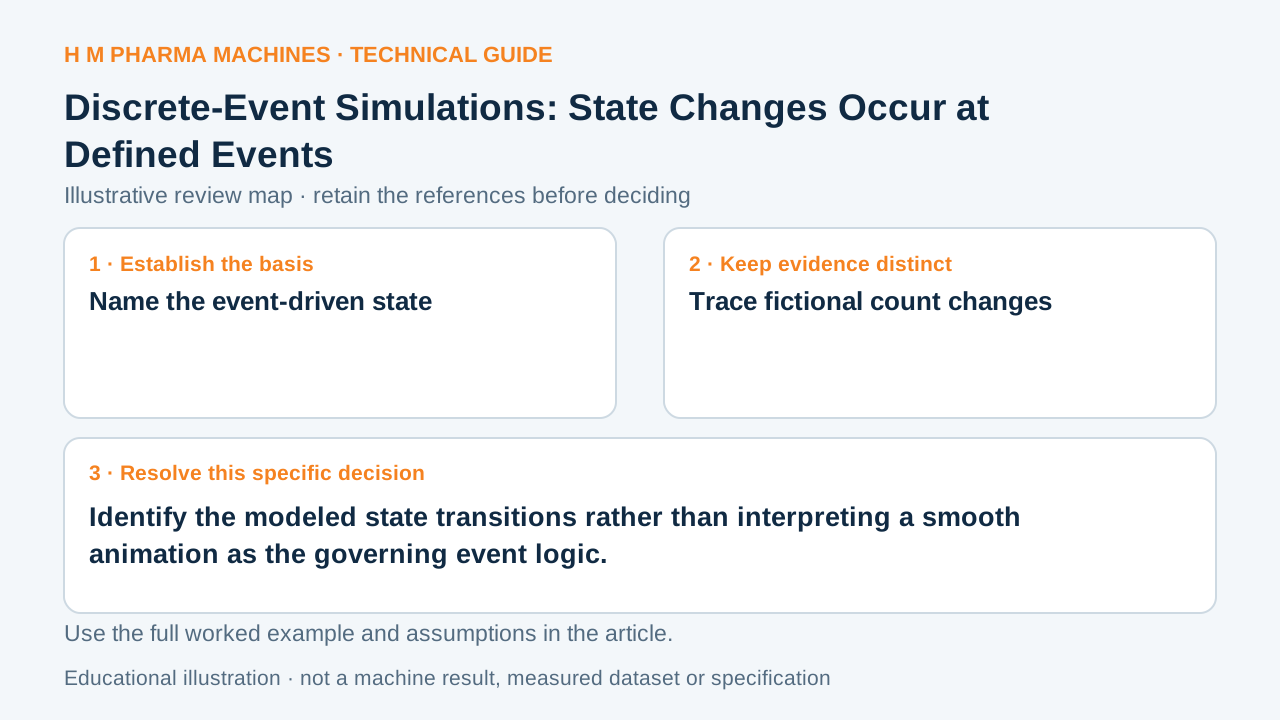
Read Full Article →Review a discrete-event model through its state transitions and event ledger rather than a smooth animation.
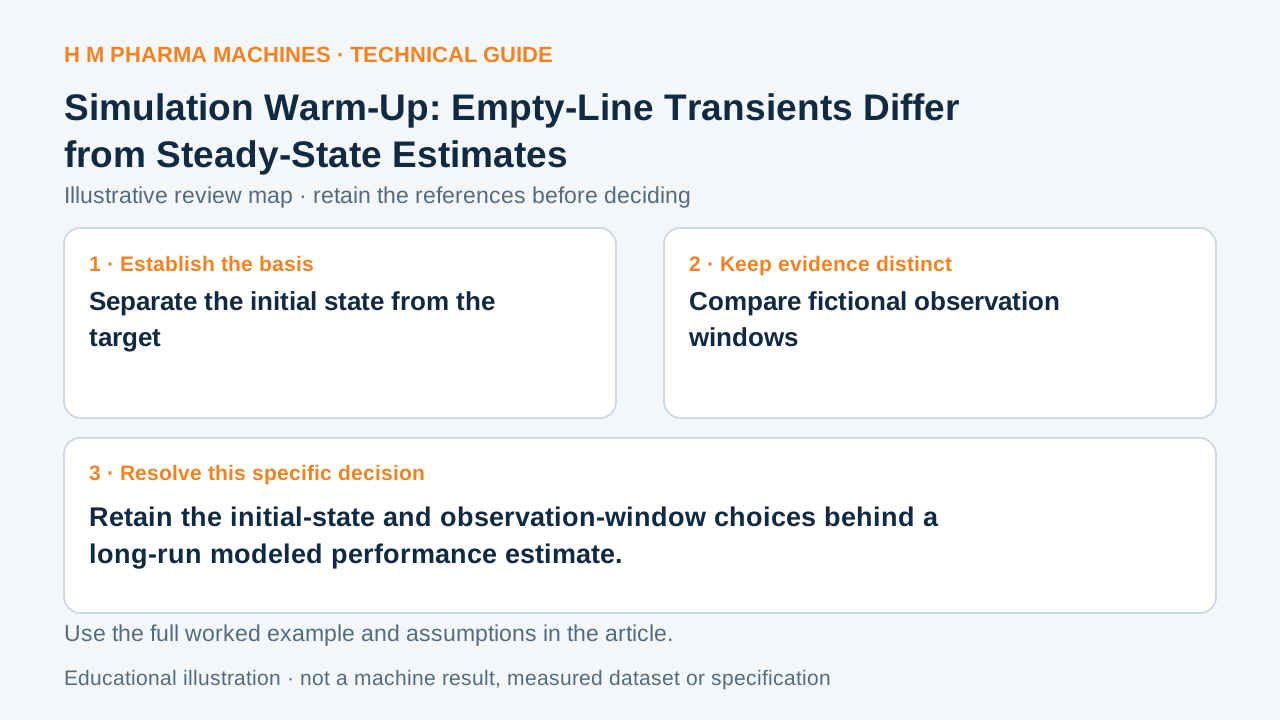
Read Full Article →Keep an empty-start transient and the chosen data-collection window explicit when reporting modeled long-run performance.
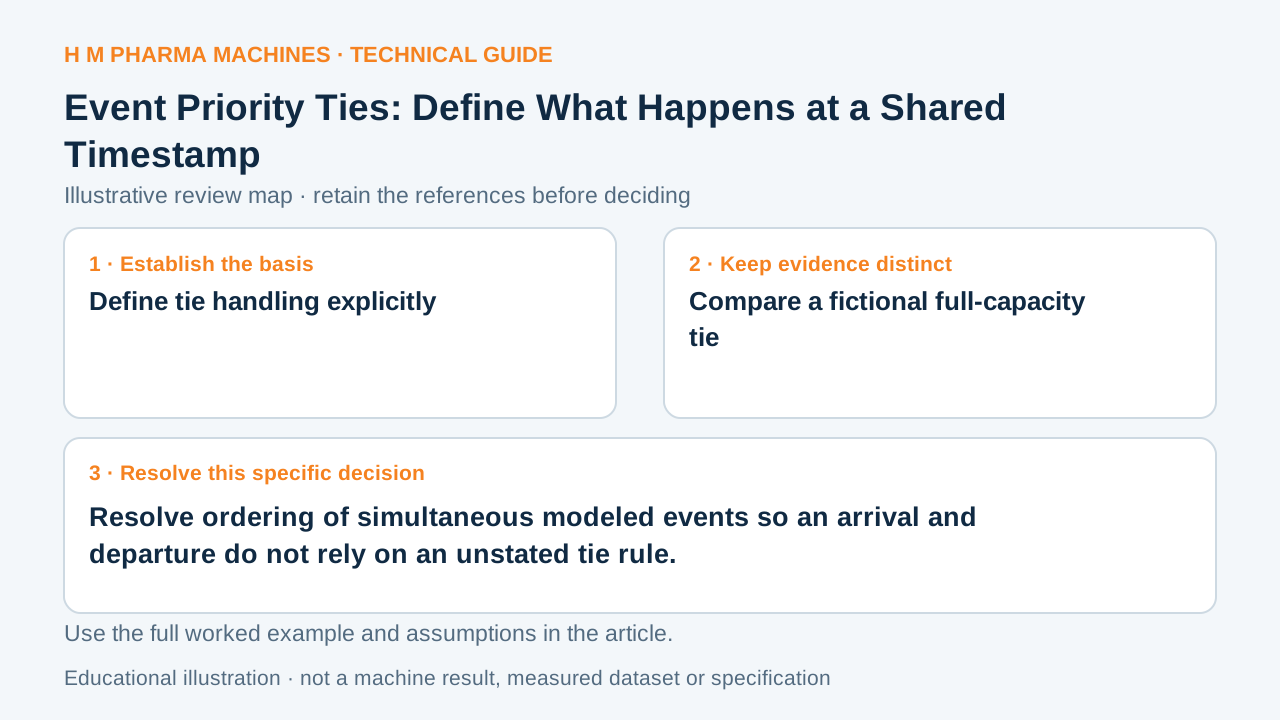
Read Full Article →Declare the event order for an arrival and departure sharing a timestamp so capacity handling is reproducible.
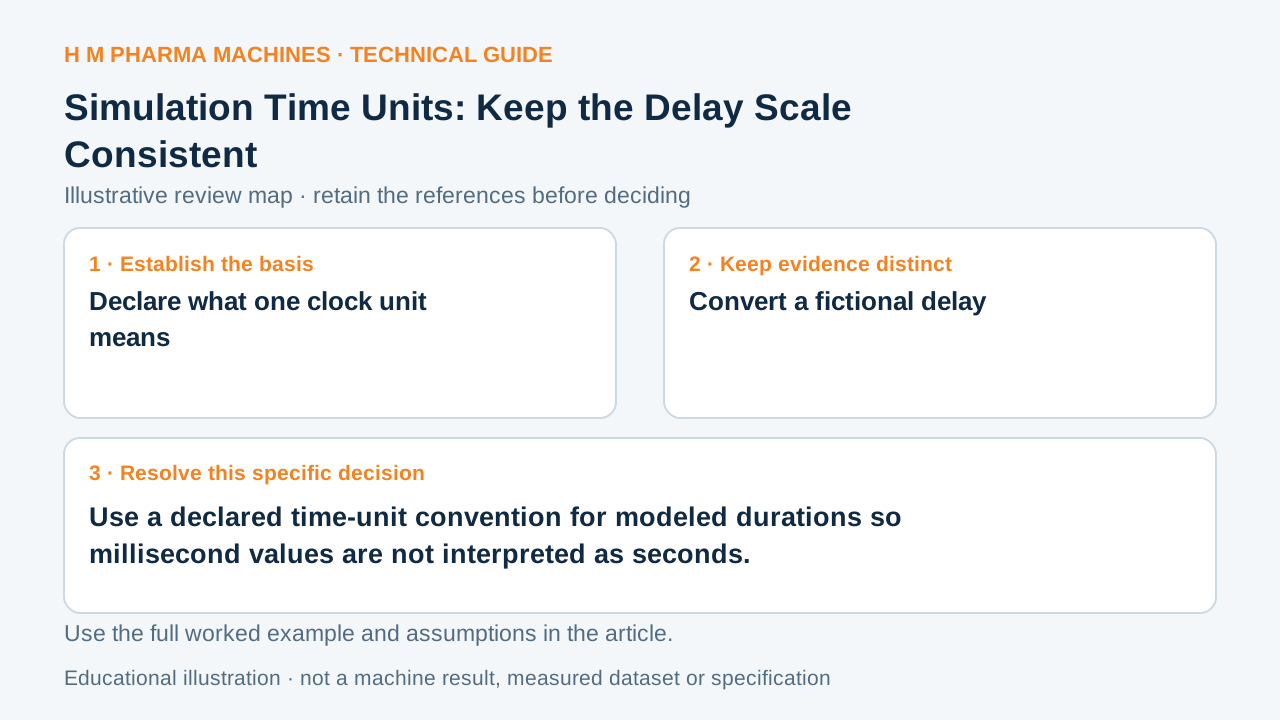
Read Full Article →Choose a time-unit convention and convert every delay before entering numerical simulation values.
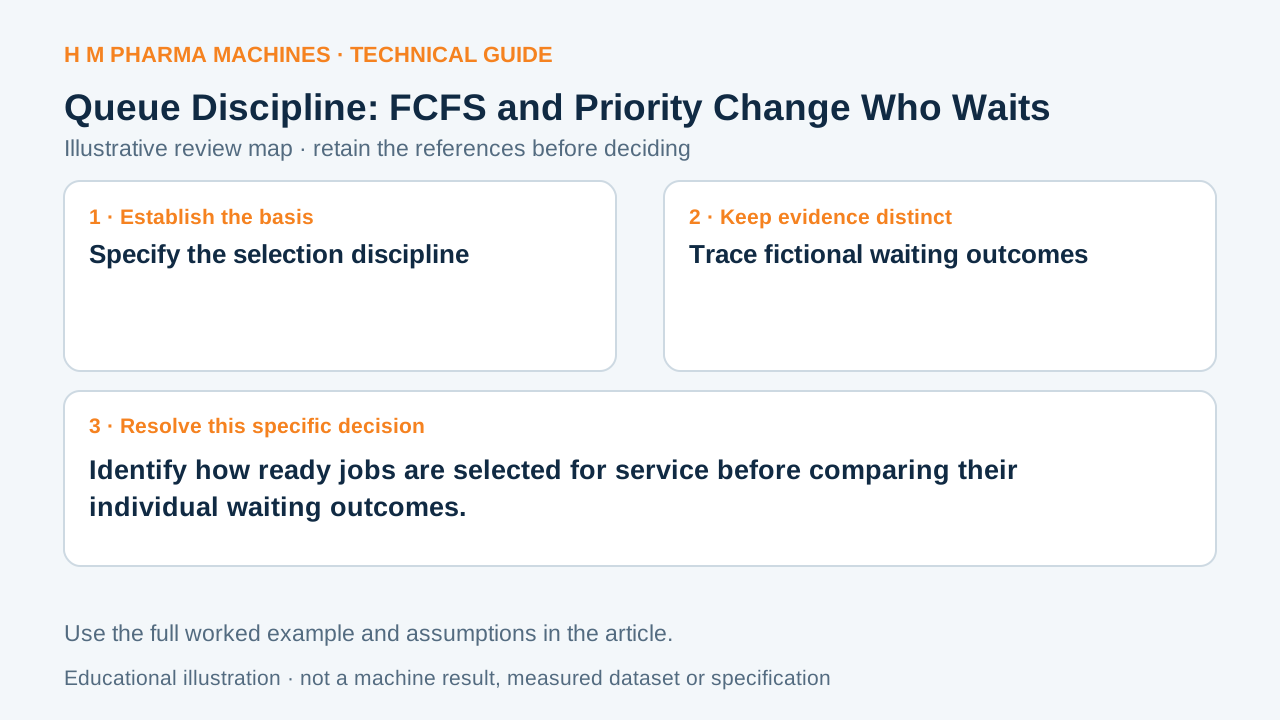
Read Full Article →Compare individual waiting under an explicit FCFS or priority-based ready-job selection rule.
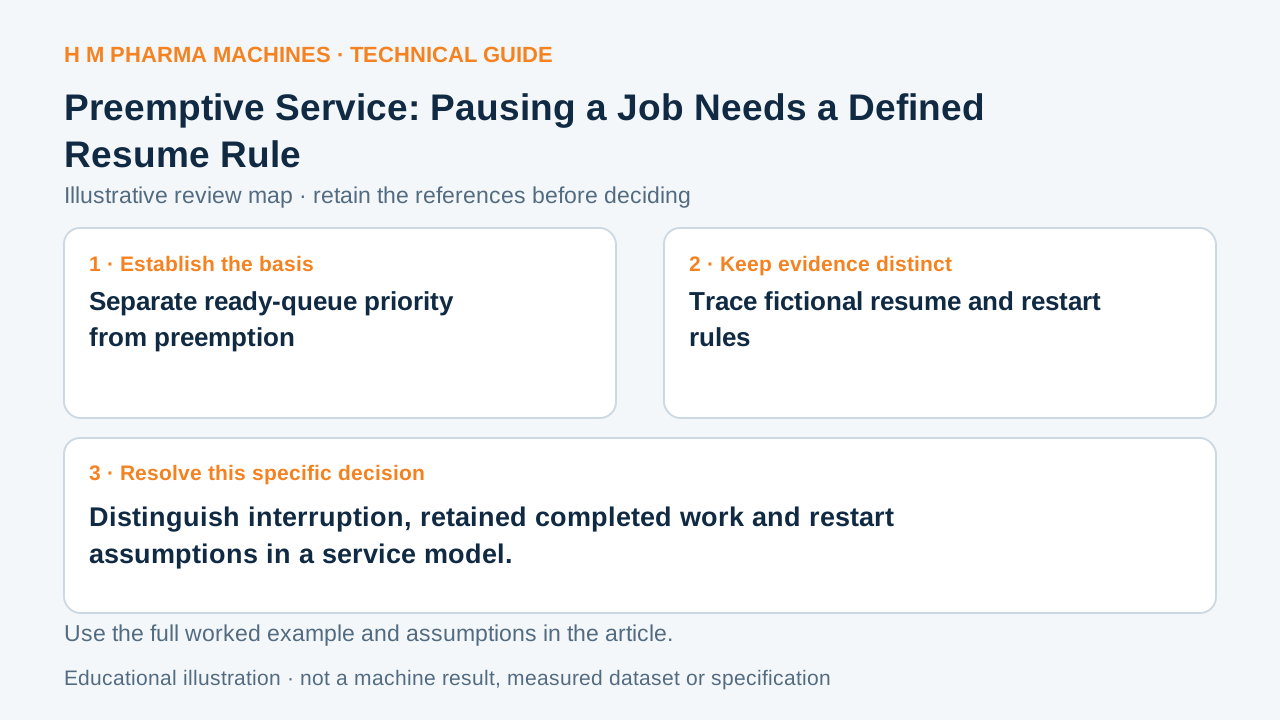
Read Full Article →Specify priority-driven interruption, retained completed work and re-entry before modeling preemptive service.
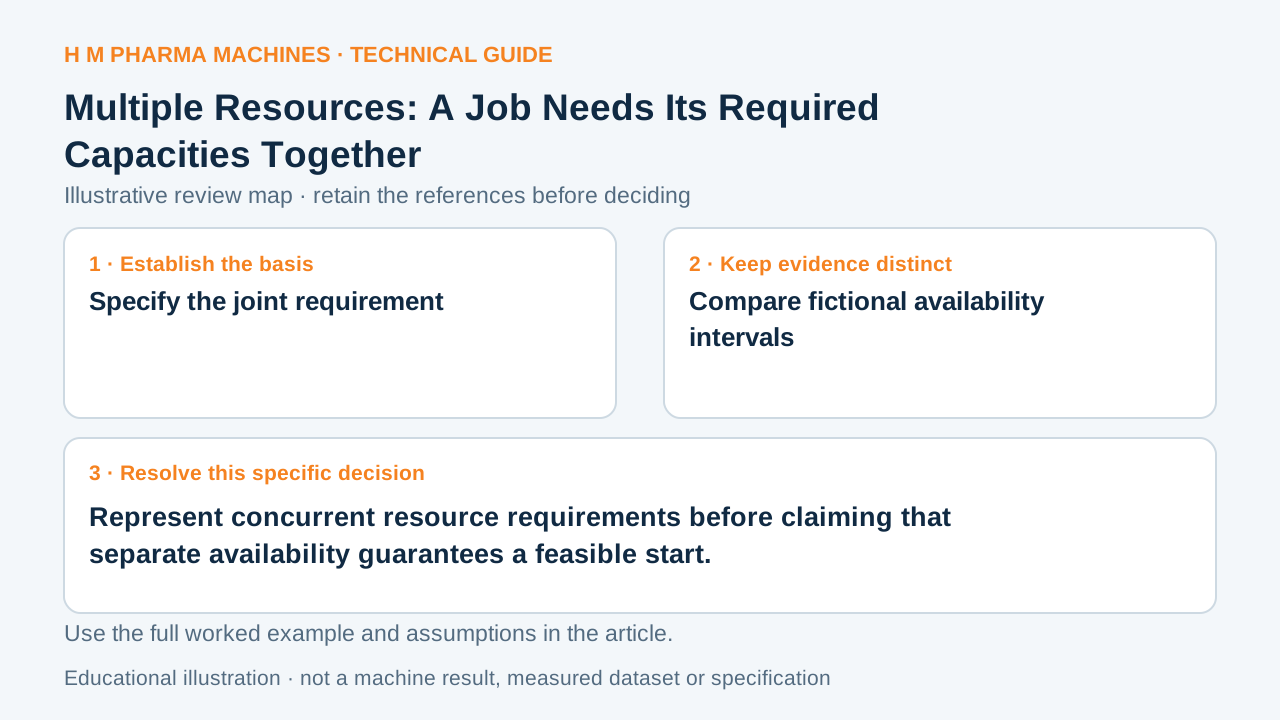
Read Full Article →Require all necessary resource units at the same time before treating a modeled job as eligible to start.
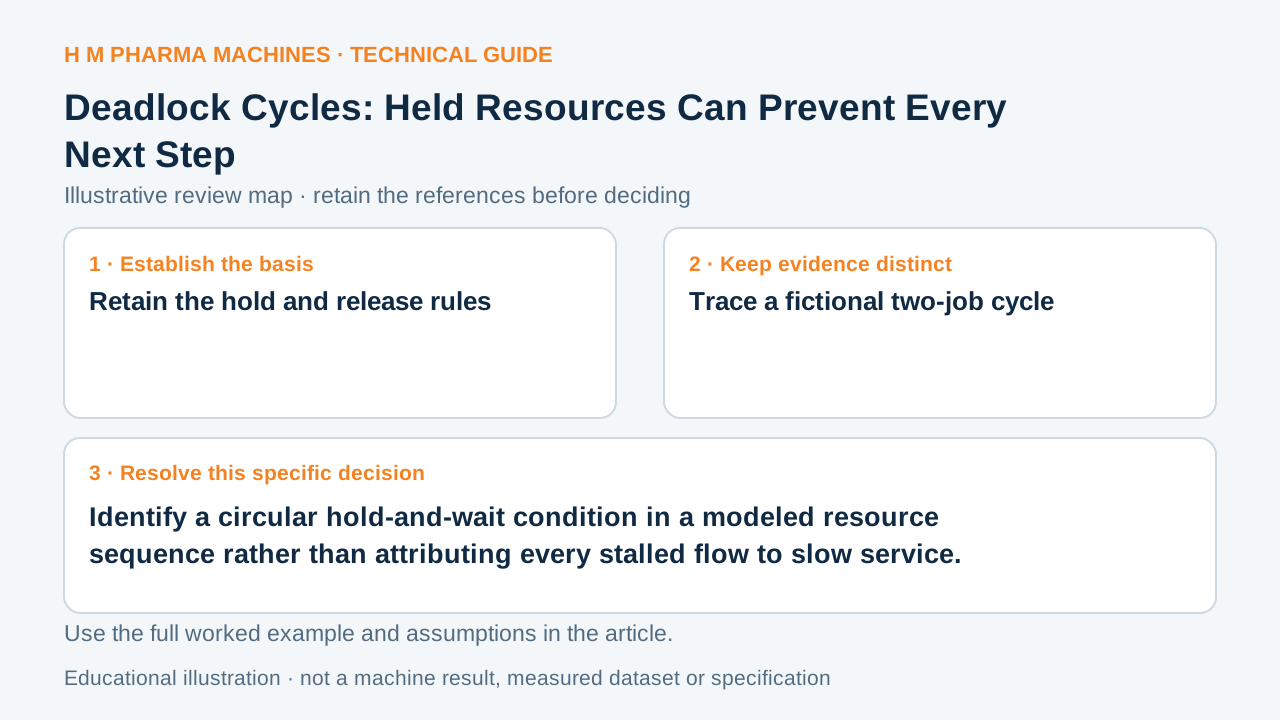
Read Full Article →Trace an exclusive-resource hold-and-wait cycle before calling a stalled model merely slow.
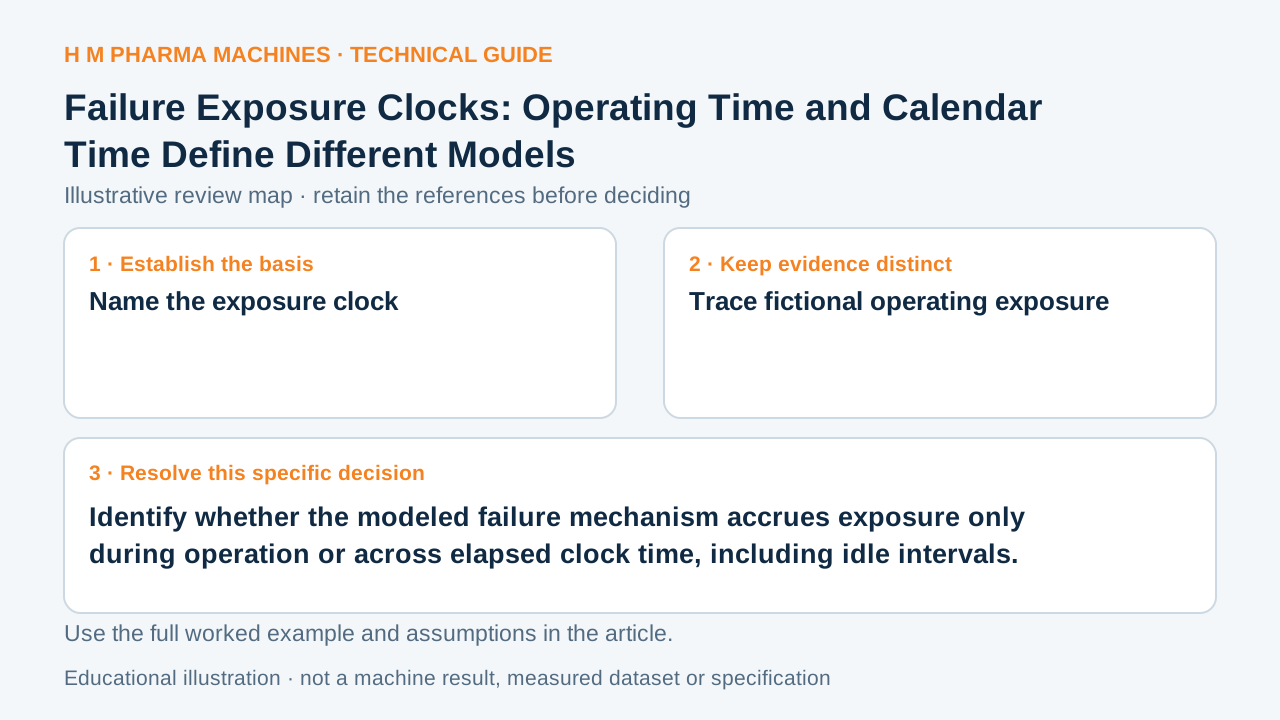
Read Full Article →Compare a fictional operating-exposure clock with elapsed-time exposure while keeping the failure mechanism explicit.
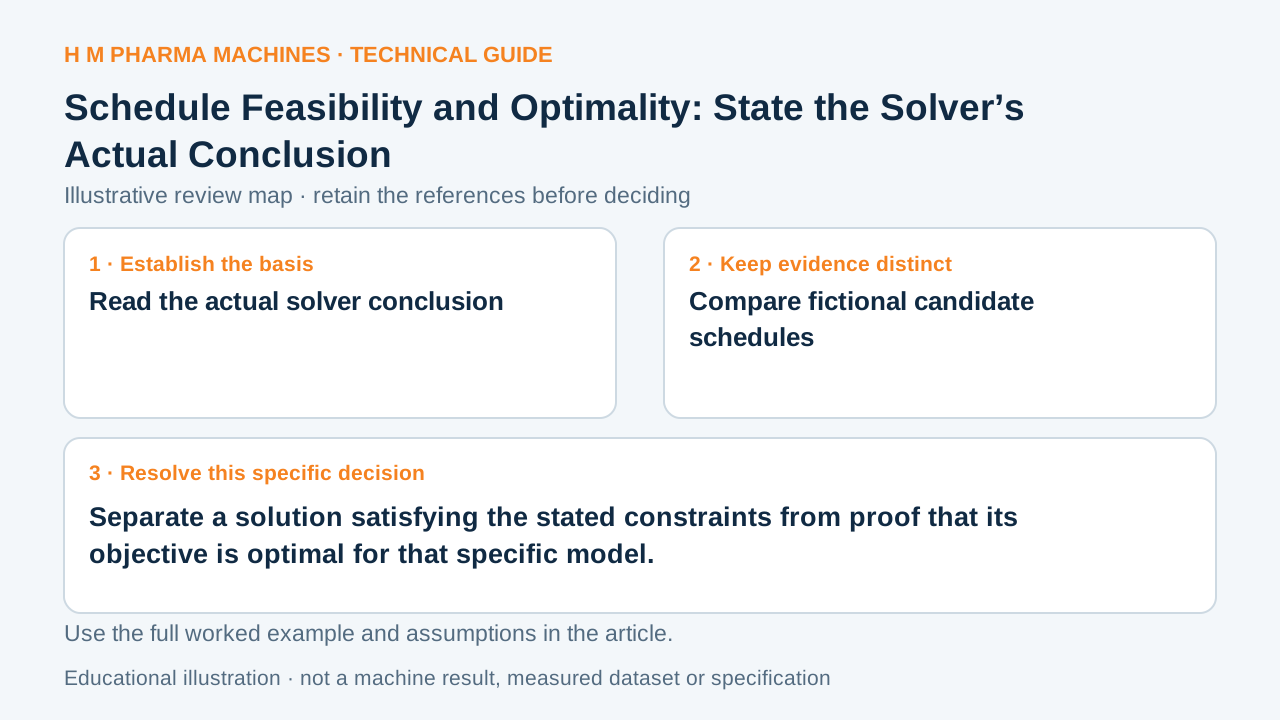
Read Full Article →Interpret feasible, optimal and unknown solver statuses only for the stated constraints and objective.
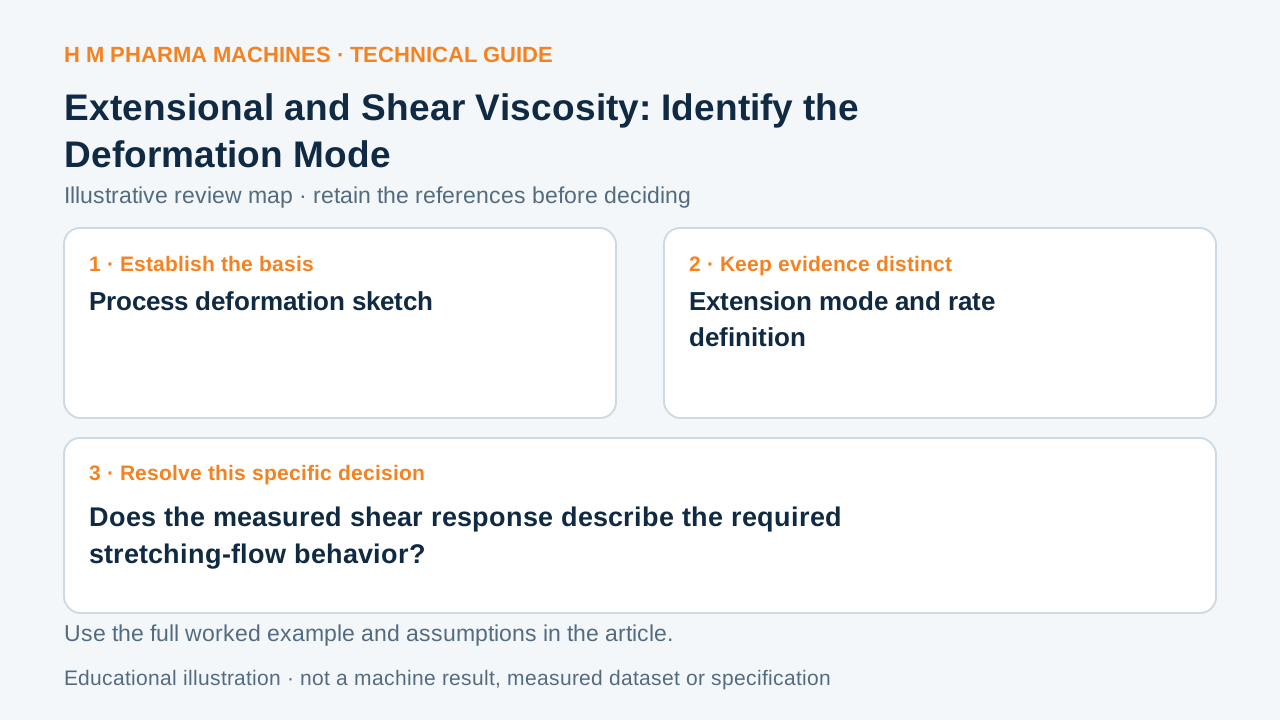
Read Full Article →Identify whether the relevant flow stretches the material or shears it before carrying one viscosity report into a different deformation question.
Read Full Article →Retain the emerging shape and deformation history when investigating die swell; a steady shear-viscosity number alone leaves elastic response unresolved.
Read Full Article →Retain the time trace immediately after shear begins; a later steady value cannot show whether the material passed through an earlier stress maximum.
Read Full Article →Keep both the loading interval and the unloading observation when comparing creep and recovery; a final deformation alone does not describe the history.
Read Full Article →Retain the imposed deformation while reading a changing stress trace; constant strain does not require constant stress in a viscoelastic material.
Read Full Article →State the tested linearity boundary before combining responses to separate deformation increments into one viscoelastic prediction.
Read Full Article →Check curve shape and material comparability before using temperature shifts to extend a measured viscoelastic time or frequency range.
Read Full Article →Retain particle size beside the actual measuring gap when comparing suspension rheology; a confined region may not represent the intended bulk sample.
Read Full Article →Blog overview · Latest articles · Machine guide library
Application-based guidance for selecting equipment according to product, container, closure and output.
Practical considerations for connecting washing, filling, capping, labeling and conveying machinery.
Useful information for changeovers, cleaning, preventive maintenance and dependable machine performance.
Share your product, container, closure, required output and process details with our engineering team.