Applied engineering reference
EWMA Monitoring: State the Weight, Starting Value and Baseline
An EWMA combines current data with earlier information. Its weight and starting basis are part of the method.
Read Full Article →
Applied engineering reading, separated from practical machine selection guides.
Browse by task
Start with the machine or task you are planning. Each topic brings together selection guides, practical checks and relevant engineering references.
Compare container handling, wash access, cleaning utilities and acceptance checks before selecting a washer.
Choose a dosing method and prepare product, container, nozzle and repeatability checks for the machine trial.
Compare cap presentation, closure methods and the evidence needed to approve the finished pack.
Match the container and label format, approve the sample roll, and define coding or inspection evidence.
Define format kits, container references and transfer interfaces for each planned product and pack size.
Prepare the site, utility connections and line interfaces before confirming the machine scope.
Agree trial evidence, dispatch checks, operator training and the spares required for the supplied machine.
Search practical Machine guides first, or choose the separate Engineering reference archive. Use a keyword, a topic, or both.
Search all 737 articles by keyword, topic, or both.
Or browse Machine guides and the Engineering reference archive.
Reference reading
Applied engineering background. These references are separate from machine selection guides.
Engineering references
Background reading is labelled by scope. For practical machine selection, use the separate Machine guides.
Applied engineering reference
An EWMA combines current data with earlier information. Its weight and starting basis are part of the method.
Read Full Article →Applied engineering reference
A cumulative departure can reveal a sustained change that looks small in each individual reading.
Read Full Article →Applied engineering reference
Fewer experimental combinations can save trial resources while leaving some effects inseparable.
Read Full Article →Applied engineering reference
A small p-value does not state how much a measured difference matters to the machinery decision.
Read Full Article →Applied engineering reference
An individuals-chart dataset needs its collection sequence, because moving ranges depend on neighbouring readings.
Read Full Article →Applied engineering reference
A subgroup definition determines which variation is compared within groups and which variation appears between them.
Read Full Article →Applied engineering reference
The same readings can look smoother or more fragmented when histogram bins change.
Read Full Article →Applied engineering reference
A box plot summarizes a distribution. Its whiskers and marked points need a stated convention.
Read Full Article →Applied engineering reference
A result chosen from many comparisons needs the context of the comparisons that were examined.
Read Full Article →Applied engineering reference
Ten readings of one trial outcome do not automatically represent ten independent trials.
Read Full Article →Applied engineering reference
A fitted equation can calculate outside the trial range even when that extension has not been assessed.
Read Full Article →Applied engineering reference
Regression weights need a defensible meaning, especially when measurement or response variability changes across conditions.
Read Full Article →Applied engineering reference
Two variables moving together can reveal a useful investigation question without proving that one causes the other.
Read Full Article →Applied engineering reference
Transforming, averaging and transforming back can produce a different summary from averaging the original values.
Read Full Article →Applied engineering reference
Interpret basic bearing ratings and model life separately from actual maintenance or guaranteed service life.
Read Full Article →Applied engineering reference
Distinguish shipping-container structural resistance evidence from carton mass and pack-completeness evidence.
Read Full Article →Applied engineering reference
Separate point-of-use pressure loss from compressor pressure settings and measure the energy impact on a comparable basis.
Read Full Article →Applied engineering reference
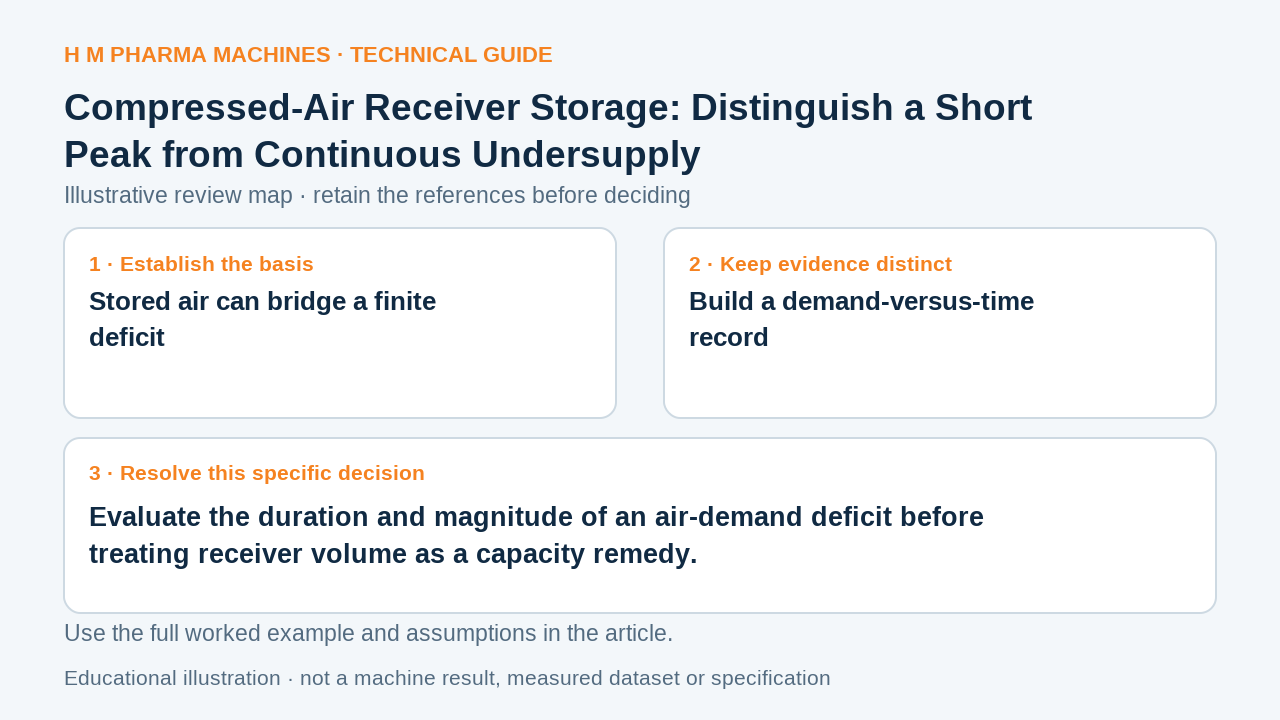
Evaluate the duration and magnitude of an air-demand deficit before treating receiver volume as a capacity remedy.
Read Full Article →Applied engineering reference
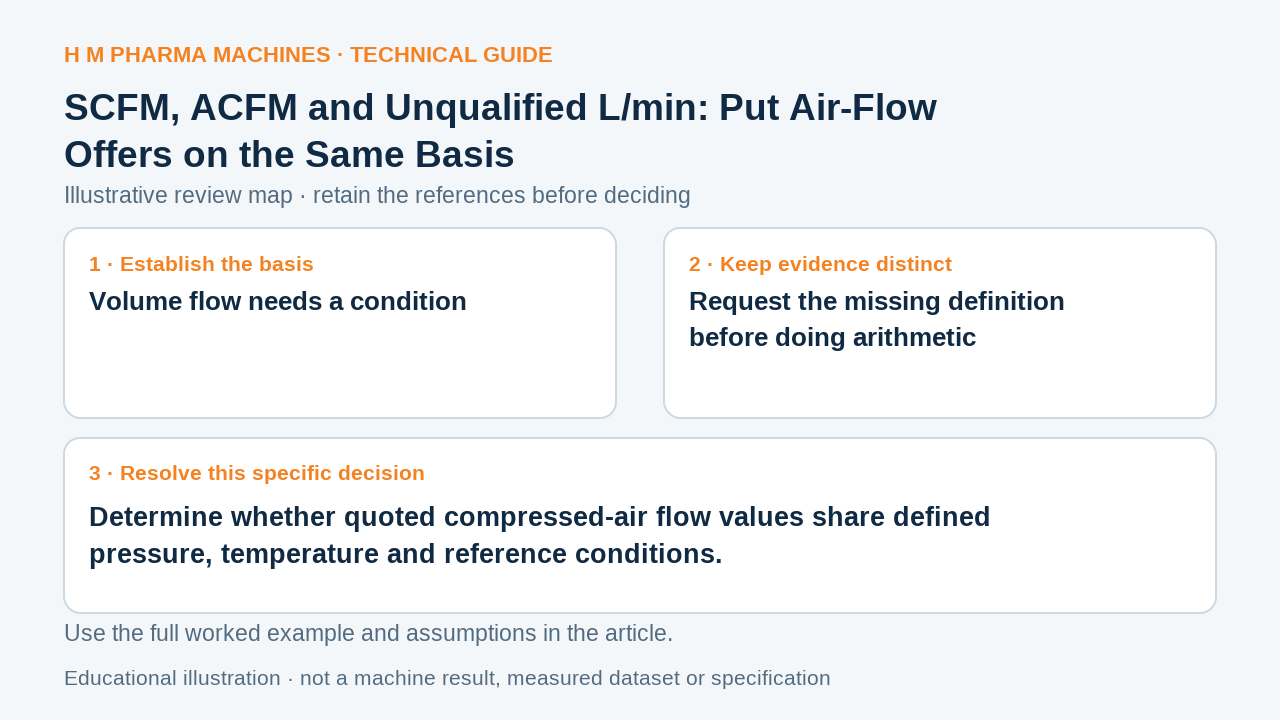
Determine whether quoted compressed-air flow values share defined pressure, temperature and reference conditions.
Read Full Article →Applied engineering reference
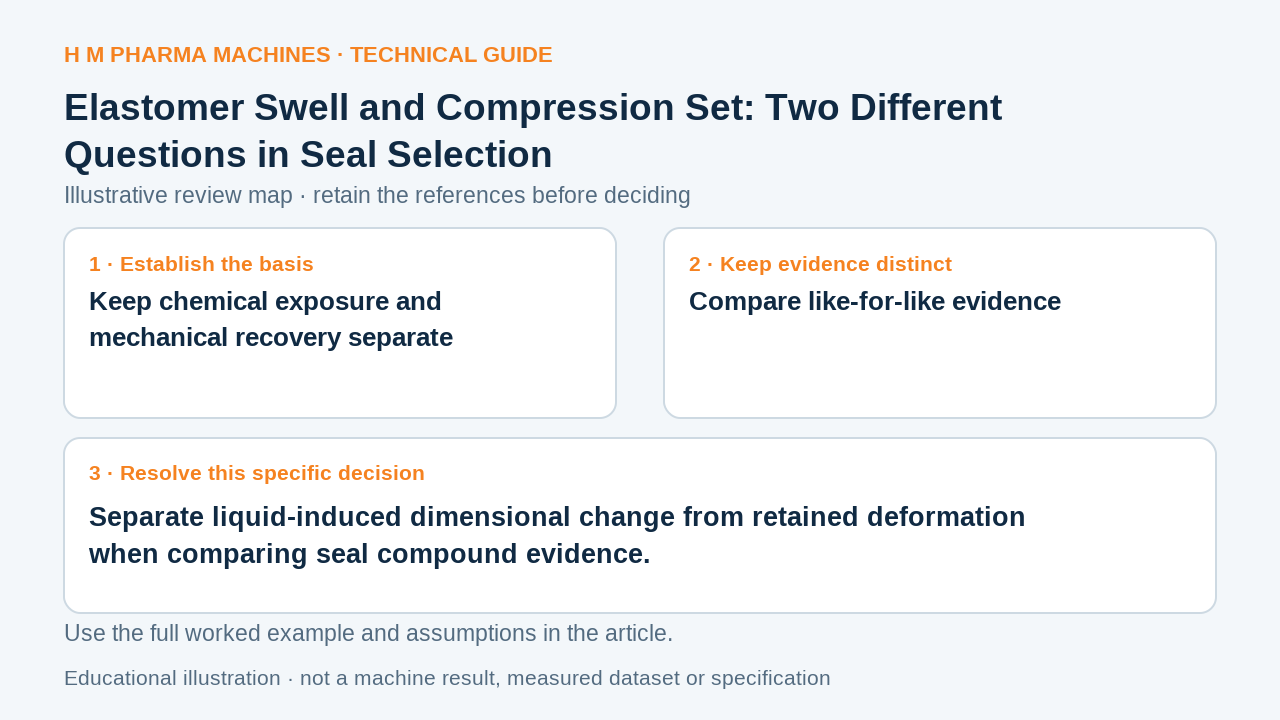
Separate liquid-induced dimensional change from retained deformation when comparing seal compound evidence.
Read Full Article →Applied engineering reference
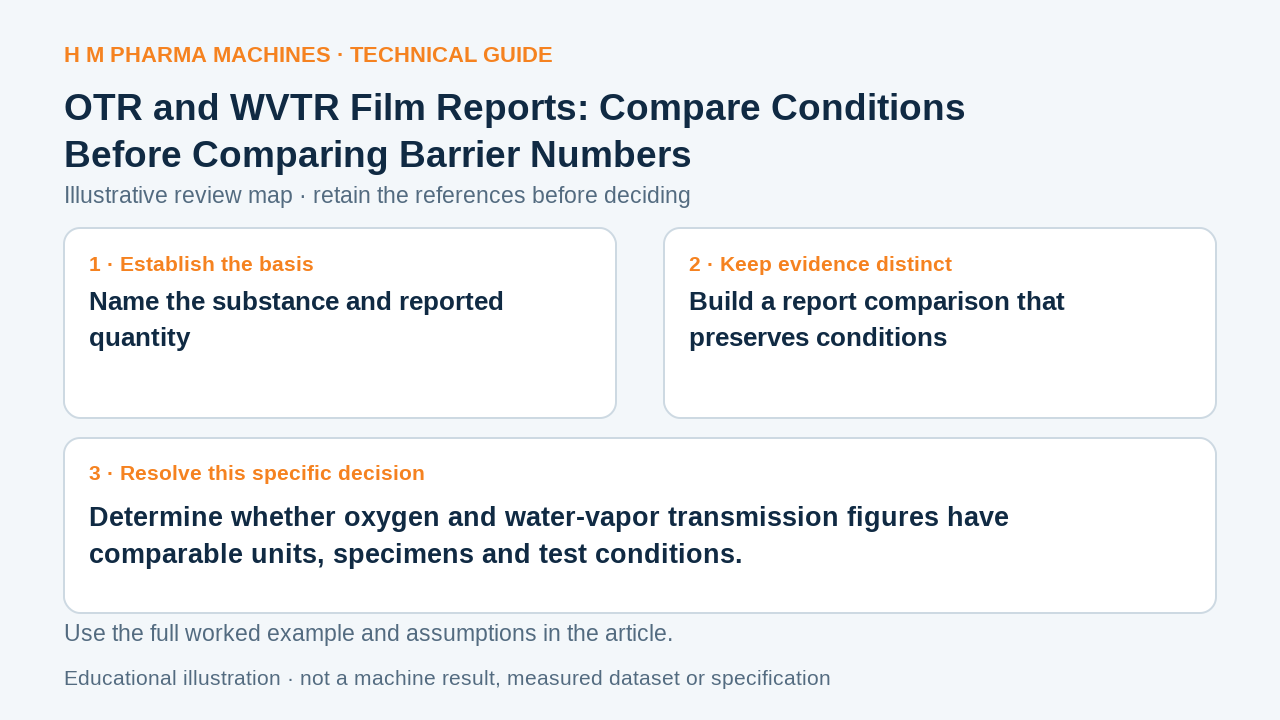
Determine whether oxygen and water-vapor transmission figures have comparable units, specimens and test conditions.
Read Full Article →Applied engineering reference
Specify how a receiver distinguishes a valid lower-endpoint measurement from an invalid or unavailable current signal.
Read Full Article →Applied engineering reference
Determine whether a defined current loop has sufficient voltage for transmitter operation and all series losses.
Read Full Article →Applied engineering reference
Identify whether a mixed-metal wet junction has the conditions for galvanic corrosion and ask an evidence-based design question.
Read Full Article →Share your product, container, closure, required output and process details with our engineering team.