Depth of Field and Depth of Focus: Identify Which Plane May Move
Clarify whether a focus tolerance concerns movement of the inspected object or the position of the camera's image plane.
Read Full Article →
Practical guides for selecting, planning, operating and maintaining pharmaceutical manufacturing and packaging machinery.
Latest articles
Practical guides to washing, filling, capping, labeling and machine planning. Each card has a distinct Library date; actual publication and revision dates remain inside the article.
Machine guide library
Browse guides by their distinct Library date. These collection labels are separate from actual publication and revision dates shown inside each article.
Clarify whether a focus tolerance concerns movement of the inspected object or the position of the camera's image plane.
Read Full Article →Review apparent-size change with object depth separately from whether a camera image remains visually sharp.
Read Full Article →Retain the spatial distortion map and the acquisition conditions before extending a centre calibration to an entire image.
Read Full Article →Read a lens MTF curve at the relevant detail size, field position and optical conditions instead of treating its label as a task guarantee.
Read Full Article →Use a theoretical diffraction calculation to explain why a smaller aperture cannot improve every imaging requirement at once.
Read Full Article →Keep periodic-feature spacing and its position relative to the pixel grid when reviewing a sampling demonstration.
Read Full Article →Distinguish a larger displayed image from newly acquired object detail when comparing camera screenshots.
Read Full Article →Compare the exposure timing of image rows before interpreting moving shapes captured by different shutter architectures.
Read Full Article →Calculate projected object travel during effective exposure while keeping blur tolerance as a separate inspection requirement.
Read Full Article →Calculate trigger-to-exposure displacement separately from the object travel accumulated during exposure.
Read Full Article →Identify the remaining object coverage and unchanged physical sample spacing when a sensor region of interest is reduced.
Read Full Article →Determine whether a smaller image combines pixel values or simply retains a smaller selected sensor region.
Read Full Article →Plan a machine remote-support session with an identified approver, permitted access and changes, information boundaries and a documented closure record.
Read Full Article →Keep electronic amplification distinct from the duration and illumination that determine collected light.
Read Full Article →Separate output code levels from the sensor and processing evidence needed to assess useful image contrast.
Read Full Article →Calculate image-data payload from the complete pixel format, including packing and padding, rather than nominal sample bit depth alone.
Read Full Article →Identify raw colour-filter samples and reconstructed RGB values before comparing colour-inspection images.
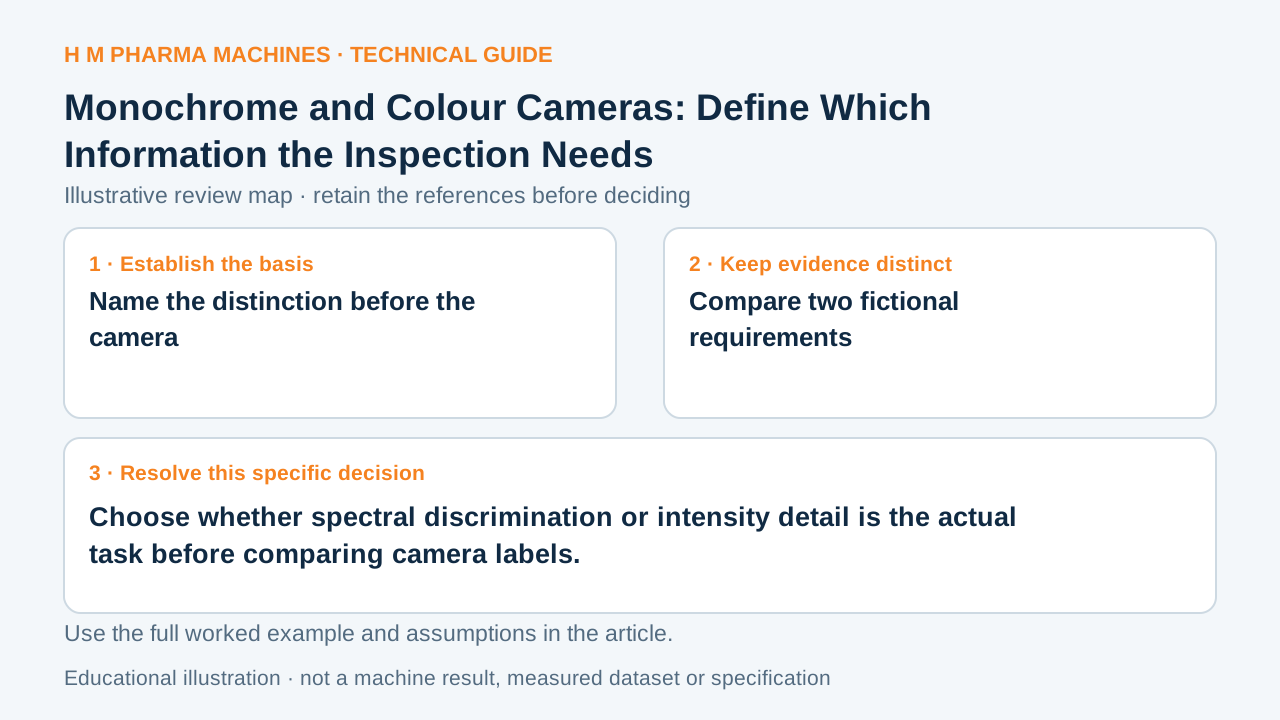
Read Full Article →Choose intensity or spectral-discrimination evidence from the actual inspection question before comparing monochrome and colour cameras.
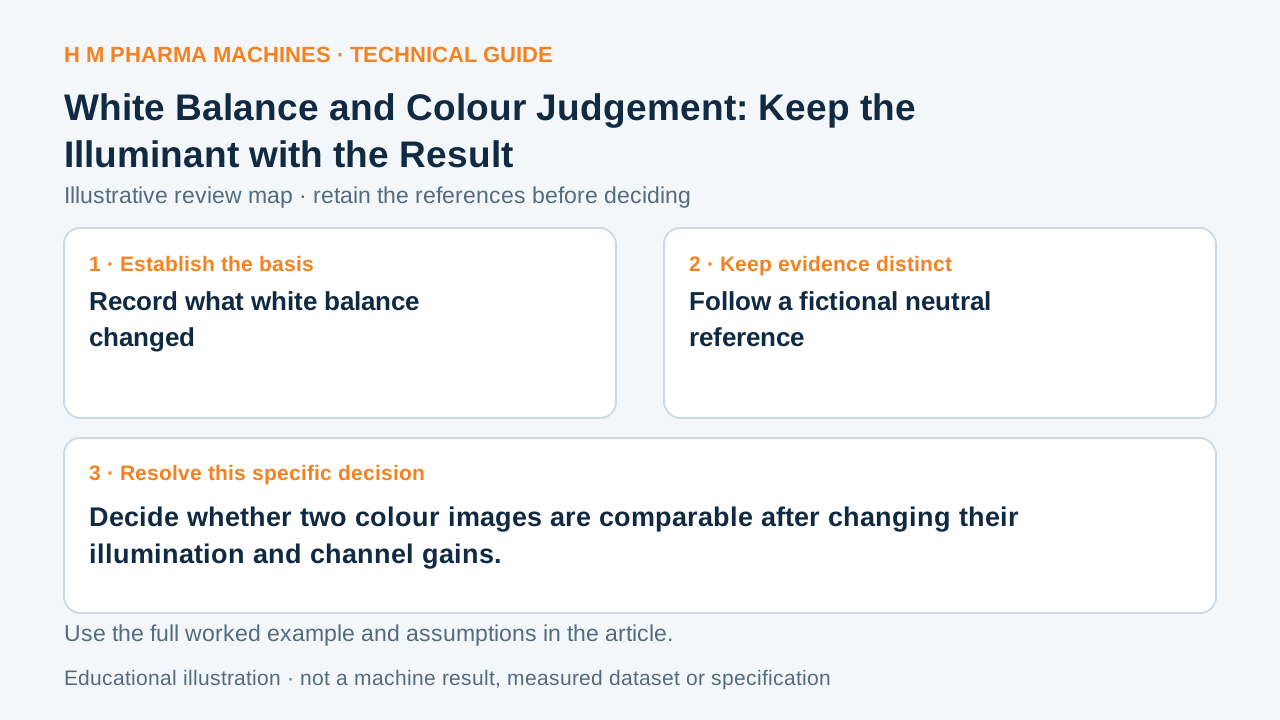
Read Full Article →Preserve illumination and channel-gain settings before treating colour images as comparable inspection evidence.
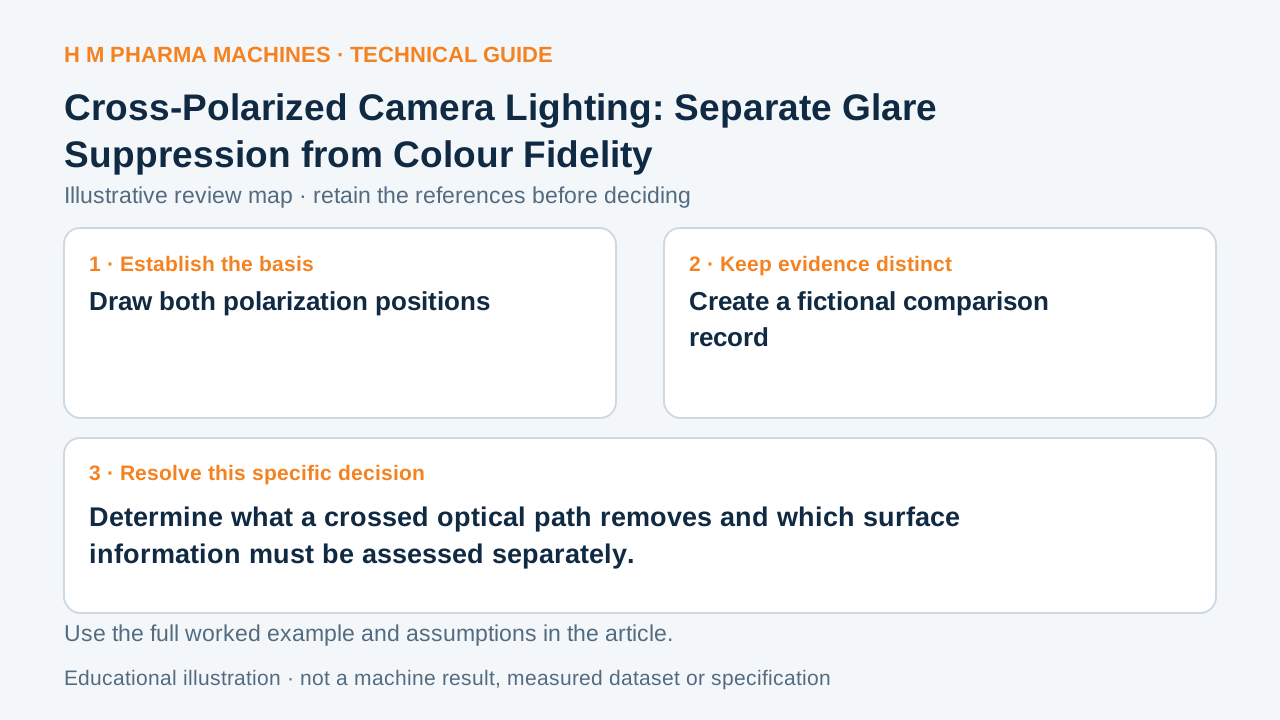
Read Full Article →Keep crossed-polarizer geometry and the required surface information together when reviewing glare suppression.
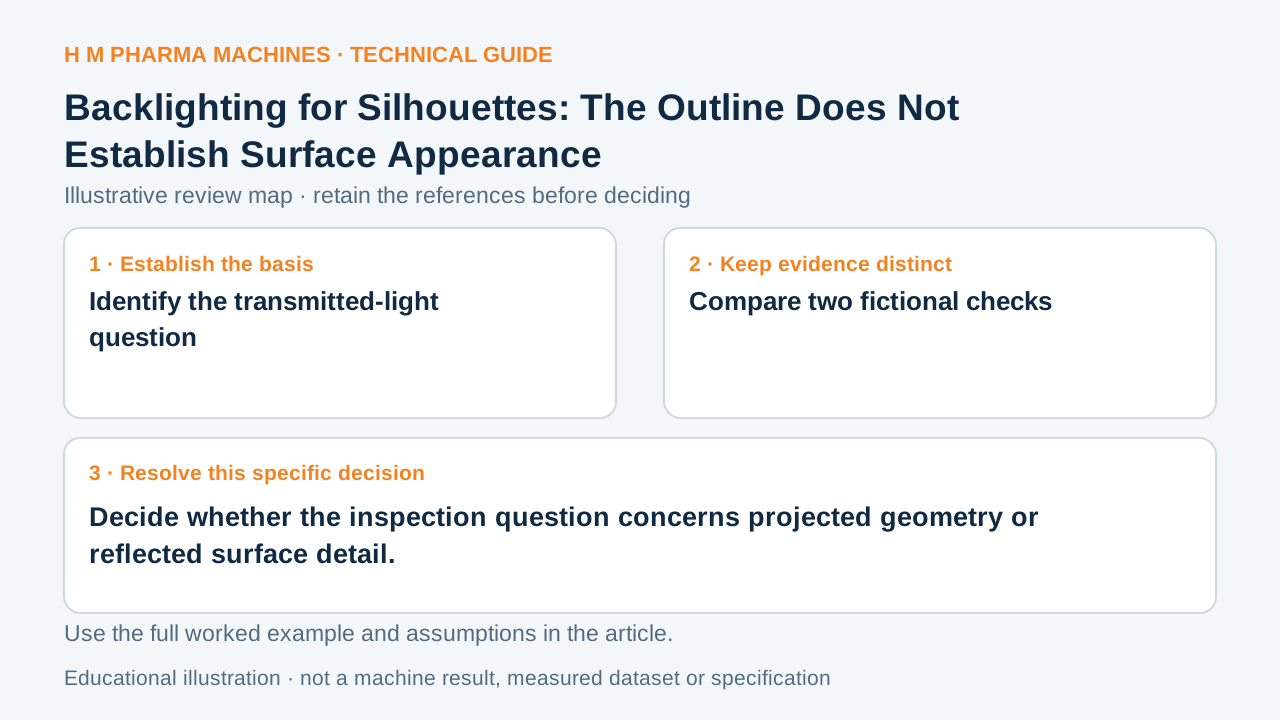
Read Full Article →Decide whether a backlit silhouette supplies the projected-geometry evidence needed by the actual task.
Read Full Article →Define which low-angle scattered-light feature a dark-field trial is intended to reveal.
Read Full Article →Keep reflection geometry with a bright-field observation before assigning an intensity patch to material or print variation.
Read Full Article →Evaluate broad directional illumination from a dome against the curved-surface feature the image must retain.
Read Full Article →Blog overview · Latest articles · Machine guide library
Application-based guidance for selecting equipment according to product, container, closure and output.
Practical considerations for connecting washing, filling, capping, labeling and conveying machinery.
Useful information for changeovers, cleaning, preventive maintenance and dependable machine performance.
Share your product, container, closure, required output and process details with our engineering team.