Heat Resistances in Series: Keep Each Layer in the Model
For layers in series, compare the thermal resistance of each layer instead of judging the stack by thickness alone.
Read Full Article →
Practical guides for selecting, planning, operating and maintaining pharmaceutical manufacturing and packaging machinery.
Latest articles
Practical guides to washing, filling, capping, labeling and machine planning. Each card has a distinct Library date; actual publication and revision dates remain inside the article.
Machine guide library
Browse guides by their distinct Library date. These collection labels are separate from actual publication and revision dates shown inside each article.
For layers in series, compare the thermal resistance of each layer instead of judging the stack by thickness alone.
Read Full Article →Use correctly paired terminal temperatures before replacing an exchanger’s changing temperature difference with one mean value.
Read Full Article →An outlet warmer than the opposite outlet can be feasible in counterflow. Check which temperatures meet locally.
Read Full Article →A heat-duty number can conceal a demanding terminal approach. Compare the closest hot-to-cold temperature difference too.
Read Full Article →Steam and circulating hot water deliver energy through different state changes. Compare their inlet-to-outlet enthalpy paths.
Read Full Article →A saturated-steam table needs an absolute-pressure basis. Resolve barg and bara before using its temperature.
Read Full Article →At saturation, temperature does not tell you how much of a wet steam mixture is vapour.
Read Full Article →A steam temperature above saturation at the same pressure describes superheat, not an increased dryness fraction.
Read Full Article →A steam-side heat balance should state whether the condensate merely forms or also cools before leaving the useful heating boundary.
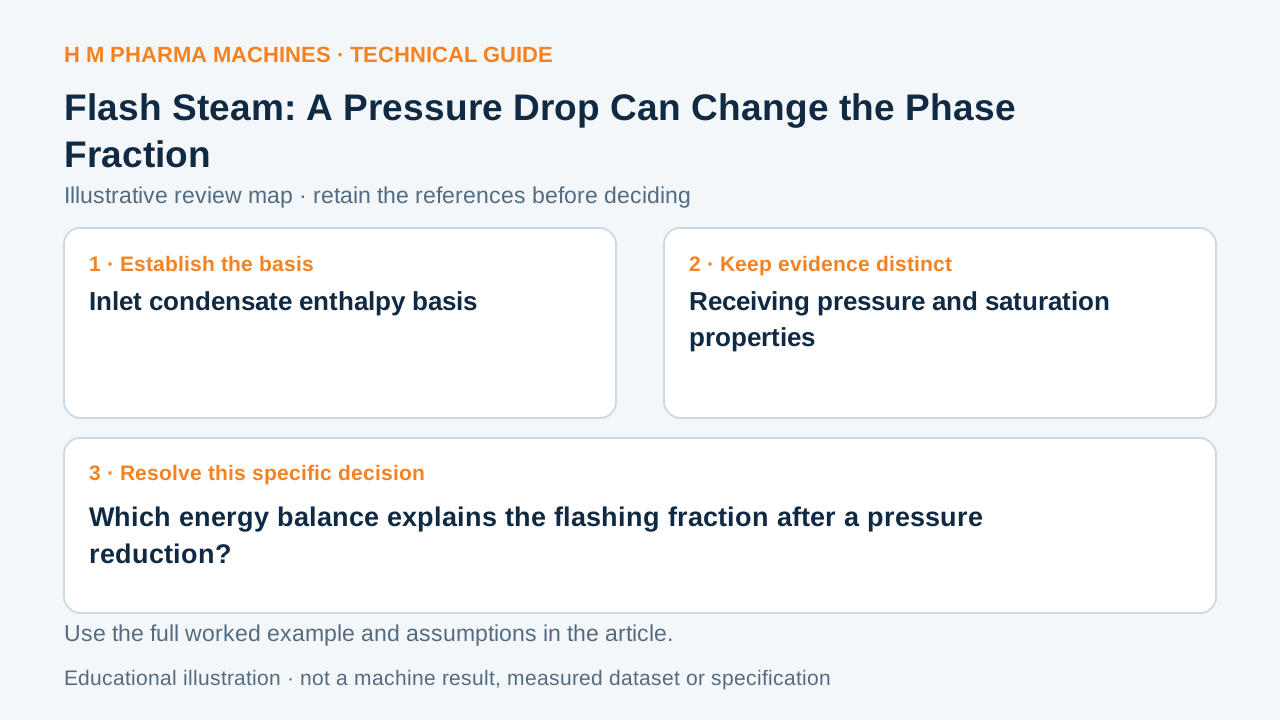
Read Full Article →Visible vapour after condensate pressure reduction can come from flashing. Quantify the possible fraction before treating all vapour as leakage.
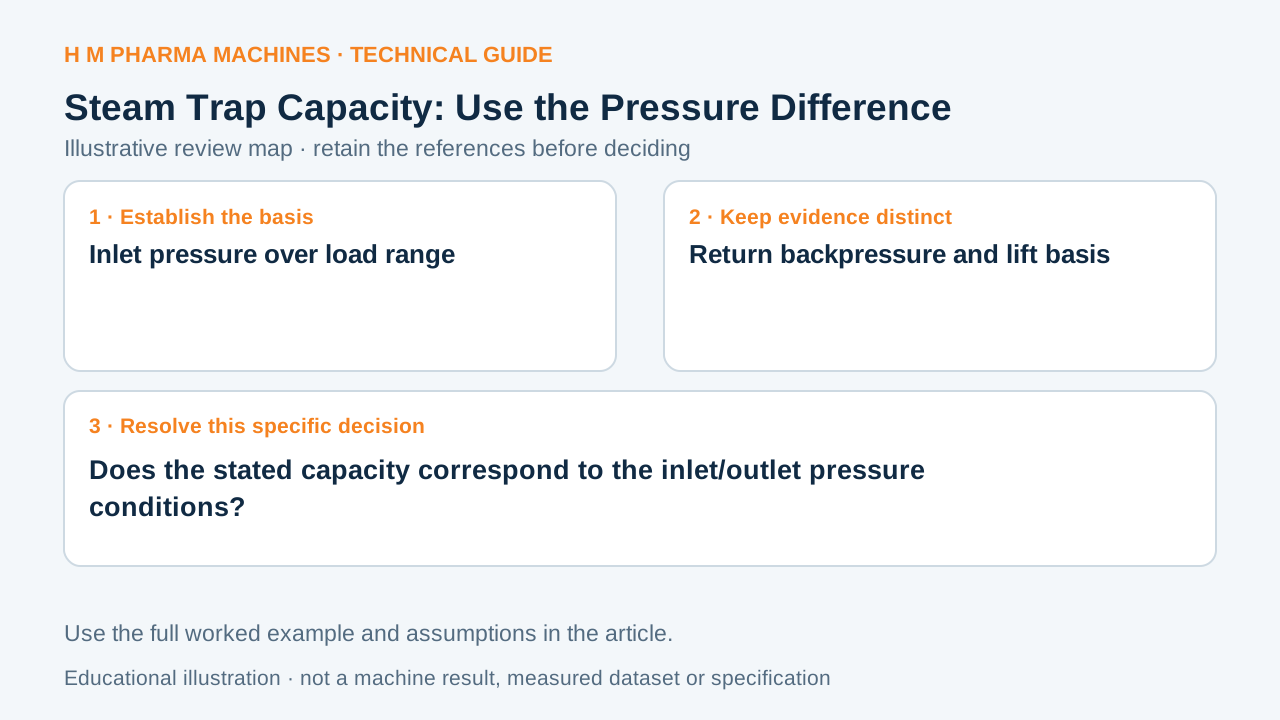
Read Full Article →A trap’s capacity curve must be read at the differential pressure it experiences, including downstream backpressure.
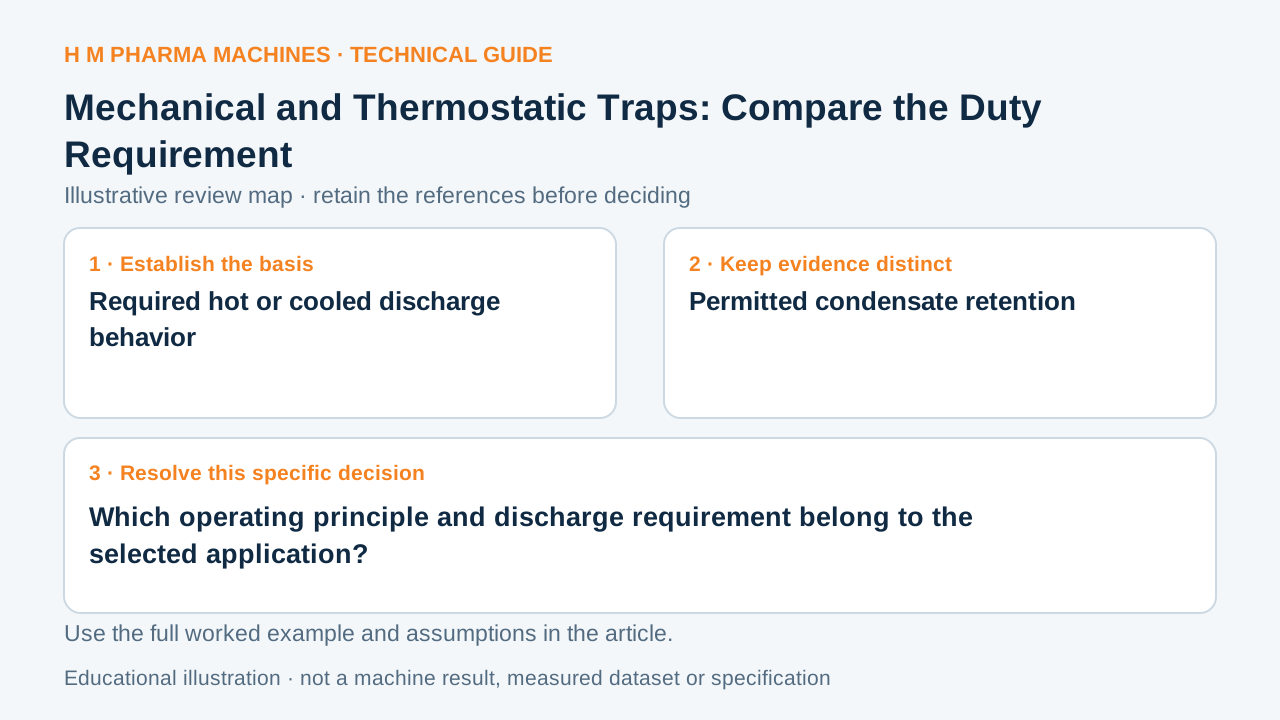
Read Full Article →Steam-trap selection includes when condensate leaves, not merely how many kilograms per hour a table lists.
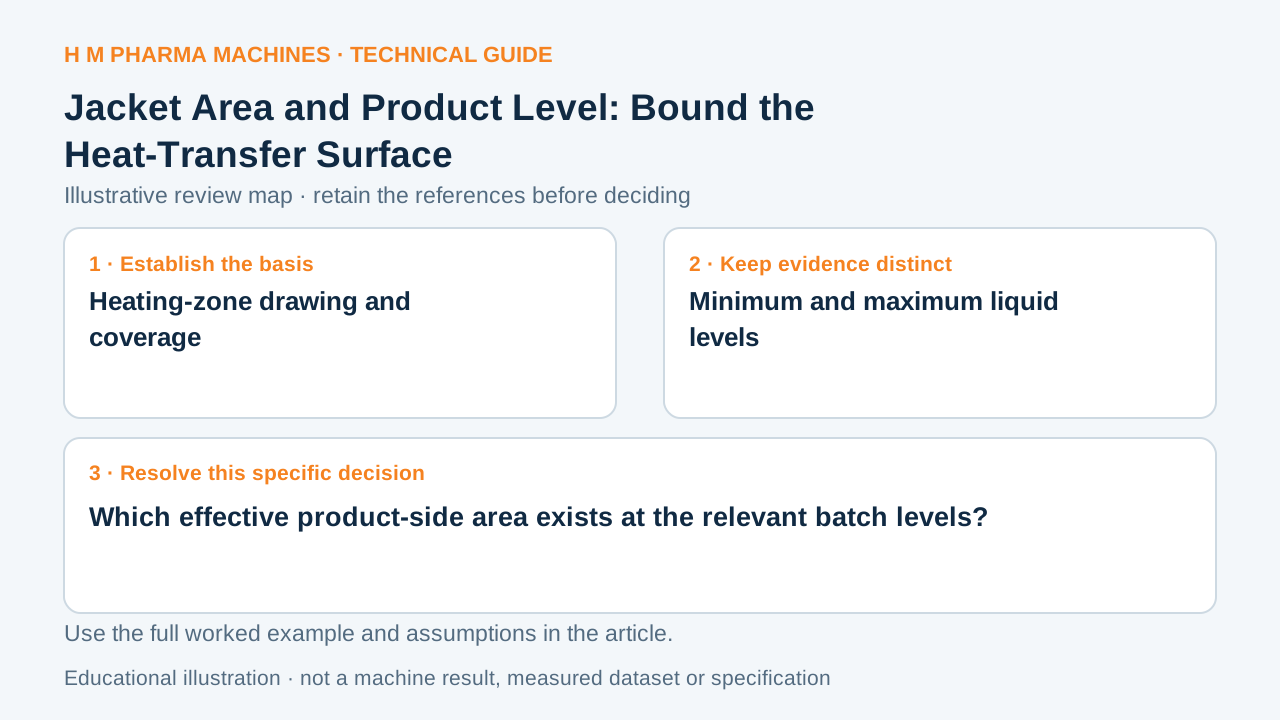
Read Full Article →At a lower batch level, the product may contact less of the heated wall even when the vessel’s total jacket area stays the same.
Read Full Article →Heating a liquid changes its occupied volume. Use a liquid volume-expansion basis before treating an initial fill level as constant.
Read Full Article →An insulation layer around a pipe has a changing heat-flow area. A flat-wall thickness calculation can miss that geometry.
Read Full Article →A convection coefficient belongs to a fluid, flow and geometry condition. It should not travel unchanged between unrelated environments.
Read Full Article →A single-temperature cooling model first needs evidence that internal temperature gradients are small enough to ignore.
Read Full Article →Keep missing container information provisional in a machine enquiry, distinguishing approved drawings, measured samples and unconfirmed pack assumptions.
Read Full Article →Heat diffusion introduces a length-squared time scale. Doubling a conduction distance can matter more than doubling the available time.
Read Full Article →A radiative heat-loss estimate needs absolute temperatures. Raising a Celsius number to the fourth power changes the model incorrectly.
Read Full Article →Wall conduction, fluid-side convection and a stream enthalpy change can describe the same transferred power. Do not add them as independent duties.
Read Full Article →A steam-space pressure reading can include air. Total pressure alone may overstate the steam partial pressure used for saturation temperature.
Read Full Article →Heater kilowatts describe a rate. A heat-up time needs an energy inventory and a realistic useful-power boundary.
Read Full Article →A permitted cooling-water temperature rise is a mass-flow input. Pair it with duty before choosing a nominal water rate.
Read Full Article →Blog overview · Latest articles · Machine guide library
Application-based guidance for selecting equipment according to product, container, closure and output.
Practical considerations for connecting washing, filling, capping, labeling and conveying machinery.
Useful information for changeovers, cleaning, preventive maintenance and dependable machine performance.
Share your product, container, closure, required output and process details with our engineering team.