Applied engineering reference
Hard Coatings and Adhesion: A Surface Hardness Claim Does Not Prove Bond Integrity
Keep coating hardness, adhesion and substrate compatibility as separate evidence in a surface proposal.
Read Full Article →
Applied engineering reading, separated from practical machine selection guides.
Browse by task
Start with the machine or task you are planning. Each topic brings together selection guides, practical checks and relevant engineering references.
Compare container handling, wash access, cleaning utilities and acceptance checks before selecting a washer.
Choose a dosing method and prepare product, container, nozzle and repeatability checks for the machine trial.
Compare cap presentation, closure methods and the evidence needed to approve the finished pack.
Match the container and label format, approve the sample roll, and define coding or inspection evidence.
Define format kits, container references and transfer interfaces for each planned product and pack size.
Prepare the site, utility connections and line interfaces before confirming the machine scope.
Agree trial evidence, dispatch checks, operator training and the spares required for the supplied machine.
Search practical Machine guides first, or choose the separate Engineering reference archive. Use a keyword, a topic, or both.
Search all 737 articles by keyword, topic, or both.
Or browse Machine guides and the Engineering reference archive.
Reference reading
Applied engineering background. These references are separate from machine selection guides.
Engineering references
Background reading is labelled by scope. For practical machine selection, use the separate Machine guides.
Applied engineering reference
Keep coating hardness, adhesion and substrate compatibility as separate evidence in a surface proposal.
Read Full Article →Applied engineering reference
Compare adhesive evidence against the actual shear or peel loading of the proposed joint.
Read Full Article →Applied engineering reference
Distinguish an adhesive joint's handling stage from its stated full-cure condition.
Read Full Article →Applied engineering reference
Keep differential expansion in the duty of an adhesive joint between different materials.
Read Full Article →Applied engineering reference
Distinguish deposited iron contamination from base-material corrosion when investigating stainless staining.
Read Full Article →Applied engineering reference
Temperature alone does not describe the energy needed to heat a batch. Name its mass, material and temperature change first.
Read Full Article →Applied engineering reference
A temperature plateau during a phase change can still consume or release a substantial amount of energy.
Read Full Article →Applied engineering reference
A wall material’s conductivity and an exchanger’s overall coefficient describe different parts of the thermal problem.
Read Full Article →Applied engineering reference
For layers in series, compare the thermal resistance of each layer instead of judging the stack by thickness alone.
Read Full Article →Applied engineering reference
Use correctly paired terminal temperatures before replacing an exchanger’s changing temperature difference with one mean value.
Read Full Article →Applied engineering reference
An outlet warmer than the opposite outlet can be feasible in counterflow. Check which temperatures meet locally.
Read Full Article →Applied engineering reference
A heat-duty number can conceal a demanding terminal approach. Compare the closest hot-to-cold temperature difference too.
Read Full Article →Applied engineering reference
Steam and circulating hot water deliver energy through different state changes. Compare their inlet-to-outlet enthalpy paths.
Read Full Article →Applied engineering reference
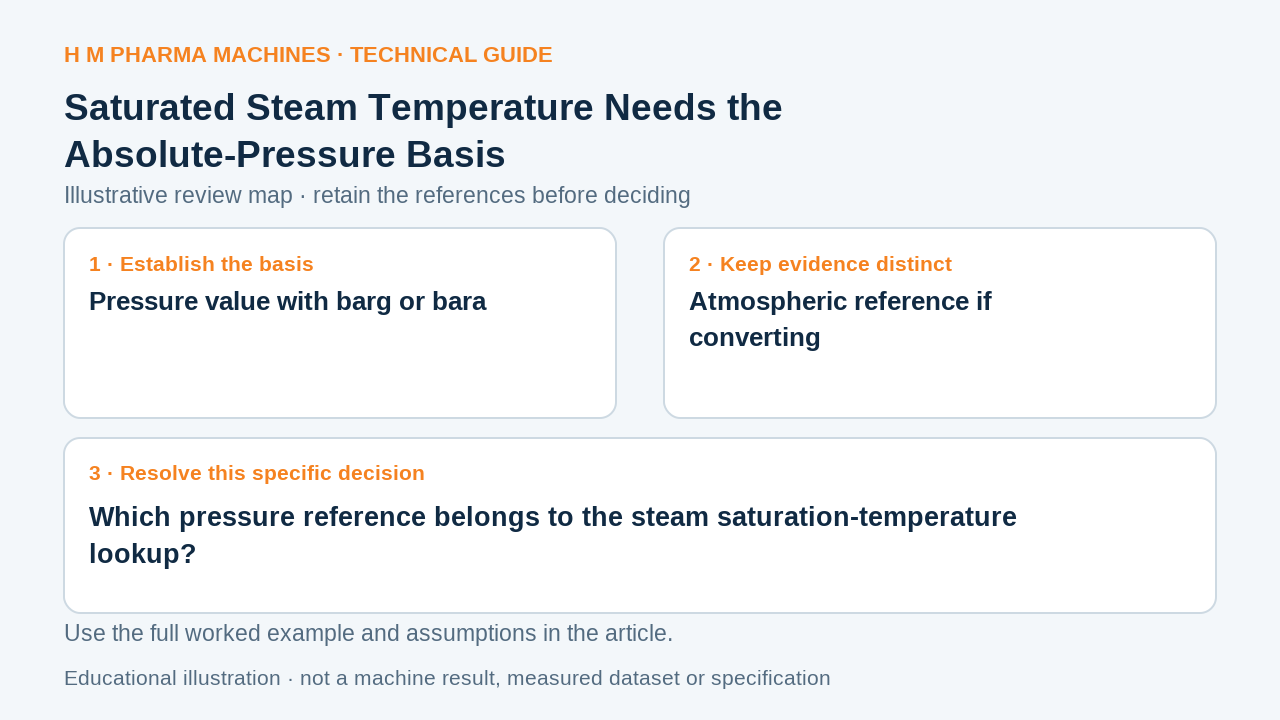
A saturated-steam table needs an absolute-pressure basis. Resolve barg and bara before using its temperature.
Read Full Article →Applied engineering reference
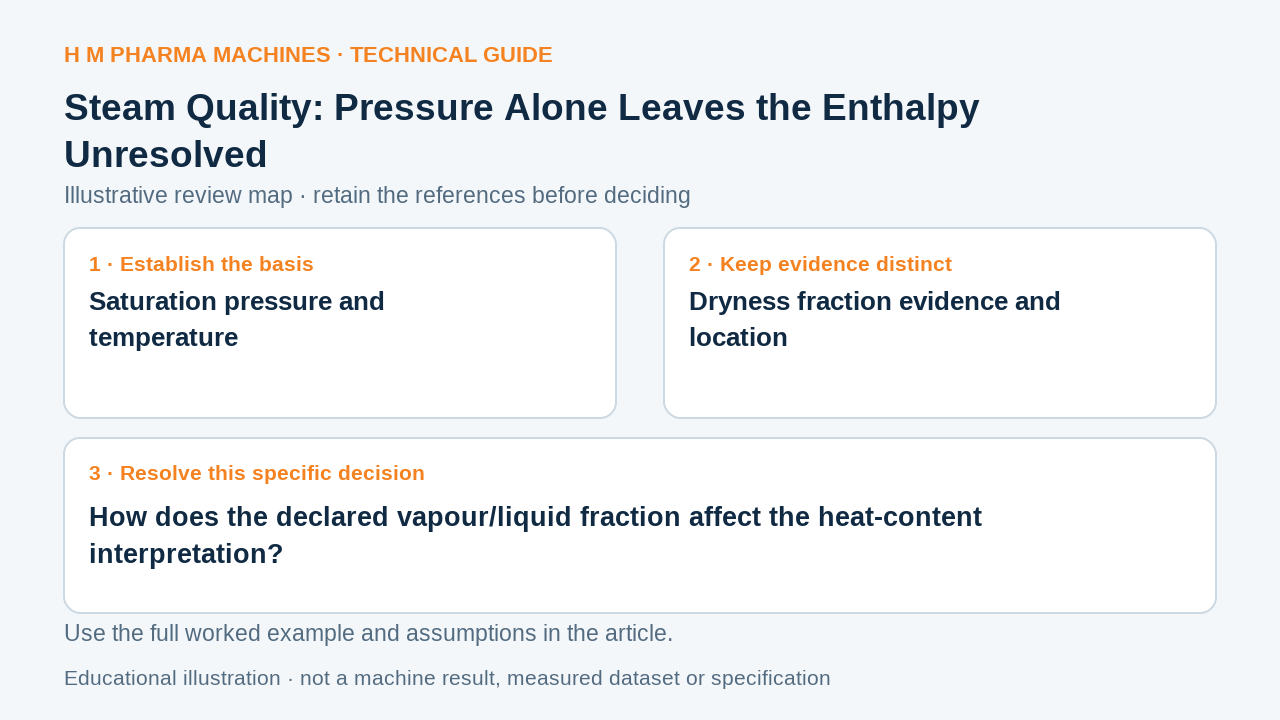
At saturation, temperature does not tell you how much of a wet steam mixture is vapour.
Read Full Article →Applied engineering reference
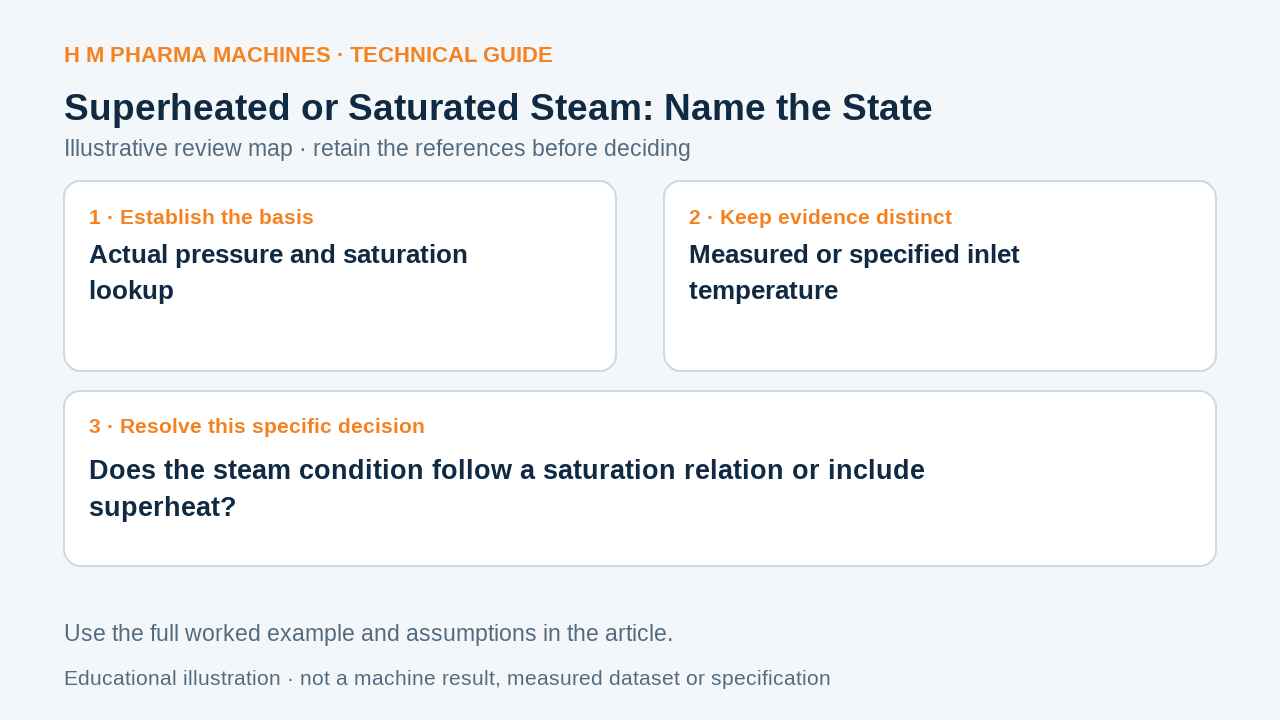
A steam temperature above saturation at the same pressure describes superheat, not an increased dryness fraction.
Read Full Article →Applied engineering reference
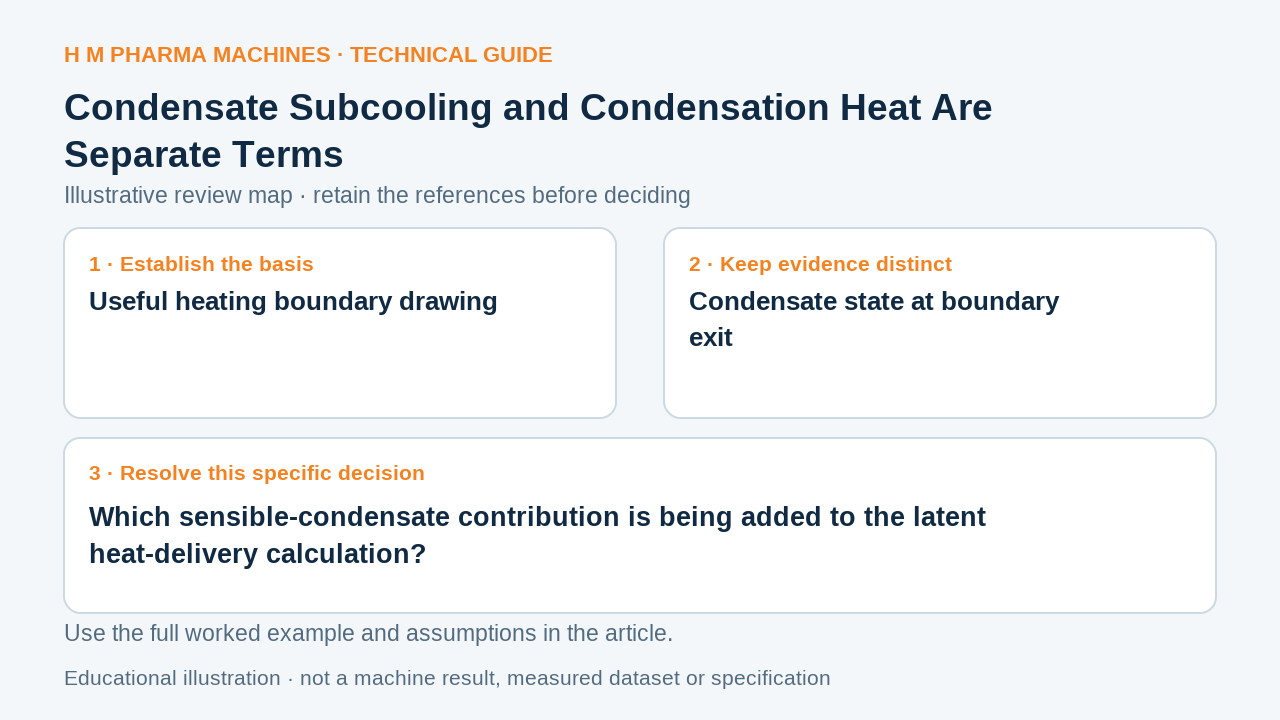
A steam-side heat balance should state whether the condensate merely forms or also cools before leaving the useful heating boundary.
Read Full Article →Applied engineering reference
Visible vapour after condensate pressure reduction can come from flashing. Quantify the possible fraction before treating all vapour as leakage.
Read Full Article →Applied engineering reference
A trap’s capacity curve must be read at the differential pressure it experiences, including downstream backpressure.
Read Full Article →Applied engineering reference
Steam-trap selection includes when condensate leaves, not merely how many kilograms per hour a table lists.
Read Full Article →Applied engineering reference
At a lower batch level, the product may contact less of the heated wall even when the vessel’s total jacket area stays the same.
Read Full Article →Applied engineering reference
Heating a liquid changes its occupied volume. Use a liquid volume-expansion basis before treating an initial fill level as constant.
Read Full Article →Applied engineering reference
An insulation layer around a pipe has a changing heat-flow area. A flat-wall thickness calculation can miss that geometry.
Read Full Article →Applied engineering reference
A convection coefficient belongs to a fluid, flow and geometry condition. It should not travel unchanged between unrelated environments.
Read Full Article →Share your product, container, closure, required output and process details with our engineering team.