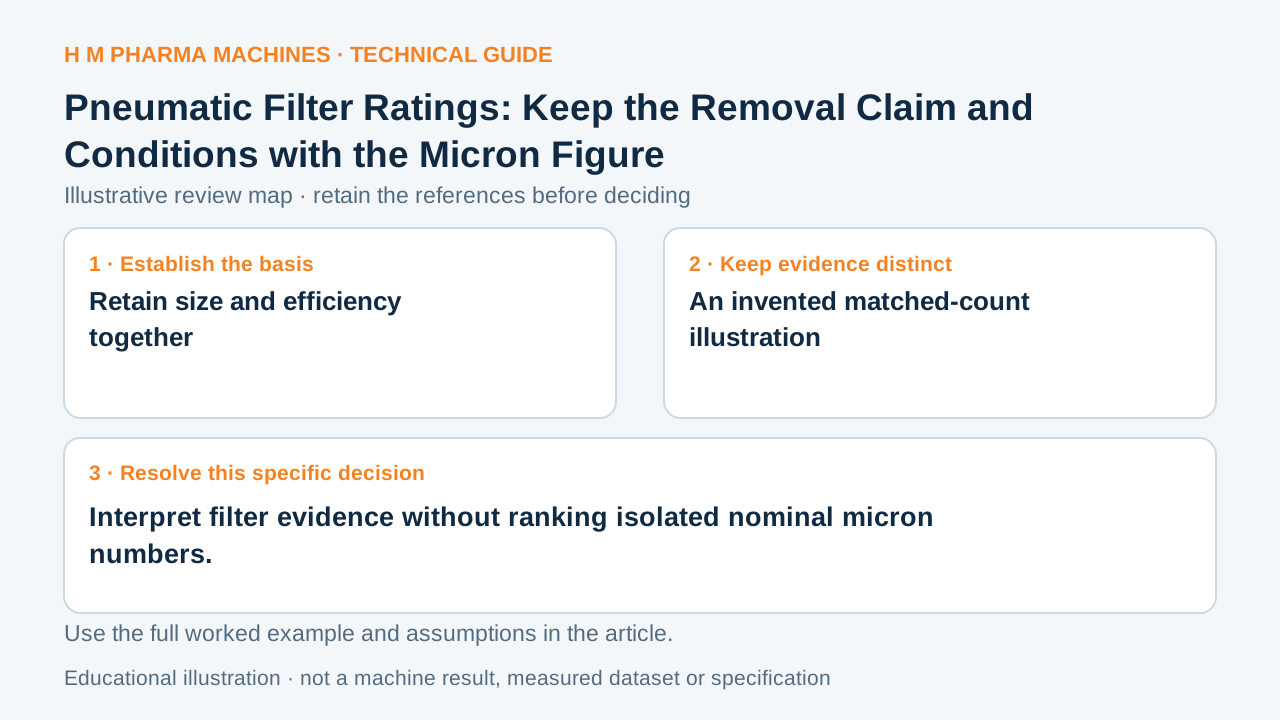
Pneumatic Filter Ratings: Keep the Removal Claim and Conditions with the Micron Figure
Compare particle-removal evidence at an identified size and efficiency rather than ranking isolated micron numbers.
Read Full Article →
Practical guides for selecting, planning, operating and maintaining pharmaceutical manufacturing and packaging machinery.
Latest articles
Practical guides to washing, filling, capping, labeling and machine planning. Each card has a distinct Library date; actual publication and revision dates remain inside the article.
Machine guide library
Browse guides by their distinct Library date. These collection labels are separate from actual publication and revision dates shown inside each article.
Compare particle-removal evidence at an identified size and efficiency rather than ranking isolated micron numbers.
Read Full Article →Keep exhaust restriction and condition evidence beside a pneumatic silencer's noise-control function.
Read Full Article →Distinguish a controller's retained last-command value from the valve's physical condition after power loss.
Read Full Article →Keep pneumatic-tube outside diameter separate from internal bore when comparing fitting compatibility and flow geometry.
Read Full Article →Compare the actual tube material and specified conditions with the chosen push-in fitting's compatibility statement.
Read Full Article →Compare a pneumatic tube bend against the selected tubing's actual radius definition and stated test conditions.
Read Full Article →Keep compressed-air leak flow distinct from the electrical savings that the real compressor controls can deliver after repair.
Read Full Article →Compare timer-driven and condensate-responsive drain behavior against actual removal and air-loss requirements.
Read Full Article →A rotor’s RPM needs its diameter before it becomes a tip velocity. Keep those two inputs together in a scale comparison.
Read Full Article →A stirred-vessel Reynolds number uses an impeller scale. Do not copy a pipe-flow formula without defining the geometry.
Read Full Article →A mixing-power estimate can be very sensitive to speed and diameter. Expose those exponents before comparing rounded motor figures.
Read Full Article →Geometric scale-up can preserve one mixing criterion while changing another. State which similarity condition is being chosen.
Read Full Article →Identify which claims belong to a frozen-rotor approximation and which need time-dependent mixing evidence.
Read Full Article →An impeller’s pumping rate is a local discharge quantity. It is not automatically a tank blending-time certificate.
Read Full Article →Define what concentration agreement means before comparing two reported mixing times.
Read Full Article →A delayed tracer signal can reflect the route from injection to observation. It does not identify a global mixing time by itself.
Read Full Article →Describe the needed bulk fluid movement before choosing an impeller family from its appearance.
Read Full Article →Visible fluid rotation can be impressive while exchange between vessel regions remains weak. Identify the motion the task actually needs.
Read Full Article →When a proposal includes a draft tube, review the defined circulation passage rather than treating the tube as extra storage volume.
Read Full Article →Keeping solids off the bottom and producing the same concentration everywhere are different suspension requirements.
Read Full Article →Use a Stokes settling estimate only after checking the particle and flow assumptions that make it meaningful.
Read Full Article →A settling estimate for one isolated particle can overstate the settling speed of an interacting suspension.
Read Full Article →Before estimating a particle’s migration rate, establish whether its buoyancy-corrected weight points downward or upward.
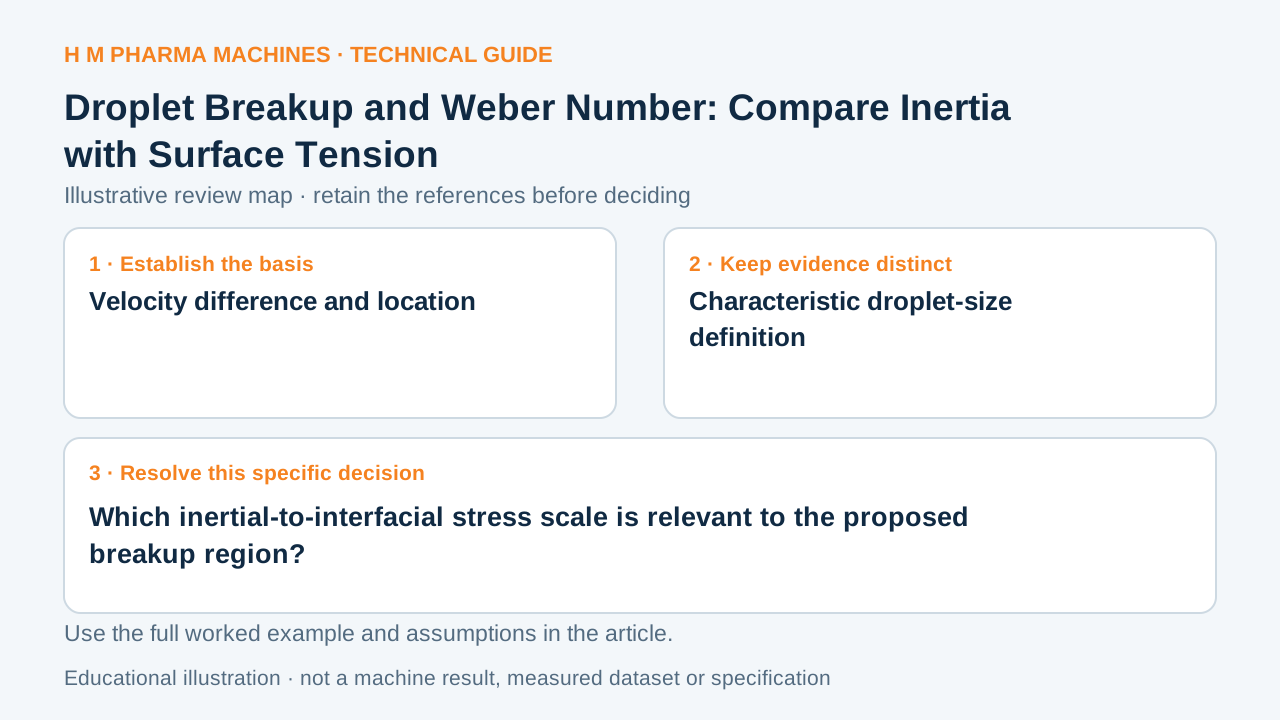
Read Full Article →A droplet Weber number needs a velocity and length scale that belong to the selected breakup model.
Read Full Article →Blog overview · Latest articles · Machine guide library
Application-based guidance for selecting equipment according to product, container, closure and output.
Practical considerations for connecting washing, filling, capping, labeling and conveying machinery.
Useful information for changeovers, cleaning, preventive maintenance and dependable machine performance.
Share your product, container, closure, required output and process details with our engineering team.