304 or 316 Stainless Steel: Build a Chloride Exposure Matrix Before Selecting
Compare stainless material proposals against the actual chloride, temperature and exposure environment.
Read Full Article →
Practical guides for selecting, planning, operating and maintaining pharmaceutical manufacturing and packaging machinery.
Latest articles
Practical guides to washing, filling, capping, labeling and machine planning. Each card has a distinct Library date; actual publication and revision dates remain inside the article.
Machine guide library
Browse guides by their distinct Library date. These collection labels are separate from actual publication and revision dates shown inside each article.
Compare stainless material proposals against the actual chloride, temperature and exposure environment.
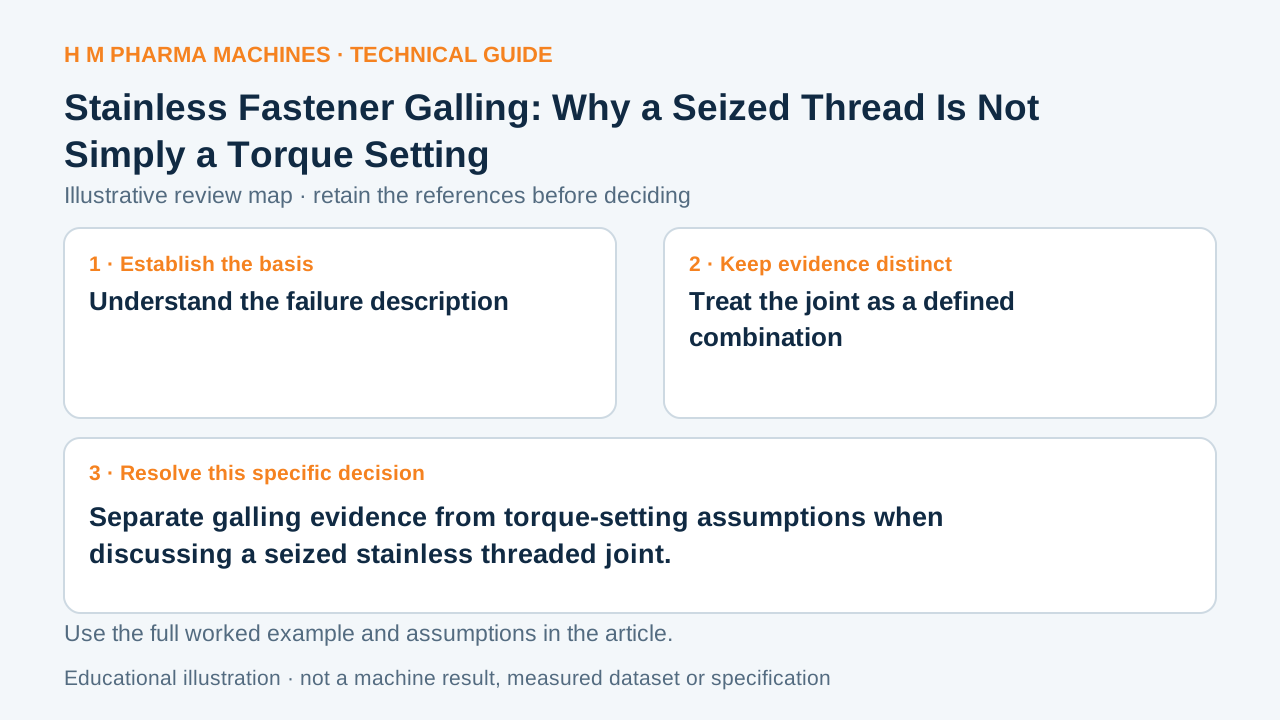
Read Full Article →Separate galling evidence from torque-setting assumptions when discussing a seized stainless threaded joint.
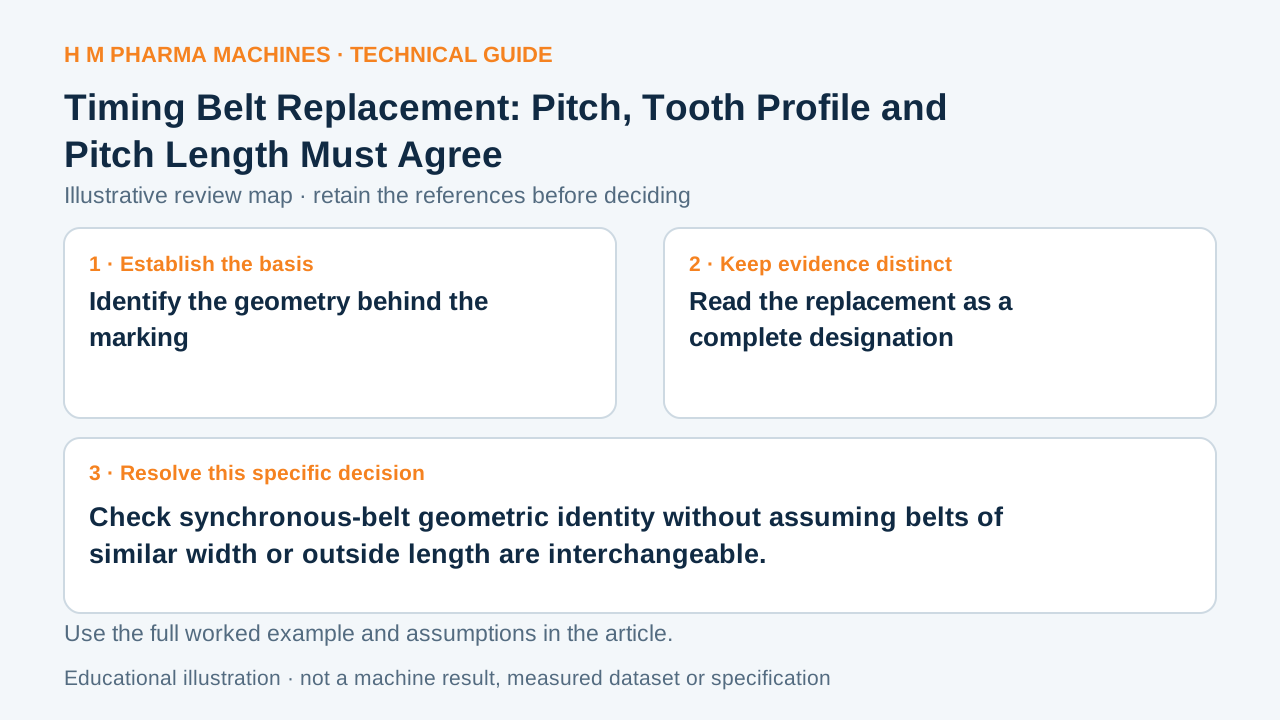
Read Full Article →Check synchronous-belt geometric identity without assuming belts of similar width or outside length are interchangeable.
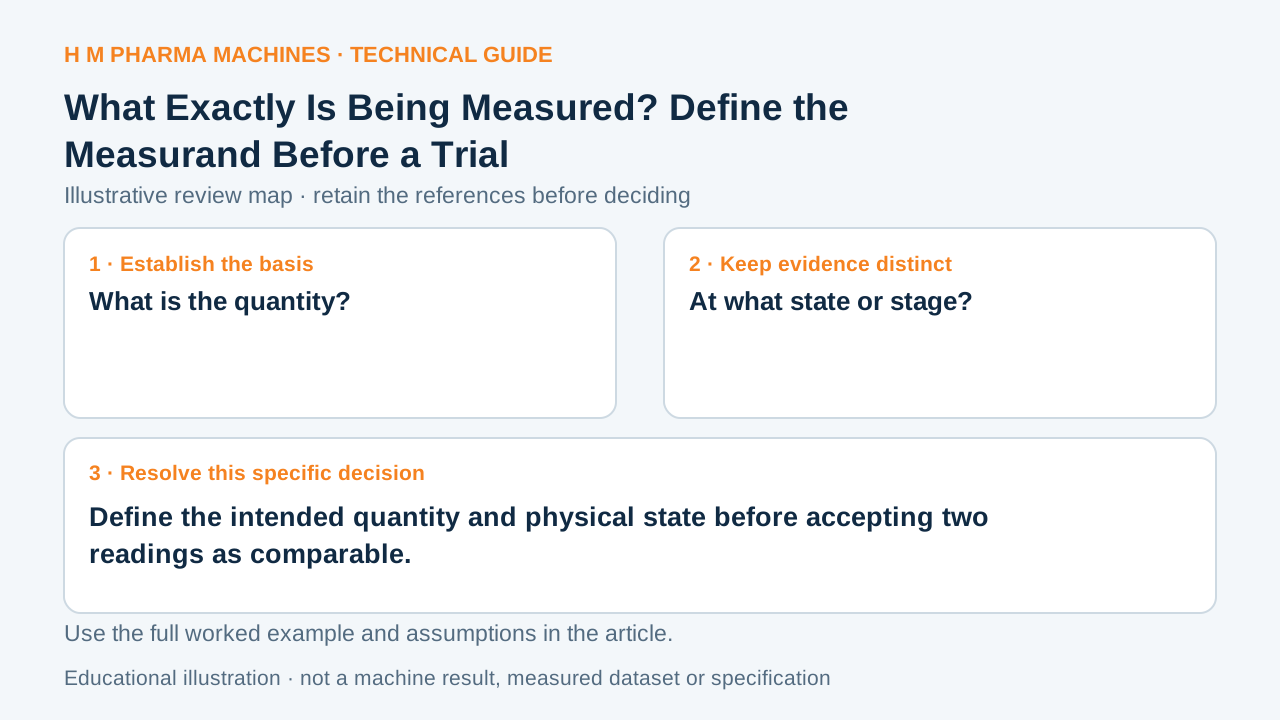
Read Full Article →A number with a unit can still answer the wrong question. Specify the intended quantity, object and condition before the trial.
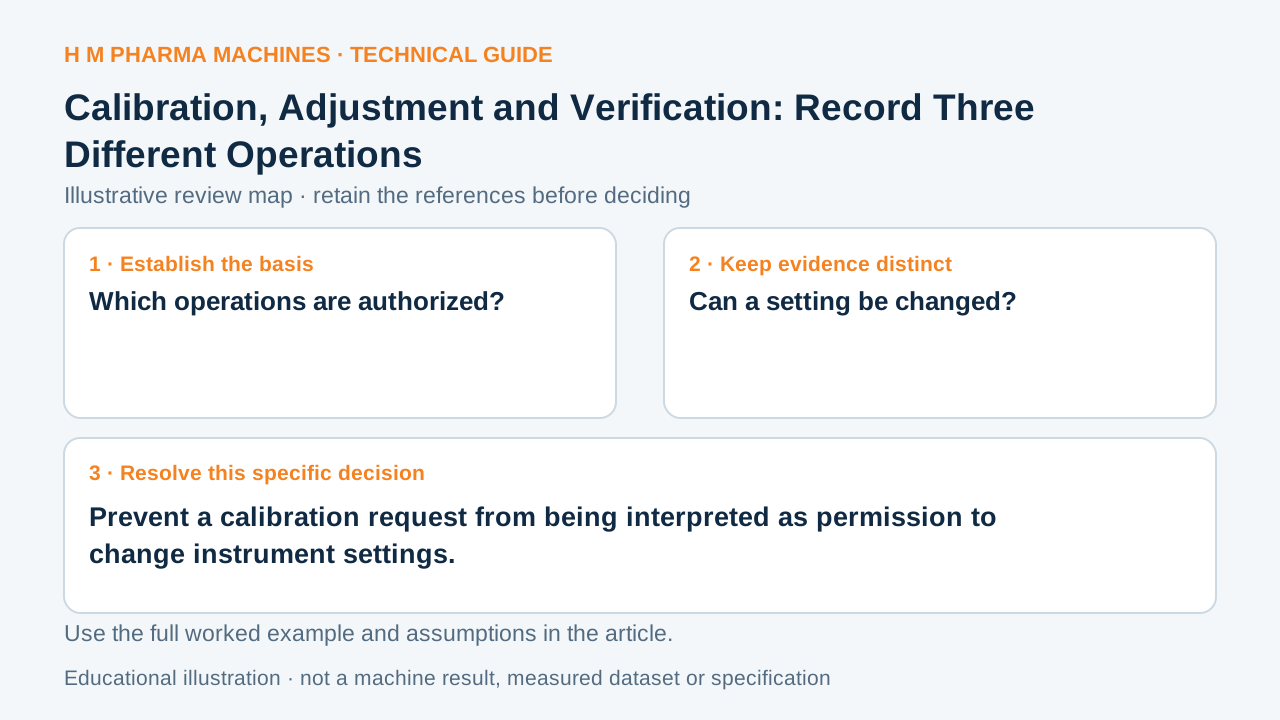
Read Full Article →A calibration relationship, a setting change and a conformity decision are different deliverables. State which operations the service request includes.
Read Full Article →The sign convention in a calibration table matters. Write the equation before applying any correction to production readings.
Read Full Article →Traceability concerns a measurement result and its reference chain. An equipment sticker helps identify status but cannot describe the whole chain.
Read Full Article →A display may show a value outside the interval covered by the instrument’s stated measurement conditions. Compare the correct intervals.
Read Full Article →The last displayed digit describes a reading increment. It does not summarize every influence on the measured result.
Read Full Article →Type A and Type B identify evaluation approaches. They are not interchangeable labels for random and systematic error.
Read Full Article →An uncertainty budget needs compatible component definitions. Read the certificate’s uncertainty label and factor before entering the number.
Read Full Article →A ± limit is not automatically one standard deviation. State the distribution assumption before converting a bounded contribution.
Read Full Article →Two inputs that share a reference or correction can be related. An uncertainty budget must account for that relationship.
Read Full Article →A temperature uncertainty and a mass uncertainty cannot be added directly. The measurement model connects each input to the result.
Read Full Article →Compare bench or manual pilot packaging observations with the intended commercial cycle, retaining operator interventions, holds and untested differences.
Read Full Article →A percentage can become misleading near a zero result. Keep the absolute uncertainty, units and denominator visible.
Read Full Article →The coverage factor scales standard uncertainty. Its probability interpretation depends on the applicable distribution and evaluation.
Read Full Article →A calibration fit and an ongoing check answer different questions. Preserve the check standard’s identity and independent observation history.
Read Full Article →A sensor’s sensitivity and a display’s resolution describe different properties. Keep their units and definitions separate.
Read Full Article →A response time number needs its test definition. Identify the input step and the criterion used to judge the response.
Read Full Article →A calibration equation has a direction. Label the input and output before implementing it in a spreadsheet.
Read Full Article →Closely grouped readings do not establish agreement with a reference. Retain both repeatability data and the reference comparison.
Read Full Article →A component statement and a complete-system statement may cover the same influence. Check their scope before combining them.
Read Full Article →Zeroing establishes one aspect of the indication. The response at nonzero quantities needs its own applicable evidence.
Read Full Article →Blog overview · Latest articles · Machine guide library
Application-based guidance for selecting equipment according to product, container, closure and output.
Practical considerations for connecting washing, filling, capping, labeling and conveying machinery.
Useful information for changeovers, cleaning, preventive maintenance and dependable machine performance.
Share your product, container, closure, required output and process details with our engineering team.