Normally Open and Normally Closed: Define the Referenced Physical State
Interpret normally open and normally closed using the defined unactuated state.
Read Full Article →
Practical guides for selecting, planning, operating and maintaining pharmaceutical manufacturing and packaging machinery.
Latest articles
Practical guides to washing, filling, capping, labeling and machine planning. Each card has a distinct Library date; actual publication and revision dates remain inside the article.
Machine guide library
Browse guides by their distinct Library date. These collection labels are separate from actual publication and revision dates shown inside each article.
Interpret normally open and normally closed using the defined unactuated state.
Read Full Article →Identify whether a receiver expects a potential-free contact or a powered signal before accepting an interface proposal.
Read Full Article →Compare relay contact ratings with the actual AC/DC and load-type condition.
Read Full Article →Keep release behavior with the actual coil-transient suppression arrangement.
Read Full Article →Distinguish protective-earth purpose from the electrical reference used by a signal circuit.
Read Full Article →Keep a cable shield's interference-control role distinct from required protective bonding.
Read Full Article →Check differential signal magnitude and common-mode voltage against their separate receiver limits.
Read Full Article →Evaluate how source and receiver impedance can change a nominal analog voltage before accepting an interface.
Read Full Article →Identify the domains and paths covered by a stated galvanic-isolation boundary.
Read Full Article →Compare electrical insulation thermal designation and enclosure protection as separate rating questions.
Read Full Article →Keep circuit-breaker current rating distinct from its stated fault-interruption capacity and voltage basis.
Read Full Article →A two-wire RTD reading includes more than the sensing element. Review the complete resistance path before comparing a remote probe with a bench reading.
Read Full Article →Three wires describe a probe connection. They do not, by themselves, prove how a particular resistance input handles the third lead.
Read Full Article →Four-wire sensing can remove source-lead voltage drops from the measured voltage path. The current source still has operating limits that belong in the review.
Read Full Article →An RTD requires electrical excitation. The associated heat can affect the element temperature, so review excitation together with its surrounding medium.
Read Full Article →A platinum probe label is only part of its electrical identity. Match nominal resistance, curve information and input configuration before using converted temperatures.
Read Full Article →Cold-junction compensation needs an applicable reference temperature. Heat near the connector can make that reference differ from the actual thermocouple transition.
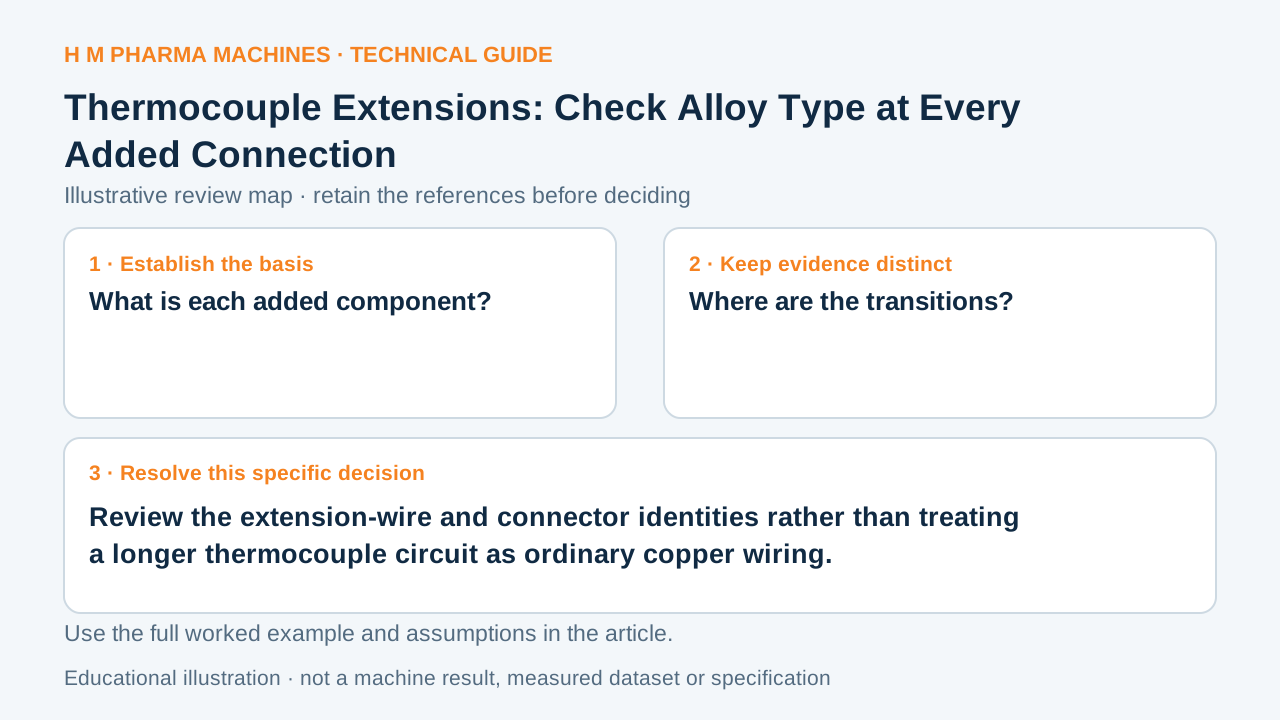
Read Full Article →A thermocouple extension changes the electrical path. Document the wire and connector types before accepting a drawing that simply labels the cable “temperature”.
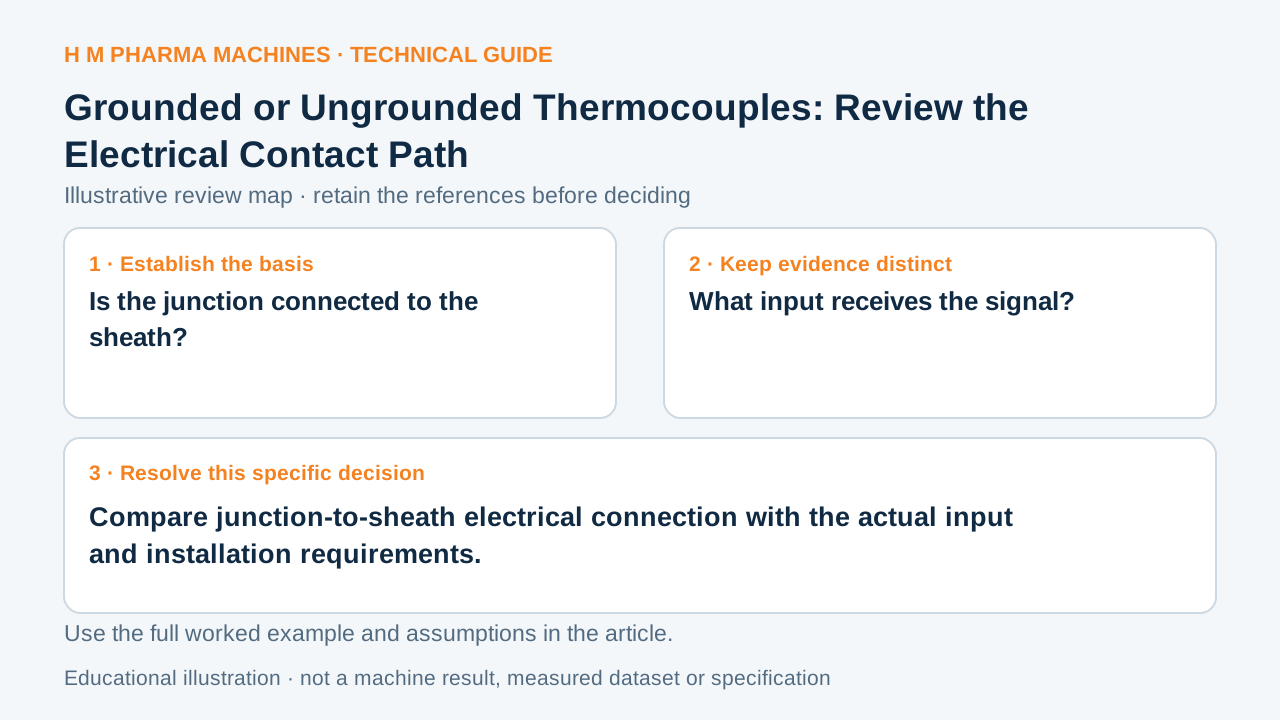
Read Full Article →A thermocouple junction can be electrically connected to its sheath or isolated from it. Keep that construction choice separate from the thermocouple letter type.
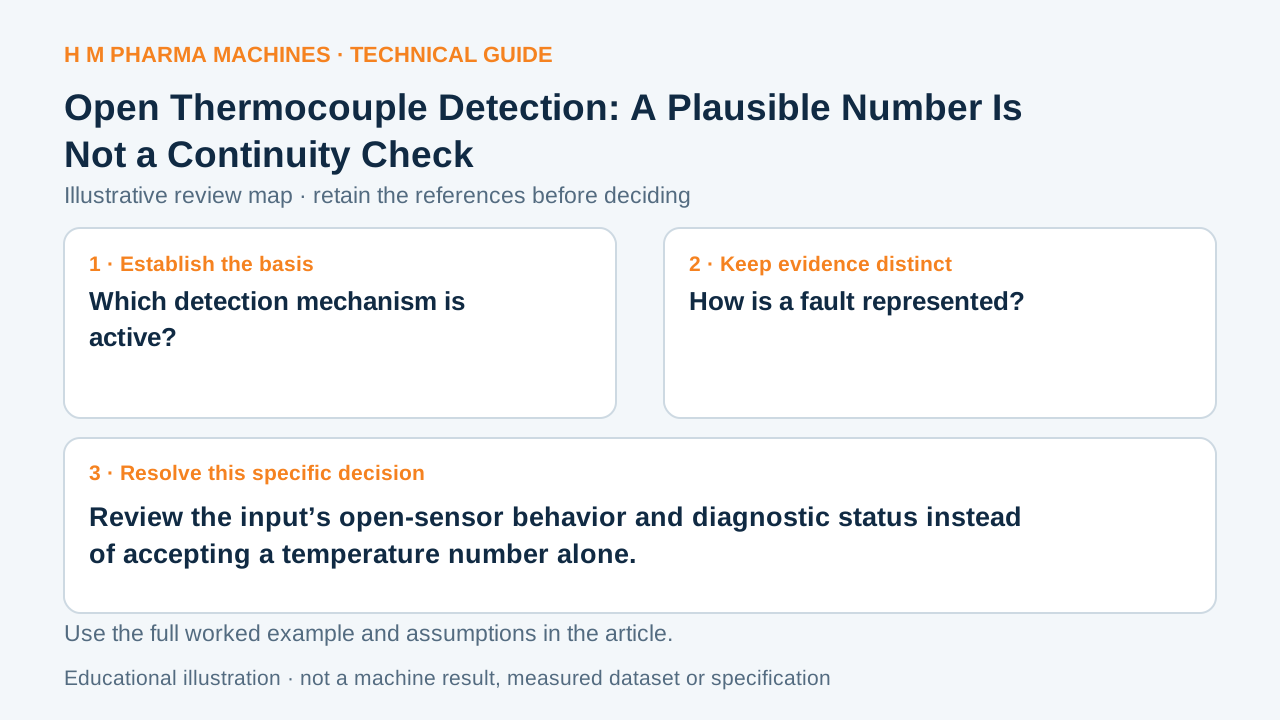
Read Full Article →An open thermocouple circuit can produce a displayed value that looks plausible. The input’s fault detection and status handling belong in the trial record.
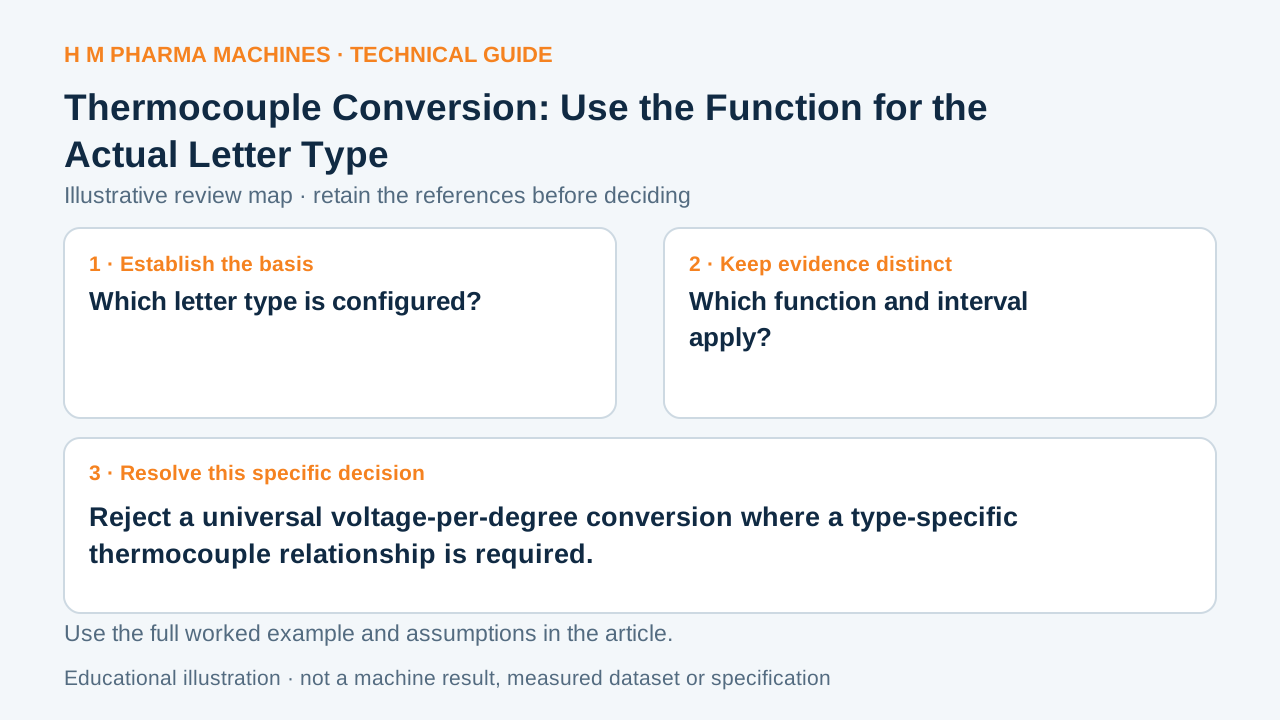
Read Full Article →Thermocouple voltage conversion depends on the designated type and reference conditions. A single copied sensitivity number cannot represent every type and interval.
Read Full Article →A temperature value and a temperature rise are different quantities in a calculation. The Celsius-to-kelvin offset applies to the value, not to the size of a rise.
Read Full Article →The aiming laser helps point an infrared thermometer. Its dot is not proof that the entire temperature measurement comes from that tiny area.
Read Full Article →An infrared instrument receives radiation associated with the target and its surroundings. Low emissivity makes the reflected background especially relevant to interpretation.
Read Full Article →Blog overview · Latest articles · Machine guide library
Application-based guidance for selecting equipment according to product, container, closure and output.
Practical considerations for connecting washing, filling, capping, labeling and conveying machinery.
Useful information for changeovers, cleaning, preventive maintenance and dependable machine performance.
Share your product, container, closure, required output and process details with our engineering team.