Parallel Linear Guides: Review Alignment Before Blaming Drive Torque
Investigate guide geometry and alignment before assuming a higher motor torque solves resistance.
Read Full Article →
Practical guides for selecting, planning, operating and maintaining pharmaceutical manufacturing and packaging machinery.
Latest articles
Practical guides to washing, filling, capping, labeling and machine planning. Each card has a distinct Library date; actual publication and revision dates remain inside the article.
Machine guide library
Browse guides by their distinct Library date. These collection labels are separate from actual publication and revision dates shown inside each article.
Investigate guide geometry and alignment before assuming a higher motor torque solves resistance.
Read Full Article →Calculate the force at a stated spring position using a defined rate and installed compression.
Read Full Article →Use free, working and solid lengths to describe compression-spring travel without treating coil bind as an operating target.
Read Full Article →Describe a cyclic spring-stress case using its minimum, maximum, mean and alternating components.
Read Full Article →Separate fastener strength class from alloy identity and corrosion-related material requirements.
Read Full Article →Keep initial clamp condition and applied external load separate in a bolted-joint review.
Read Full Article →Relate cyclic bolt-load change to the defined stiffness sharing of the assembled joint.
Read Full Article →Before choosing a pipe-loss correlation, identify the fluid properties and actual passage used to calculate Reynolds number.
Read Full Article →Use the laminar model to separate the effects of length and bore before treating a longer transfer route as the main source of loss.
Read Full Article →A friction-factor number needs its convention. Otherwise a correct-looking pressure-loss calculation can carry a fourfold error.
Read Full Article →For a noncircular flow passage, the relevant characteristic dimension may come from fluid area and wetted perimeter rather than the outside width.
Read Full Article →A fitting represented by a loss coefficient and the same fitting represented by equivalent length need the same hydraulic basis.
Read Full Article →Two centrifugal pumps in series add head at a common flow. The resulting system duty still needs a combined curve.
Read Full Article →A water-tested centrifugal pump curve may need a fluid-specific correction before it supports a viscous-liquid duty.
Read Full Article →A smaller impeller and a slower unchanged impeller are different engineering proposals, even when both reduce a centrifugal pump’s duty.
Read Full Article →The best-efficiency point identifies one favourable duty. It does not define every continuous operating point a pump may be asked to handle.
Read Full Article →Theoretical displaced volume and delivered volume are different quantities. Define the ratio before treating each revolution as an exact output.
Read Full Article →A mean transfer rate can conceal a much larger instantaneous demand. Review the delivery waveform when a pump works in strokes.
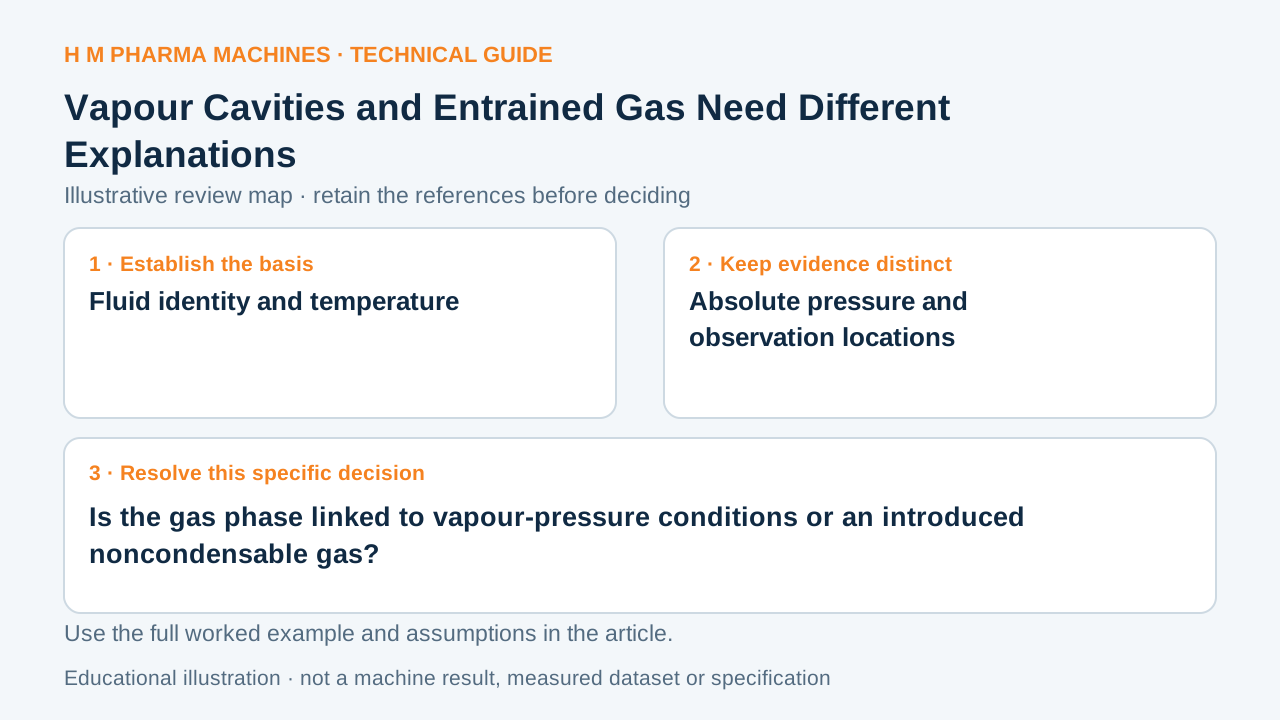
Read Full Article →Visible bubbles can come from vaporisation, released dissolved gas or entrained air. Distinguish the mechanism before choosing a corrective explanation.
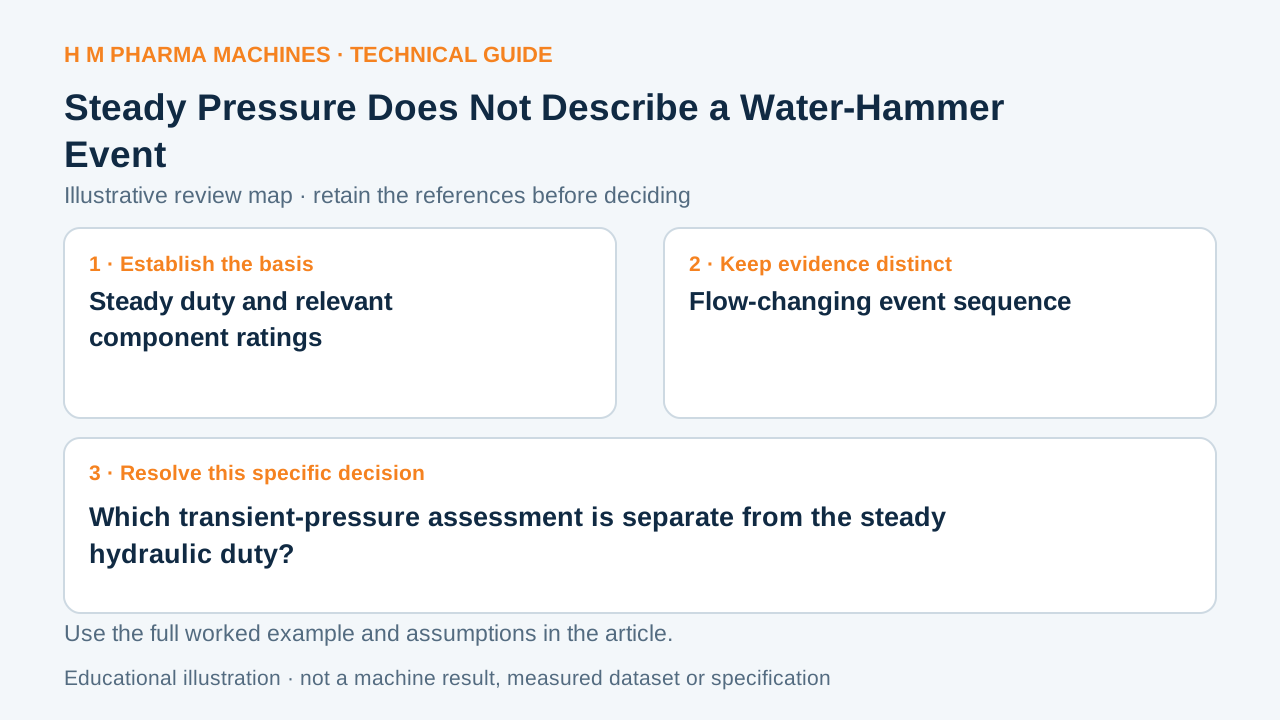
Read Full Article →A satisfactory steady pressure reading does not describe the pressure envelope during rapid changes in flow.
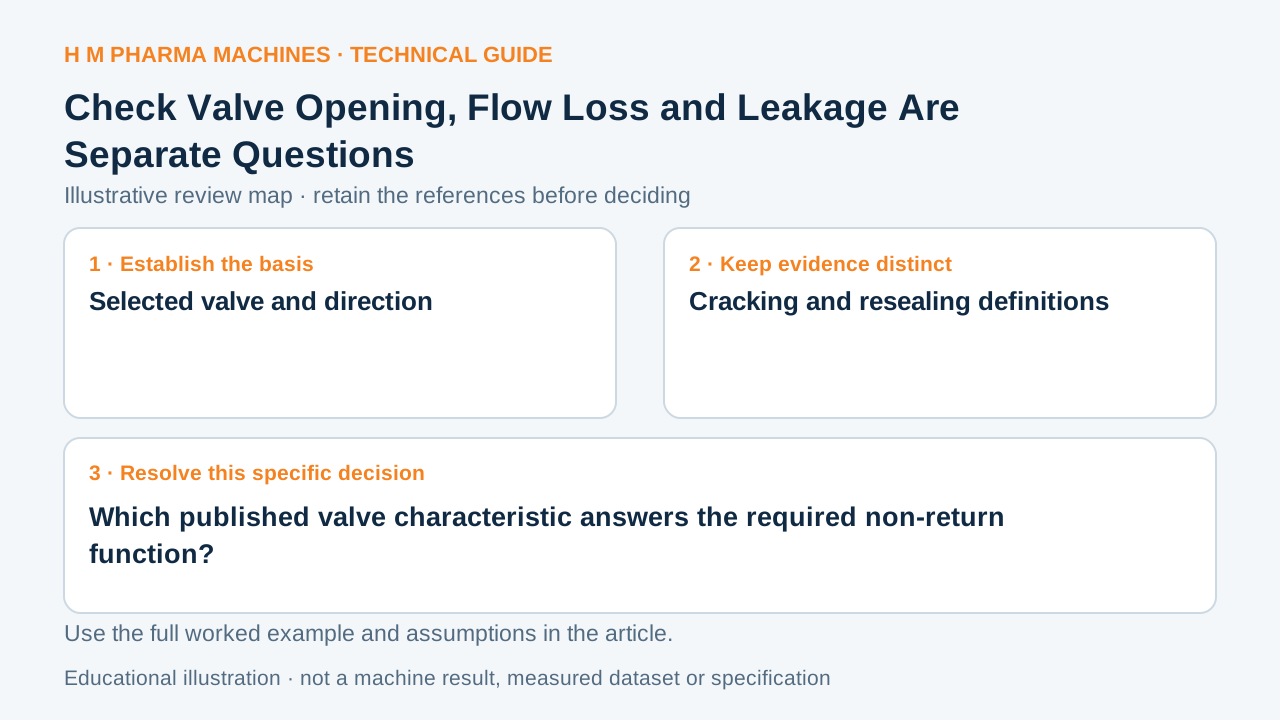
Read Full Article →Opening a check valve, passing the required forward flow and preventing reverse flow are three different evidence questions.
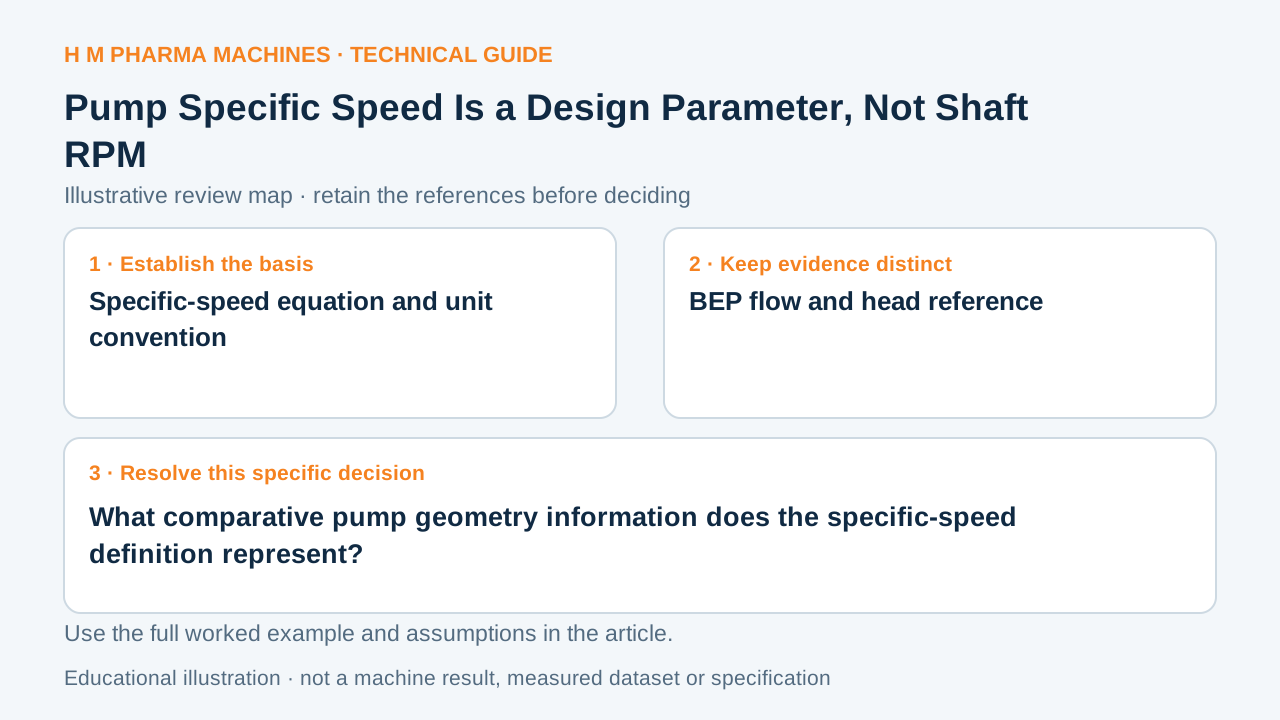
Read Full Article →Specific speed helps compare centrifugal impeller duties and shapes. It must not be read as the actual shaft-speed setting.
Read Full Article →A Coriolis instrument can measure mass flow and density, then calculate volume. Identify which quantity the dosing decision actually uses.
Read Full Article →An electromagnetic flowmeter needs a conductive liquid within its selected measuring scope. Product thickness alone cannot establish compatibility.
Read Full Article →Blog overview · Latest articles · Machine guide library
Application-based guidance for selecting equipment according to product, container, closure and output.
Practical considerations for connecting washing, filling, capping, labeling and conveying machinery.
Useful information for changeovers, cleaning, preventive maintenance and dependable machine performance.
Share your product, container, closure, required output and process details with our engineering team.