Applied engineering reference
Low-Speed Motor Operation: Check the Cooling Basis of the Duty
Keep the motor's actual cooling and thermal-duty basis with a sustained low-speed requirement.
Read Full Article →
Applied engineering reading, separated from practical machine selection guides.
Browse by task
Start with the machine or task you are planning. Each topic brings together selection guides, practical checks and relevant engineering references.
Compare container handling, wash access, cleaning utilities and acceptance checks before selecting a washer.
Choose a dosing method and prepare product, container, nozzle and repeatability checks for the machine trial.
Compare cap presentation, closure methods and the evidence needed to approve the finished pack.
Match the container and label format, approve the sample roll, and define coding or inspection evidence.
Define format kits, container references and transfer interfaces for each planned product and pack size.
Prepare the site, utility connections and line interfaces before confirming the machine scope.
Agree trial evidence, dispatch checks, operator training and the spares required for the supplied machine.
Search practical Machine guides first, or choose the separate Engineering reference archive. Use a keyword, a topic, or both.
Search all 737 articles by keyword, topic, or both.
Or browse Machine guides and the Engineering reference archive.
Reference reading
Applied engineering background. These references are separate from machine selection guides.
Engineering references
Background reading is labelled by scope. For practical machine selection, use the separate Machine guides.
Applied engineering reference
Keep the motor's actual cooling and thermal-duty basis with a sustained low-speed requirement.
Read Full Article →Applied engineering reference
Separate motor starting-current evidence from steady running-current information in an electrical review.
Read Full Article →Applied engineering reference
Keep electrical power factor separate from conversion efficiency when interpreting a motor-power statement.
Read Full Article →Applied engineering reference
Budget voltage drop in a shared 24 V distribution path under the defined simultaneous load.
Read Full Article →Applied engineering reference
Match a switching sensor's sourcing or sinking output with the actual receiver architecture.
Read Full Article →Applied engineering reference
Check two-wire sensor leakage and receiver off-state requirements together.
Read Full Article →Applied engineering reference
Interpret normally open and normally closed using the defined unactuated state.
Read Full Article →Applied engineering reference
Identify whether a receiver expects a potential-free contact or a powered signal before accepting an interface proposal.
Read Full Article →Applied engineering reference
Compare relay contact ratings with the actual AC/DC and load-type condition.
Read Full Article →Applied engineering reference
Keep release behavior with the actual coil-transient suppression arrangement.
Read Full Article →Applied engineering reference
Distinguish protective-earth purpose from the electrical reference used by a signal circuit.
Read Full Article →Applied engineering reference
Keep a cable shield's interference-control role distinct from required protective bonding.
Read Full Article →Applied engineering reference
Check differential signal magnitude and common-mode voltage against their separate receiver limits.
Read Full Article →Applied engineering reference
Evaluate how source and receiver impedance can change a nominal analog voltage before accepting an interface.
Read Full Article →Applied engineering reference
Identify the domains and paths covered by a stated galvanic-isolation boundary.
Read Full Article →Applied engineering reference
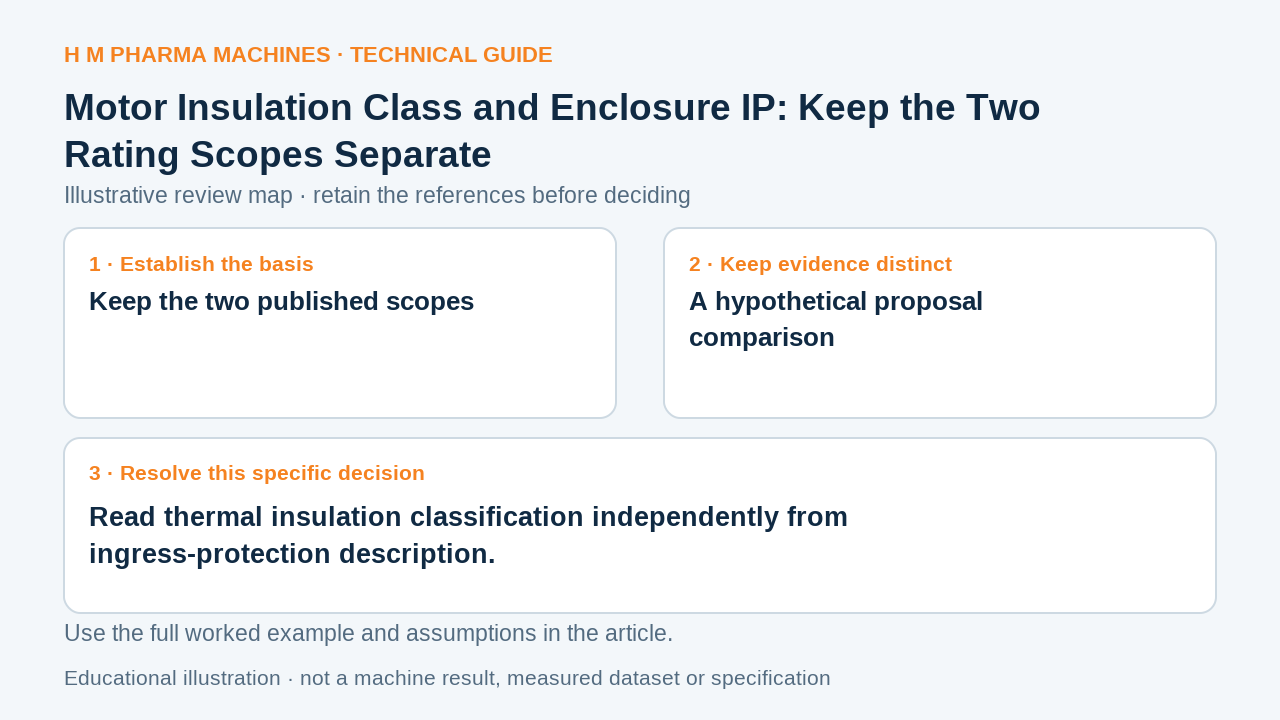
Compare electrical insulation thermal designation and enclosure protection as separate rating questions.
Read Full Article →Applied engineering reference
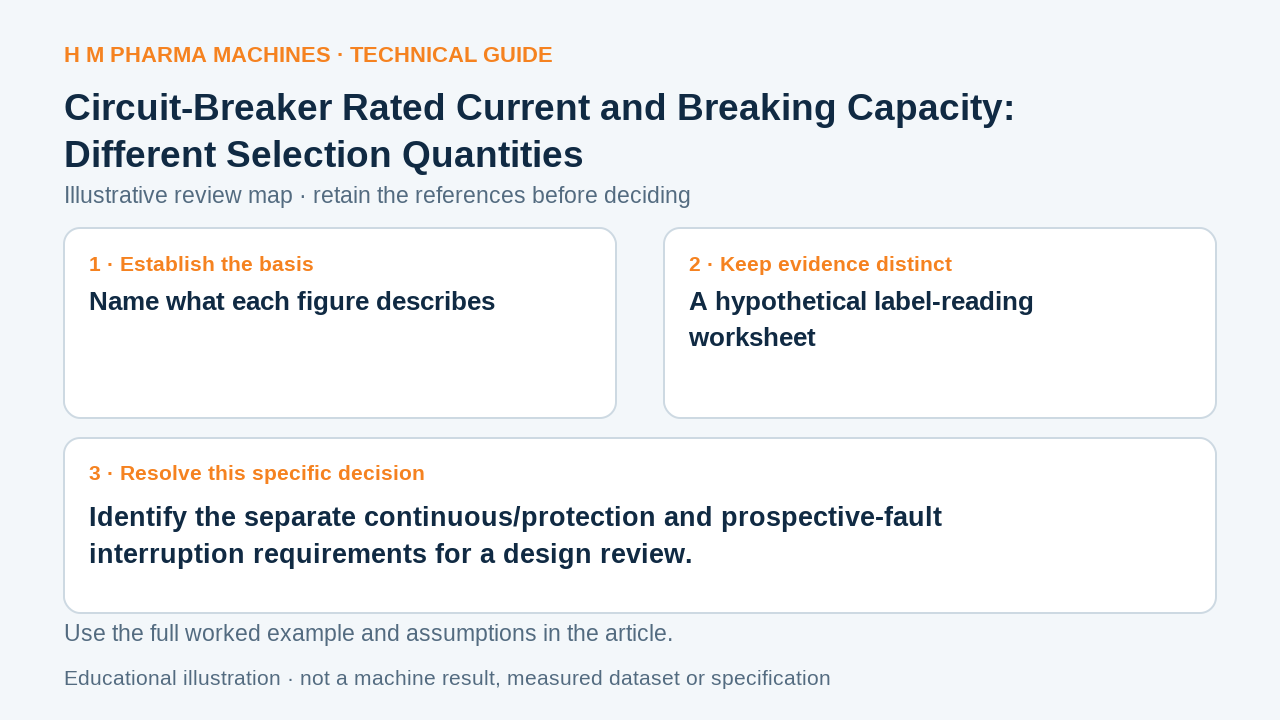
Keep circuit-breaker current rating distinct from its stated fault-interruption capacity and voltage basis.
Read Full Article →Applied engineering reference
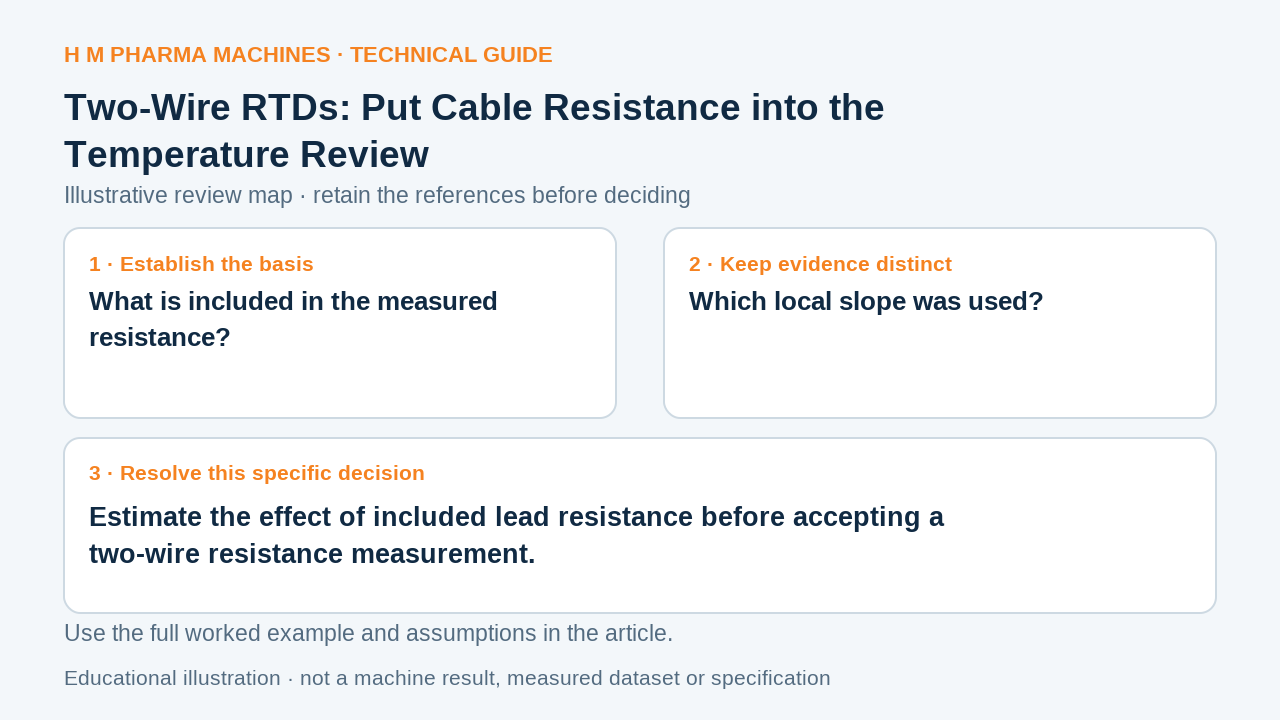
A two-wire RTD reading includes more than the sensing element. Review the complete resistance path before comparing a remote probe with a bench reading.
Read Full Article →Applied engineering reference
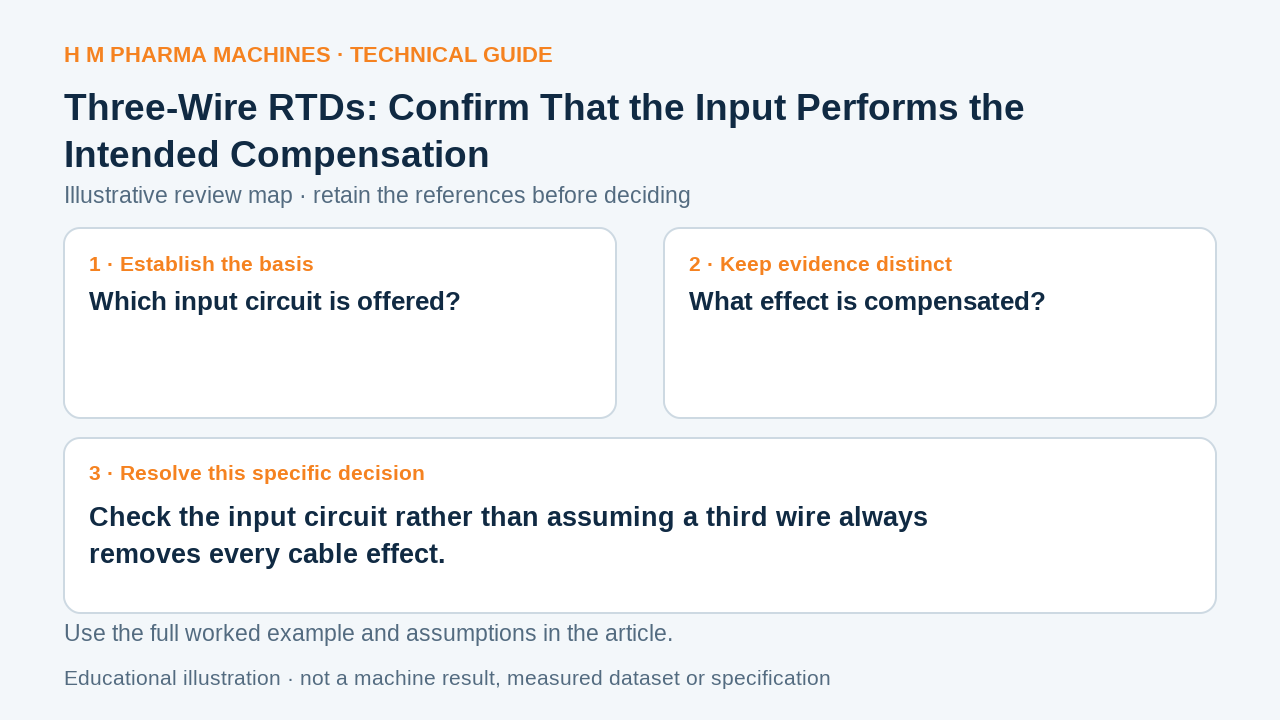
Three wires describe a probe connection. They do not, by themselves, prove how a particular resistance input handles the third lead.
Read Full Article →Applied engineering reference
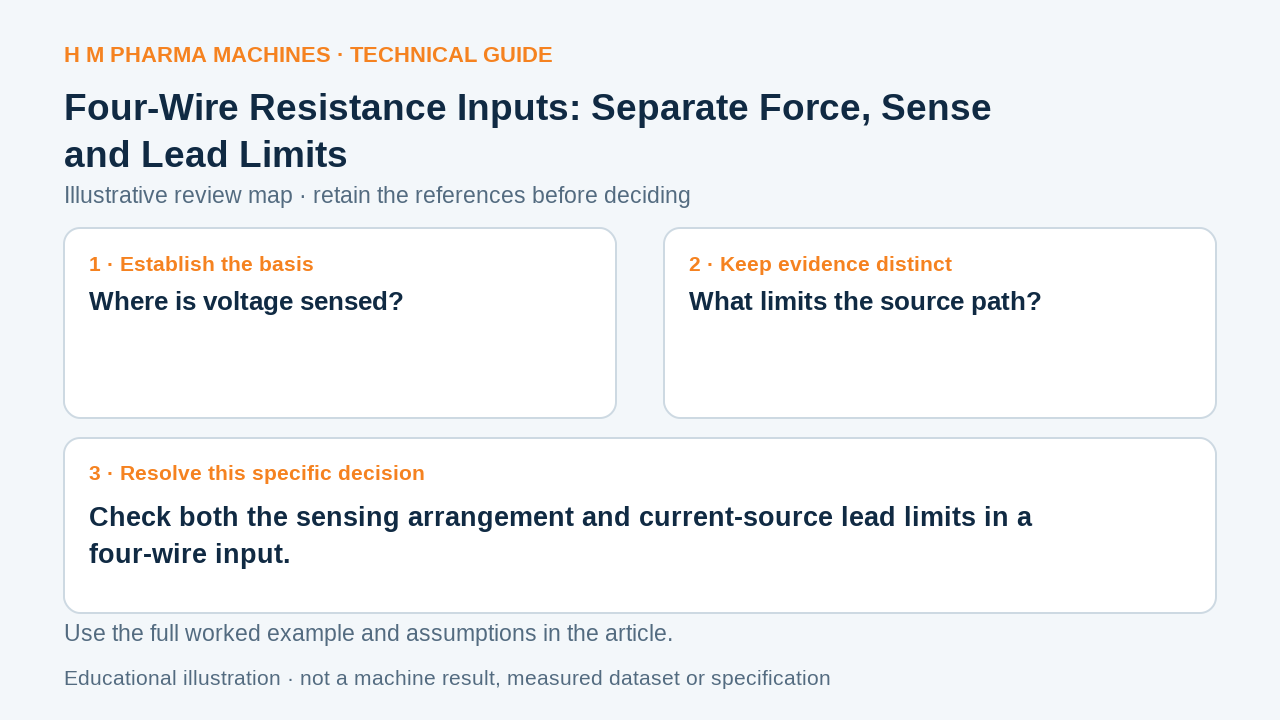
Four-wire sensing can remove source-lead voltage drops from the measured voltage path. The current source still has operating limits that belong in the review.
Read Full Article →Applied engineering reference
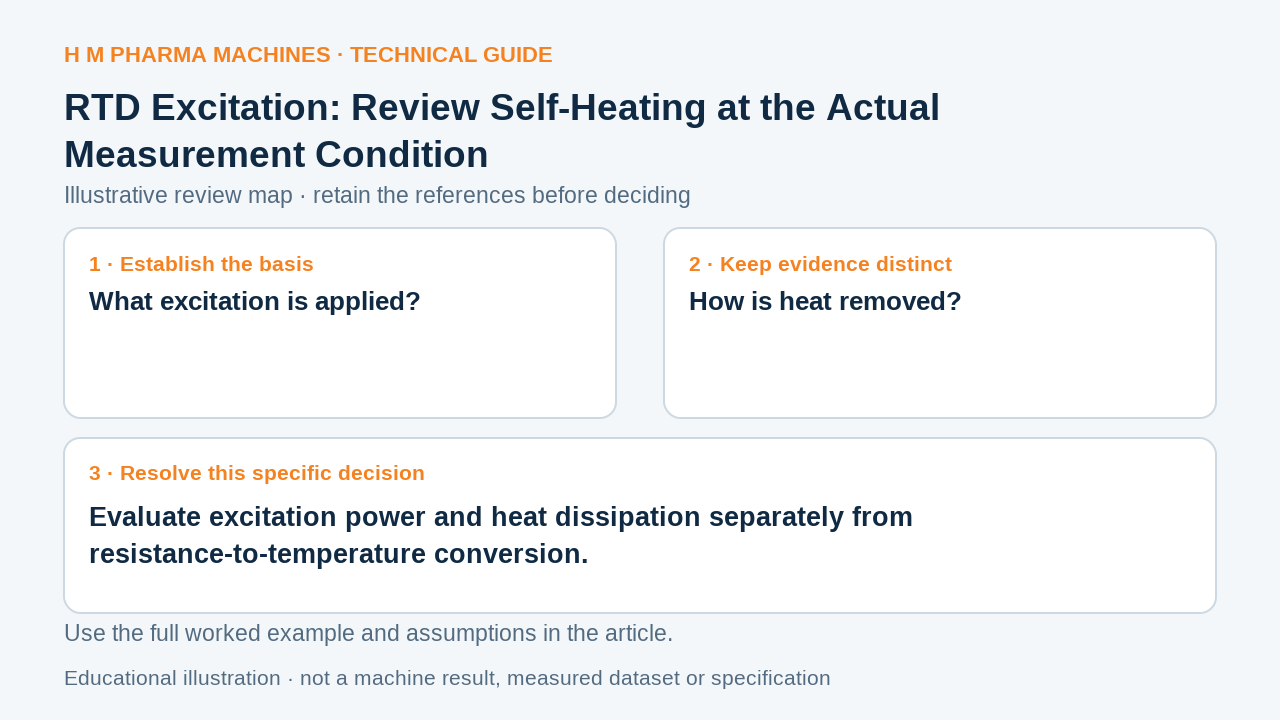
An RTD requires electrical excitation. The associated heat can affect the element temperature, so review excitation together with its surrounding medium.
Read Full Article →Applied engineering reference
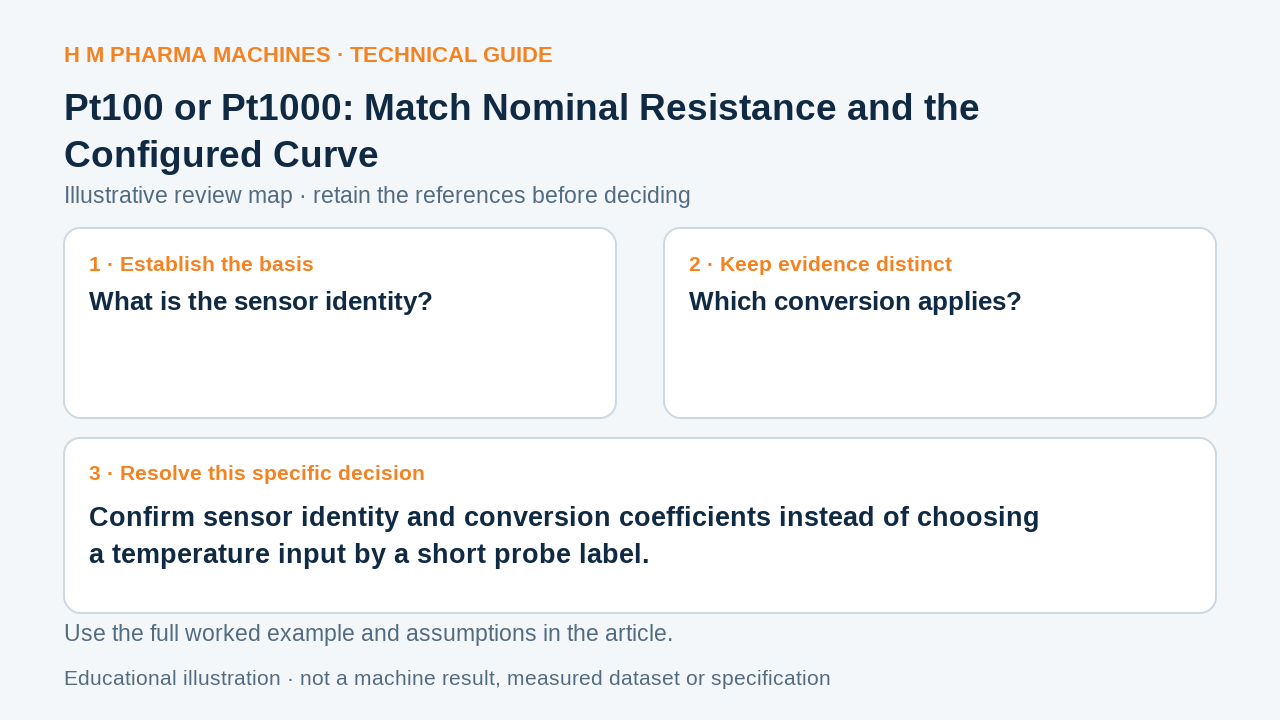
A platinum probe label is only part of its electrical identity. Match nominal resistance, curve information and input configuration before using converted temperatures.
Read Full Article →Applied engineering reference
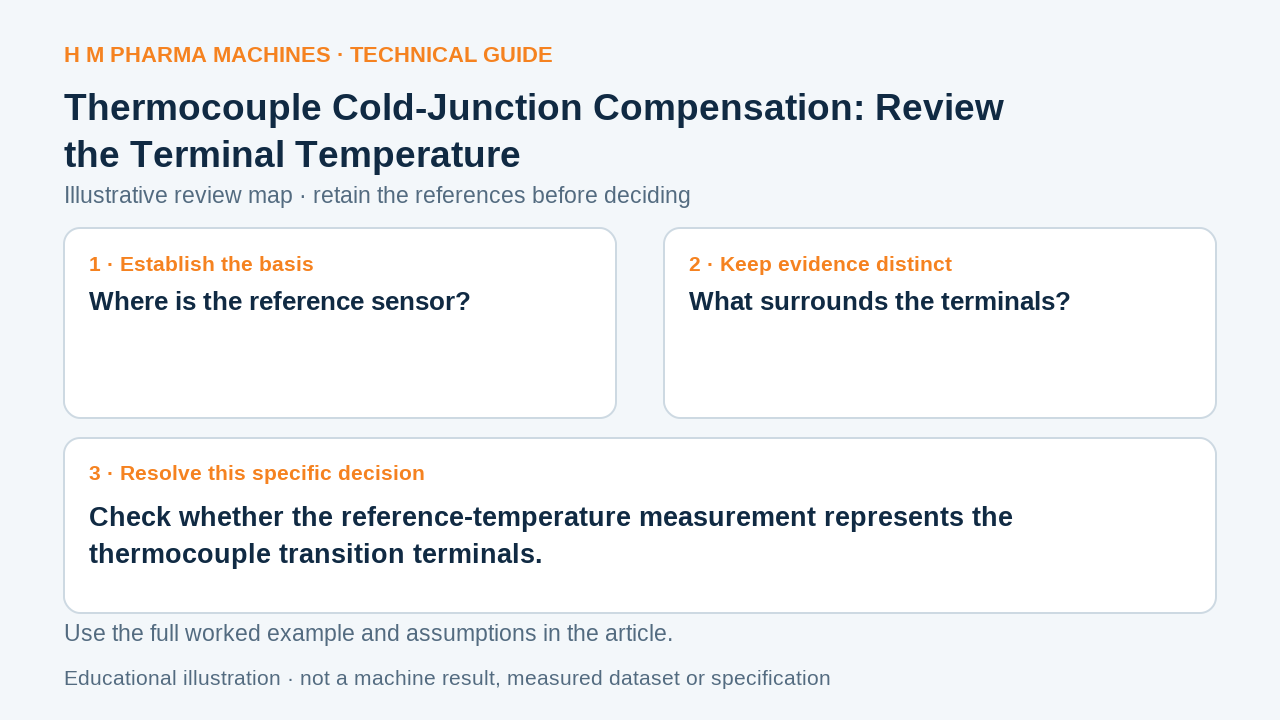
Cold-junction compensation needs an applicable reference temperature. Heat near the connector can make that reference differ from the actual thermocouple transition.
Read Full Article →Applied engineering reference
A thermocouple extension changes the electrical path. Document the wire and connector types before accepting a drawing that simply labels the cable “temperature”.
Read Full Article →Share your product, container, closure, required output and process details with our engineering team.