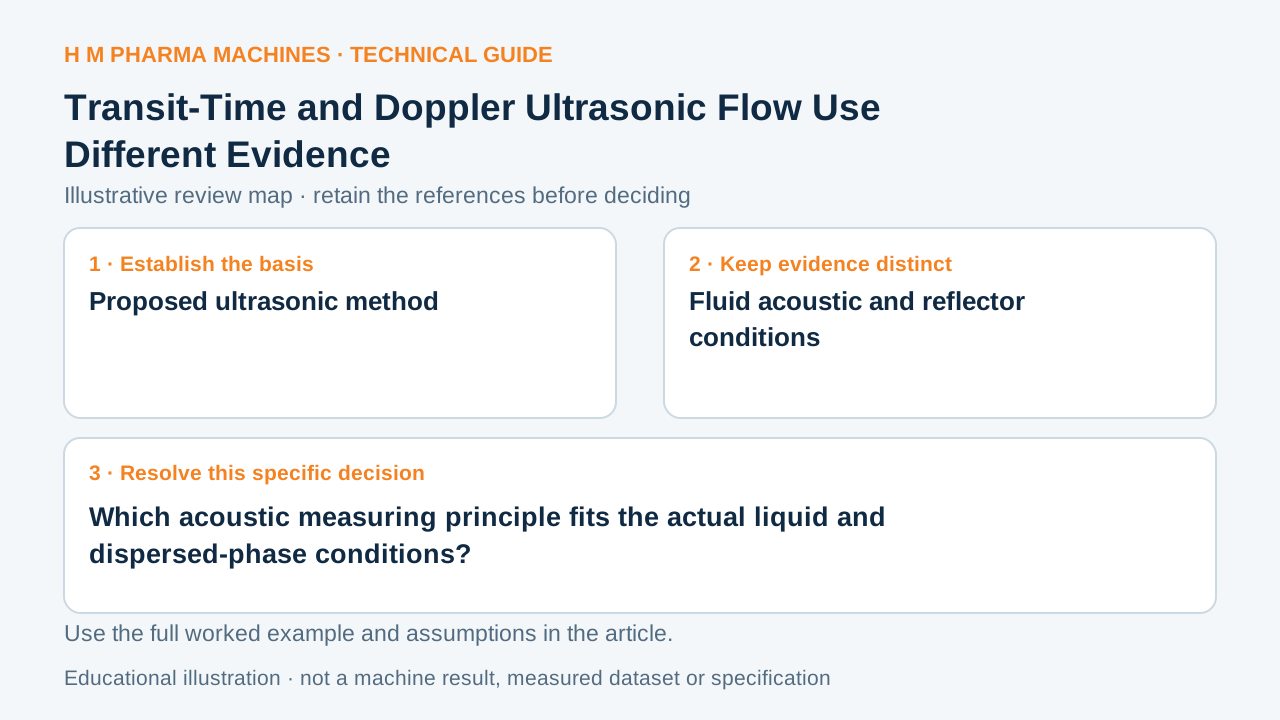
Transit-Time and Doppler Ultrasonic Flow Use Different Evidence
Transit-time and Doppler ultrasonic flow measurements use different acoustic evidence. Identify the liquid condition before treating them as interchangeable.
Read Full Article →
Practical guides for selecting, planning, operating and maintaining pharmaceutical manufacturing and packaging machinery.
Latest articles
Practical guides to washing, filling, capping, labeling and machine planning. Each card has a distinct Library date; actual publication and revision dates remain inside the article.
Machine guide library
Browse guides by their distinct Library date. These collection labels are separate from actual publication and revision dates shown inside each article.
Transit-time and Doppler ultrasonic flow measurements use different acoustic evidence. Identify the liquid condition before treating them as interchangeable.
Read Full Article →A turbine meter’s pulse factor belongs to an identified meter and flow-condition range. An average factor does not describe every point automatically.
Read Full Article →A vortex meter relies on a usable shedding signal. The advertised upper range does not establish measurement at every low flow.
Read Full Article →Prepare a retrofit enquiry using the installed line’s current asset, transfer and interface evidence, with unverified measurements and ownership gaps identified.
Read Full Article →A positive displacement flowmeter and a positive displacement pump may both contain moving chambers, but they have different duties.
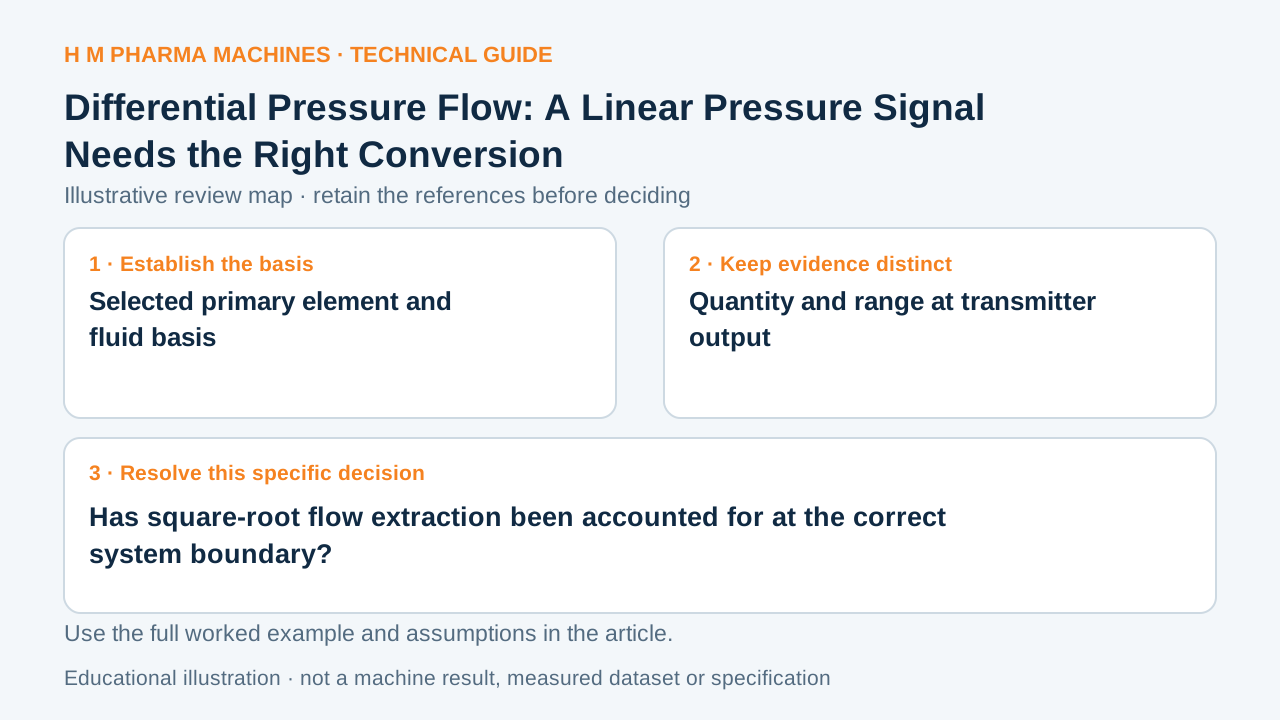
Read Full Article →A differential-pressure flow signal may already contain square-root extraction. Identify that processing before scaling it again in a controller.
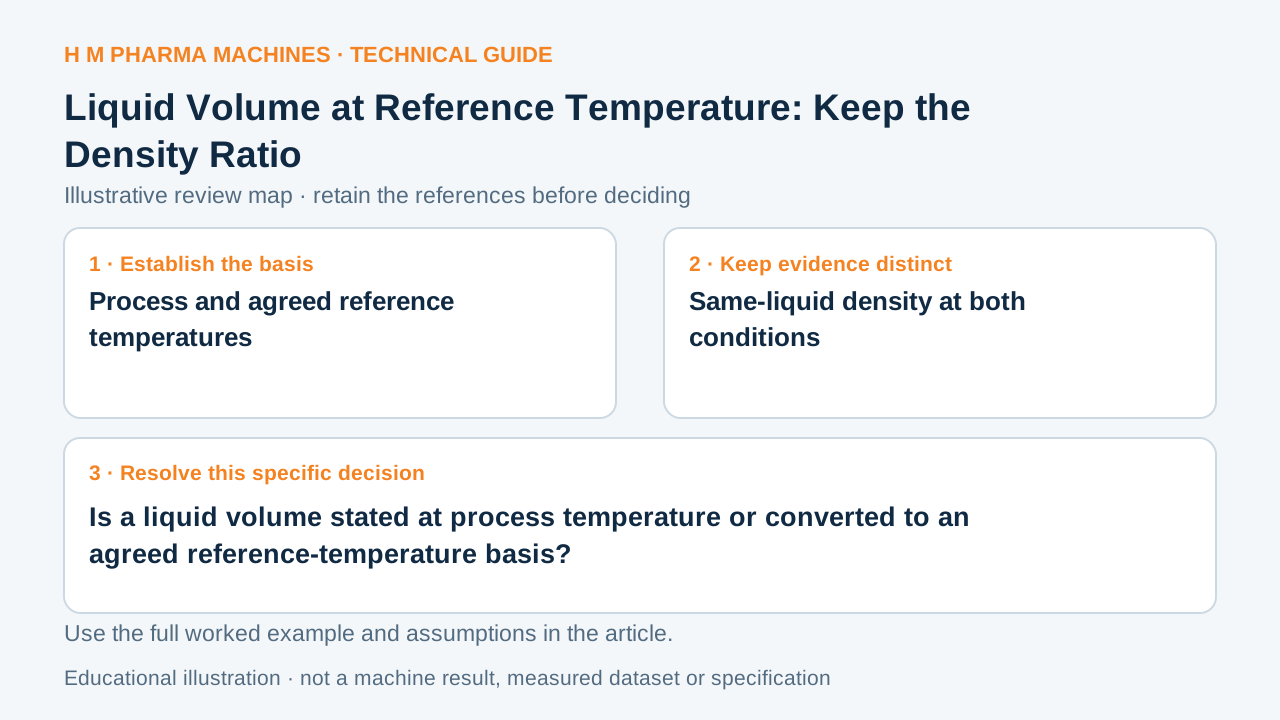
Read Full Article →A liquid volume at flowing temperature and the same material’s volume at an agreed reference temperature are different reporting quantities.
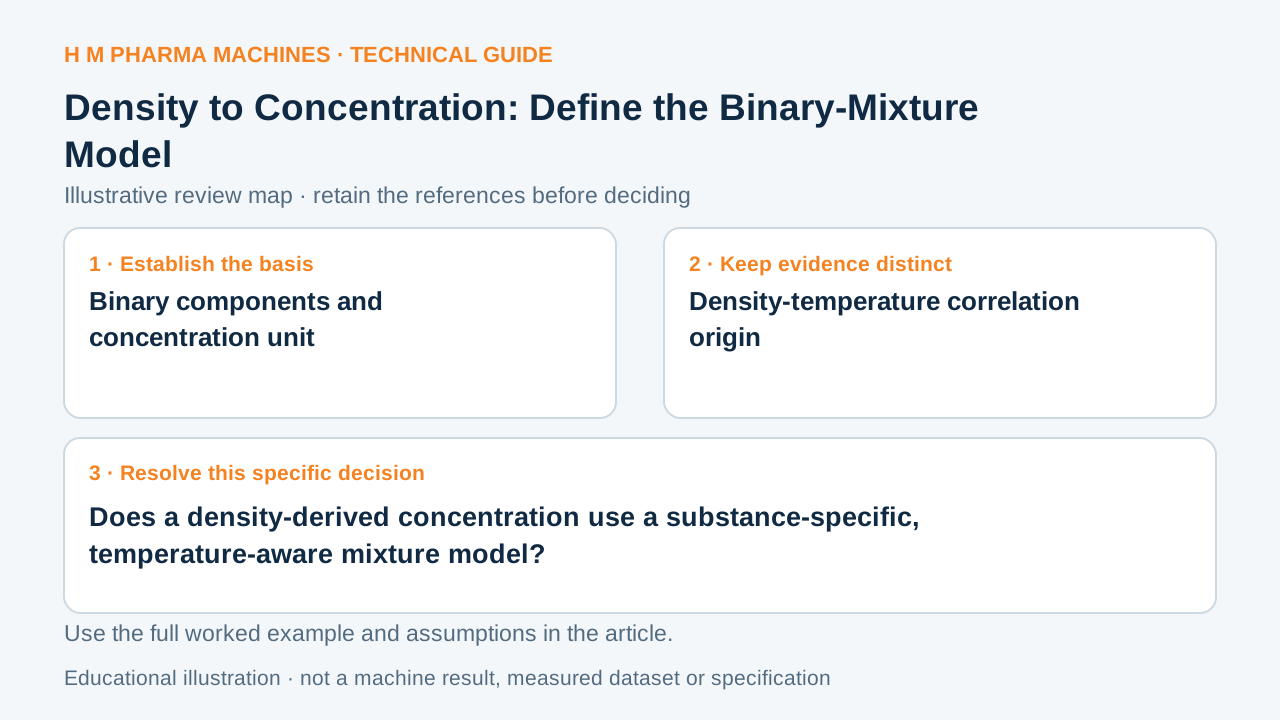
Read Full Article →A density reading can support concentration only through an appropriate mixture model. It does not identify composition on its own.
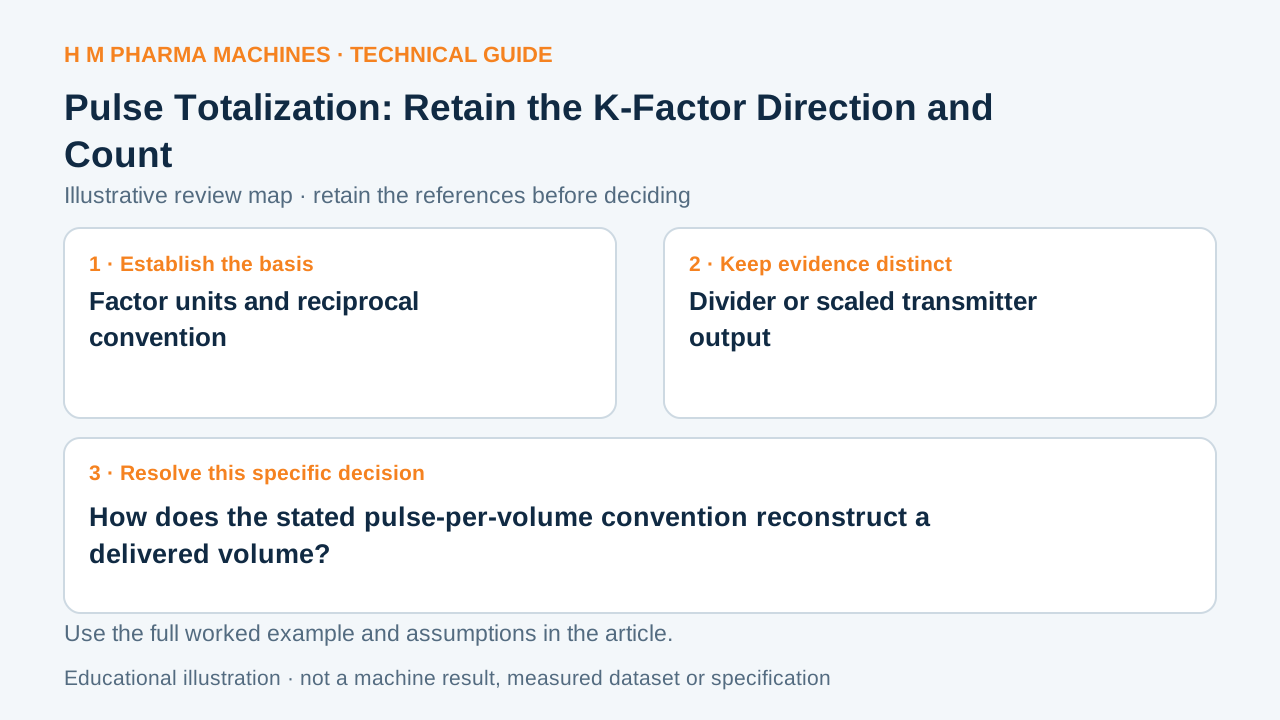
Read Full Article →A pulse input needs the direction and units of its scaling factor. Pulses per litre and litres per pulse are reciprocals.
Read Full Article →A sensor’s response setting and a controller’s batch window need a common time basis. A displayed rate is not automatically a complete short-batch total.
Read Full Article →At a low mass rate, a Coriolis meter’s additive zero-stability term can become important relative to the quantity being measured.
Read Full Article →A flowmeter’s installation evidence must match the upstream disturbances actually present. One generic straight-length number can miss the relevant geometry.
Read Full Article →A pipe that carries some liquid is not necessarily full at the measuring section. Establish the fill condition required by the selected instrument.
Read Full Article →Adding a measuring section can change the hydraulic duty. Evaluate its pressure loss alongside its measuring performance.
Read Full Article →Include the stressed component and actual exposure when reviewing a stainless stress-corrosion hypothesis.
Read Full Article →Keep corrosive exposure with the cyclic load when assessing fatigue evidence for an equipment component.
Read Full Article →Treat magnetic response as an observation rather than a complete stainless alloy identification method.
Read Full Article →Review a duplex-to-austenitic material proposal across mechanical, corrosion and fabrication requirements.
Read Full Article →Define whether the surface request concerns chemical passivation or electrochemical material removal.
Read Full Article →Use hardness evidence for its defined test rather than treating it as a complete wear-life result.
Read Full Article →Separate a material's elastic stiffness from the stress associated with permanent deformation.
Read Full Article →Identify whether a strength statement concerns yield or the maximum tensile-test stress.
Read Full Article →Retain notch and section-transition geometry when interpreting a nominal stress calculation.
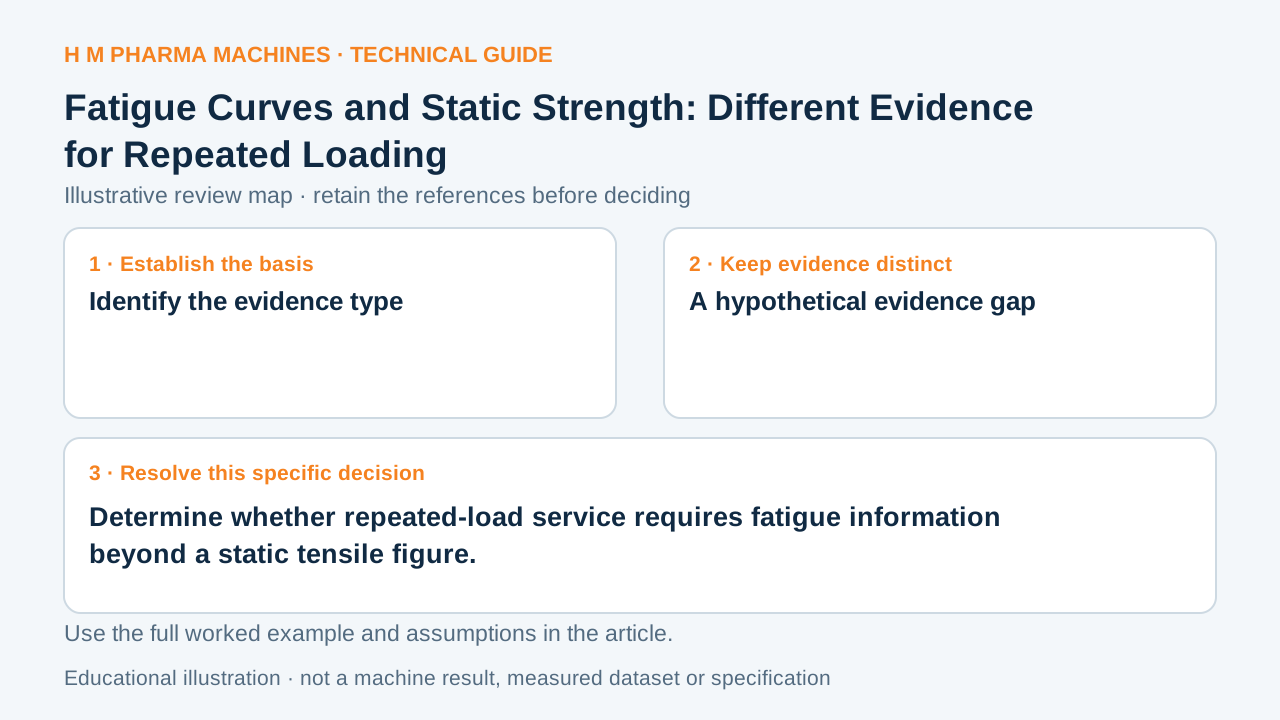
Read Full Article →Ask whether repeated-load service is supported by fatigue evidence rather than static tensile strength alone.
Read Full Article →Blog overview · Latest articles · Machine guide library
Application-based guidance for selecting equipment according to product, container, closure and output.
Practical considerations for connecting washing, filling, capping, labeling and conveying machinery.
Useful information for changeovers, cleaning, preventive maintenance and dependable machine performance.
Share your product, container, closure, required output and process details with our engineering team.