Applied engineering reference
Impeller Trimming and Speed Scaling Are Different Changes
A smaller impeller and a slower unchanged impeller are different engineering proposals, even when both reduce a centrifugal pump’s duty.
Read Full Article →
Applied engineering reading, separated from practical machine selection guides.
Browse by task
Start with the machine or task you are planning. Each topic brings together selection guides, practical checks and relevant engineering references.
Compare container handling, wash access, cleaning utilities and acceptance checks before selecting a washer.
Choose a dosing method and prepare product, container, nozzle and repeatability checks for the machine trial.
Compare cap presentation, closure methods and the evidence needed to approve the finished pack.
Match the container and label format, approve the sample roll, and define coding or inspection evidence.
Define format kits, container references and transfer interfaces for each planned product and pack size.
Prepare the site, utility connections and line interfaces before confirming the machine scope.
Agree trial evidence, dispatch checks, operator training and the spares required for the supplied machine.
Search practical Machine guides first, or choose the separate Engineering reference archive. Use a keyword, a topic, or both.
Search all 737 articles by keyword, topic, or both.
Or browse Machine guides and the Engineering reference archive.
Reference reading
Applied engineering background. These references are separate from machine selection guides.
Engineering references
Background reading is labelled by scope. For practical machine selection, use the separate Machine guides.
Applied engineering reference
A smaller impeller and a slower unchanged impeller are different engineering proposals, even when both reduce a centrifugal pump’s duty.
Read Full Article →Applied engineering reference
The best-efficiency point identifies one favourable duty. It does not define every continuous operating point a pump may be asked to handle.
Read Full Article →Applied engineering reference
Theoretical displaced volume and delivered volume are different quantities. Define the ratio before treating each revolution as an exact output.
Read Full Article →Applied engineering reference
A mean transfer rate can conceal a much larger instantaneous demand. Review the delivery waveform when a pump works in strokes.
Read Full Article →Applied engineering reference
Visible bubbles can come from vaporisation, released dissolved gas or entrained air. Distinguish the mechanism before choosing a corrective explanation.
Read Full Article →Applied engineering reference
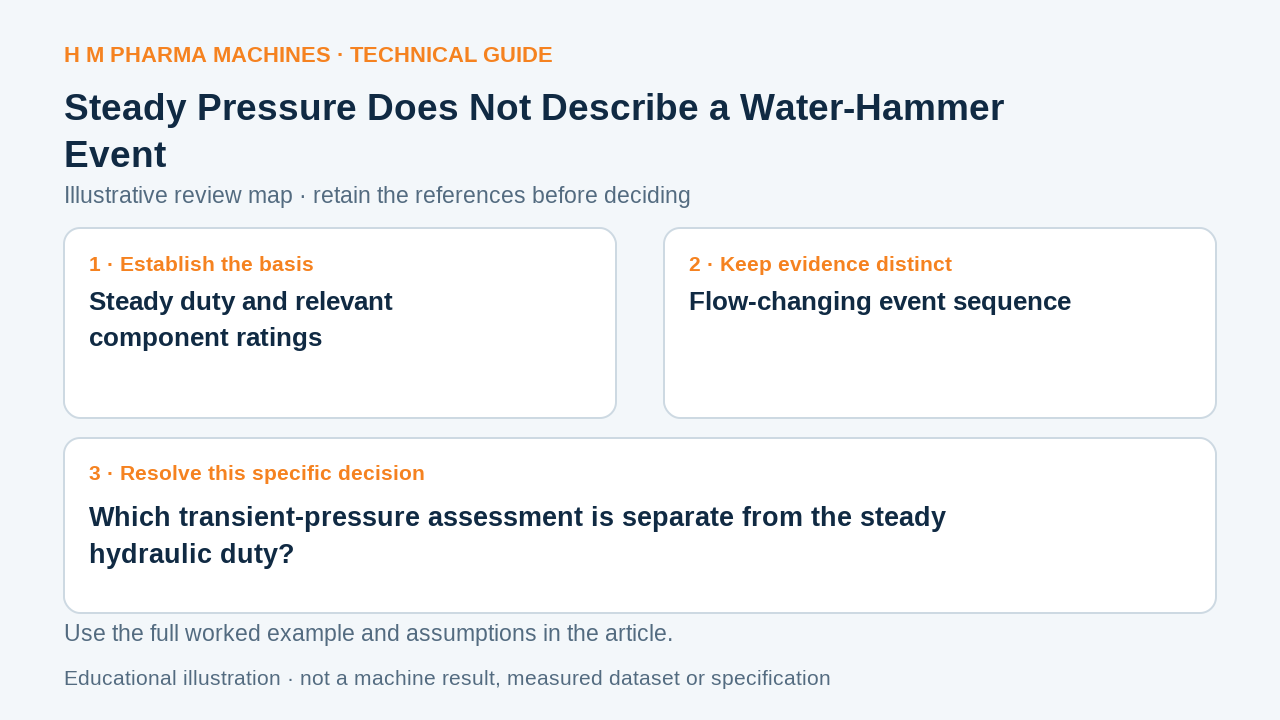
A satisfactory steady pressure reading does not describe the pressure envelope during rapid changes in flow.
Read Full Article →Applied engineering reference
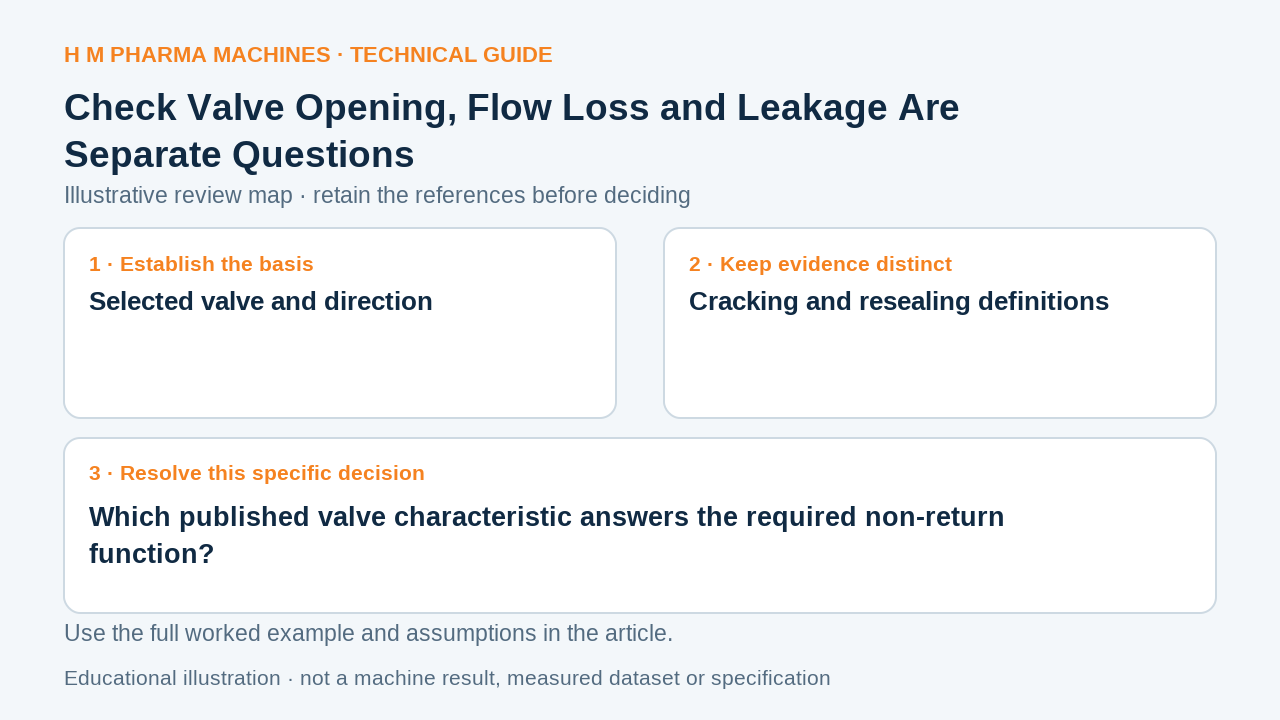
Opening a check valve, passing the required forward flow and preventing reverse flow are three different evidence questions.
Read Full Article →Applied engineering reference
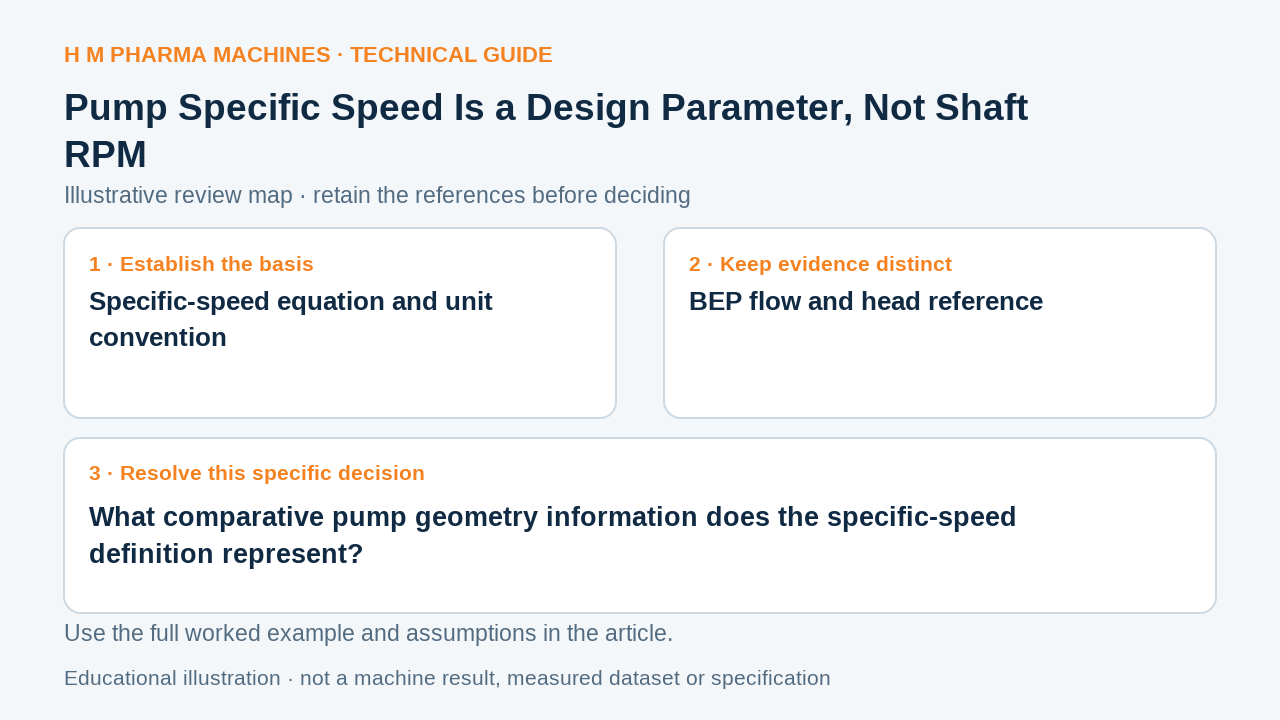
Specific speed helps compare centrifugal impeller duties and shapes. It must not be read as the actual shaft-speed setting.
Read Full Article →Applied engineering reference
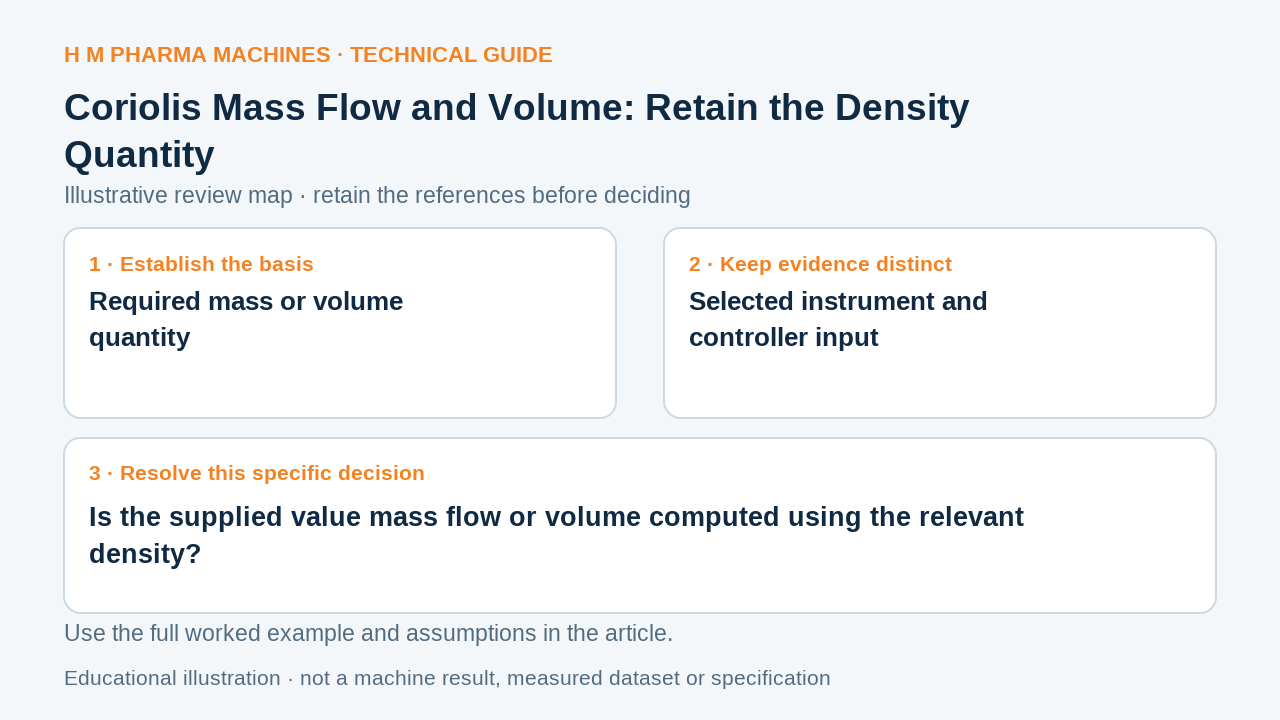
A Coriolis instrument can measure mass flow and density, then calculate volume. Identify which quantity the dosing decision actually uses.
Read Full Article →Applied engineering reference
An electromagnetic flowmeter needs a conductive liquid within its selected measuring scope. Product thickness alone cannot establish compatibility.
Read Full Article →Applied engineering reference
Transit-time and Doppler ultrasonic flow measurements use different acoustic evidence. Identify the liquid condition before treating them as interchangeable.
Read Full Article →Applied engineering reference
A turbine meter’s pulse factor belongs to an identified meter and flow-condition range. An average factor does not describe every point automatically.
Read Full Article →Applied engineering reference
A vortex meter relies on a usable shedding signal. The advertised upper range does not establish measurement at every low flow.
Read Full Article →Applied engineering reference
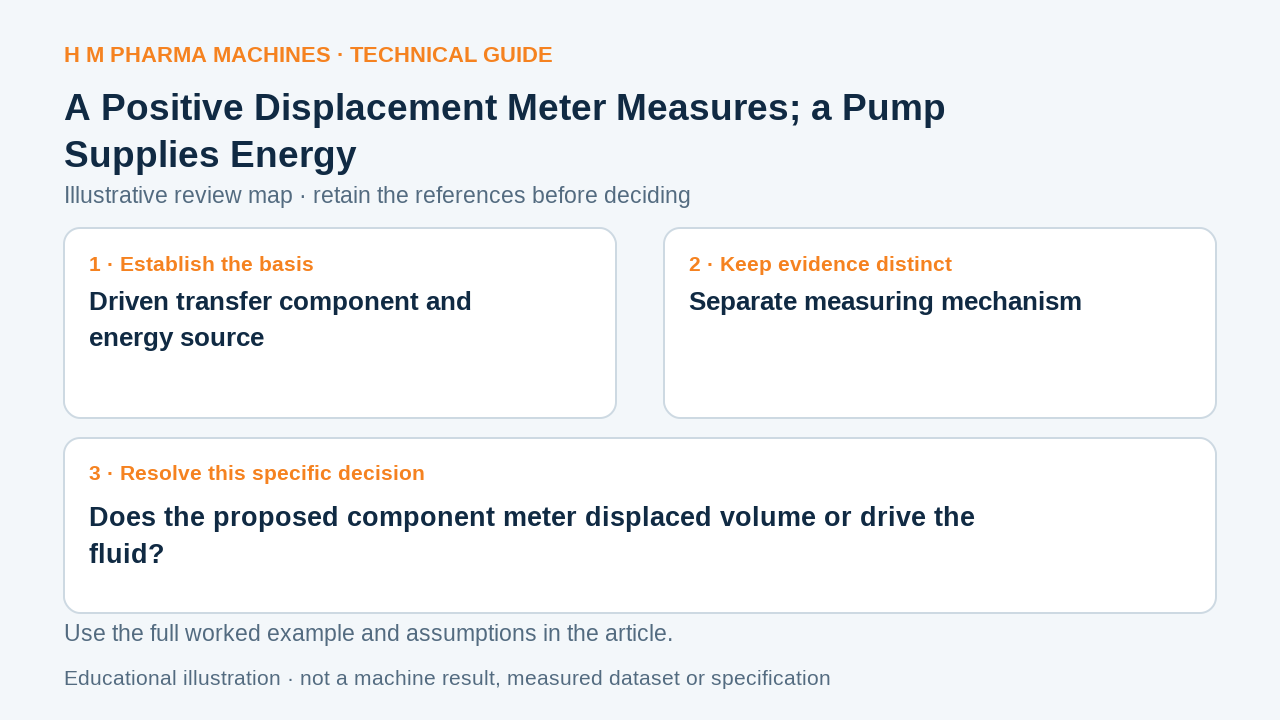
A positive displacement flowmeter and a positive displacement pump may both contain moving chambers, but they have different duties.
Read Full Article →Applied engineering reference
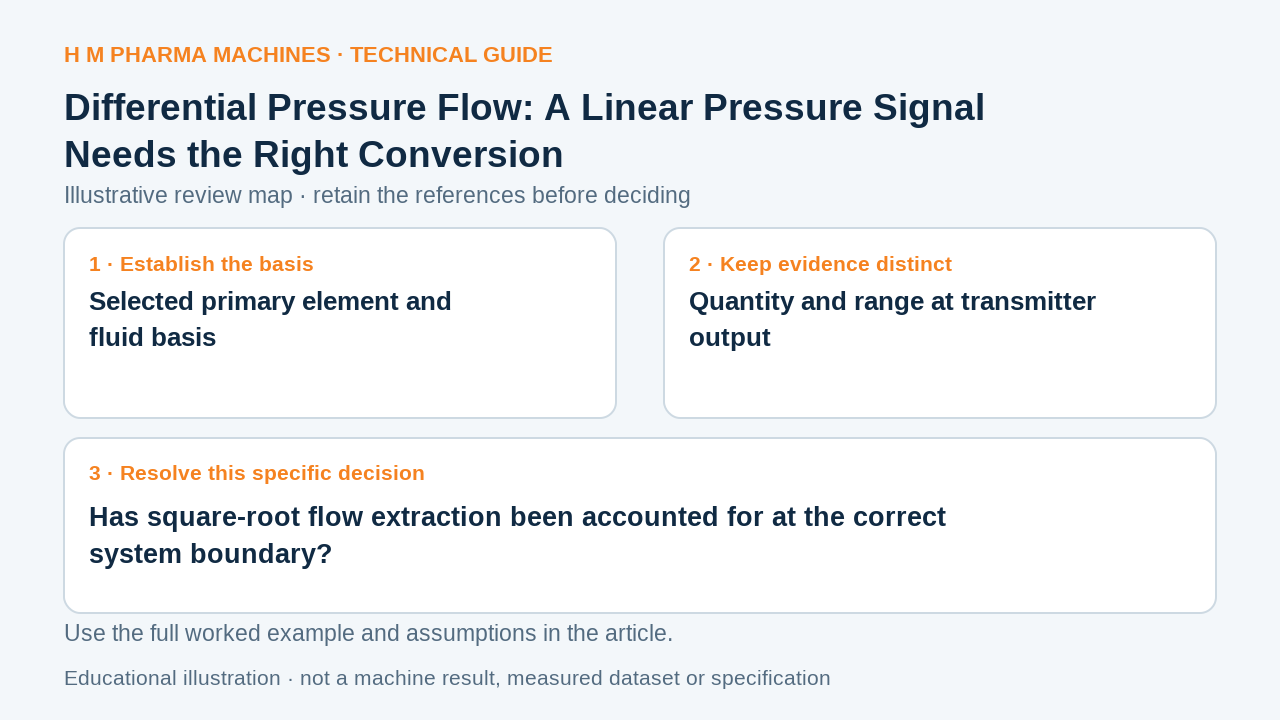
A differential-pressure flow signal may already contain square-root extraction. Identify that processing before scaling it again in a controller.
Read Full Article →Applied engineering reference
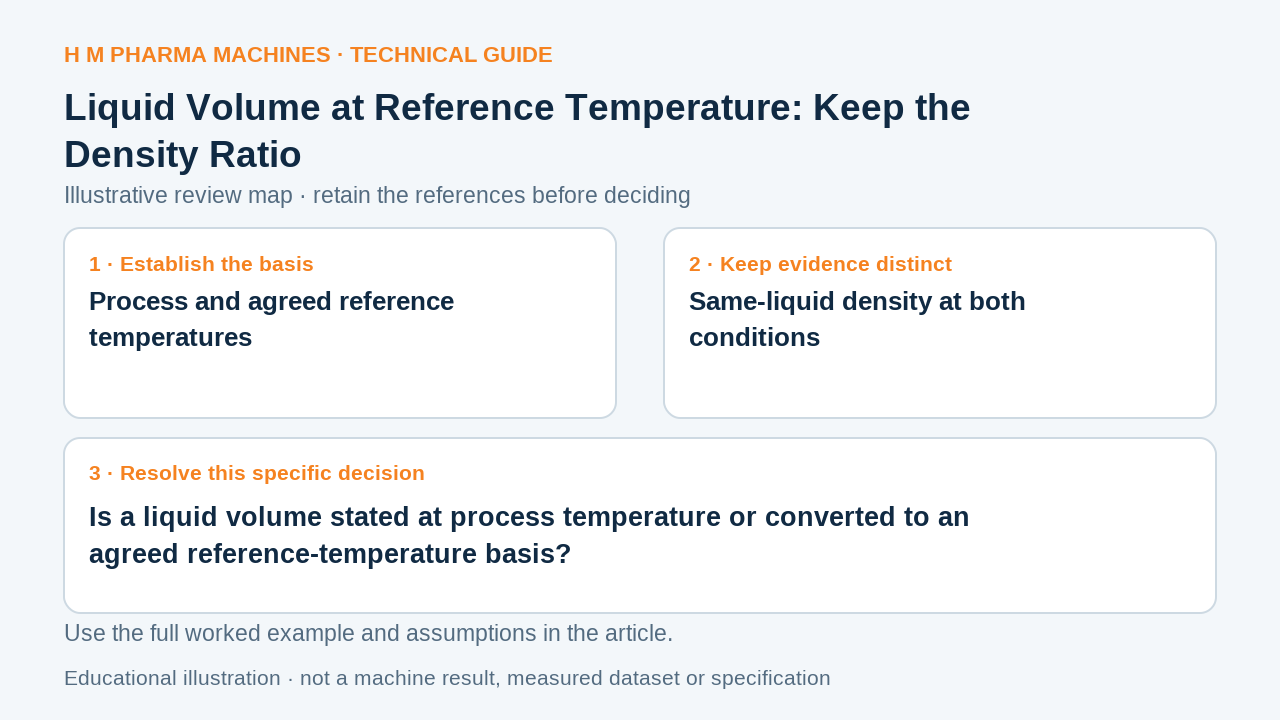
A liquid volume at flowing temperature and the same material’s volume at an agreed reference temperature are different reporting quantities.
Read Full Article →Applied engineering reference
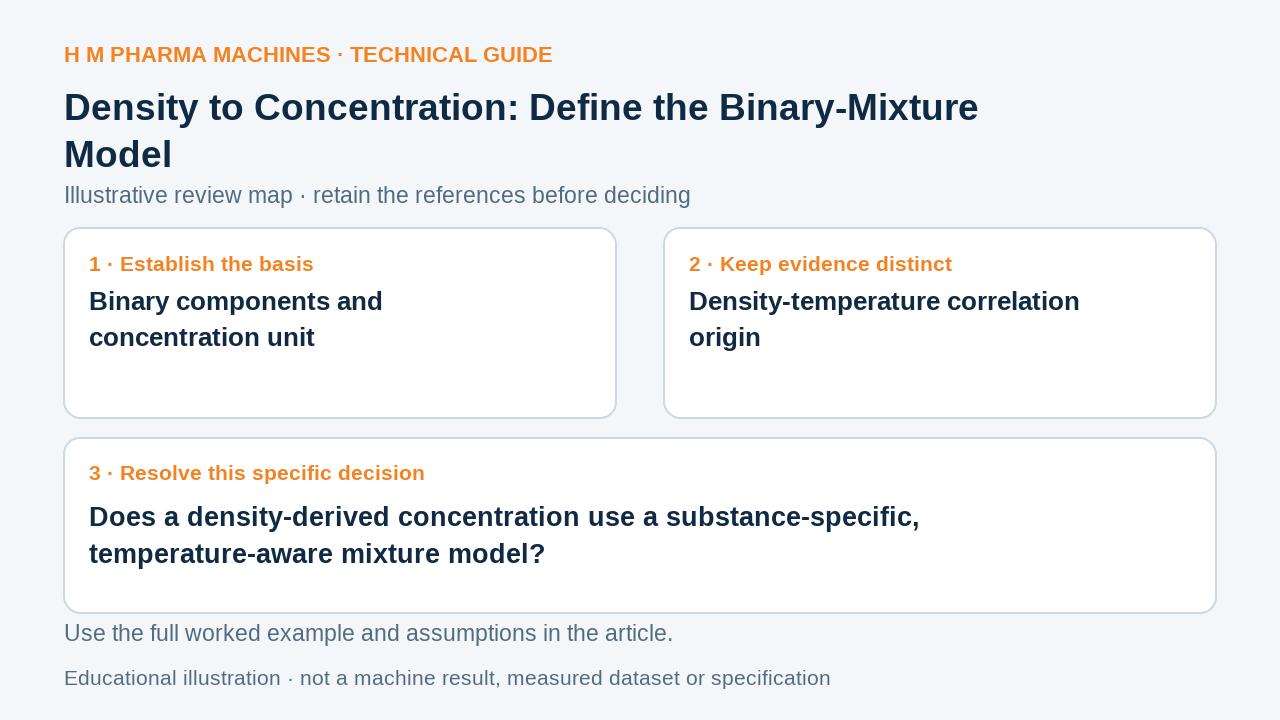
A density reading can support concentration only through an appropriate mixture model. It does not identify composition on its own.
Read Full Article →Applied engineering reference
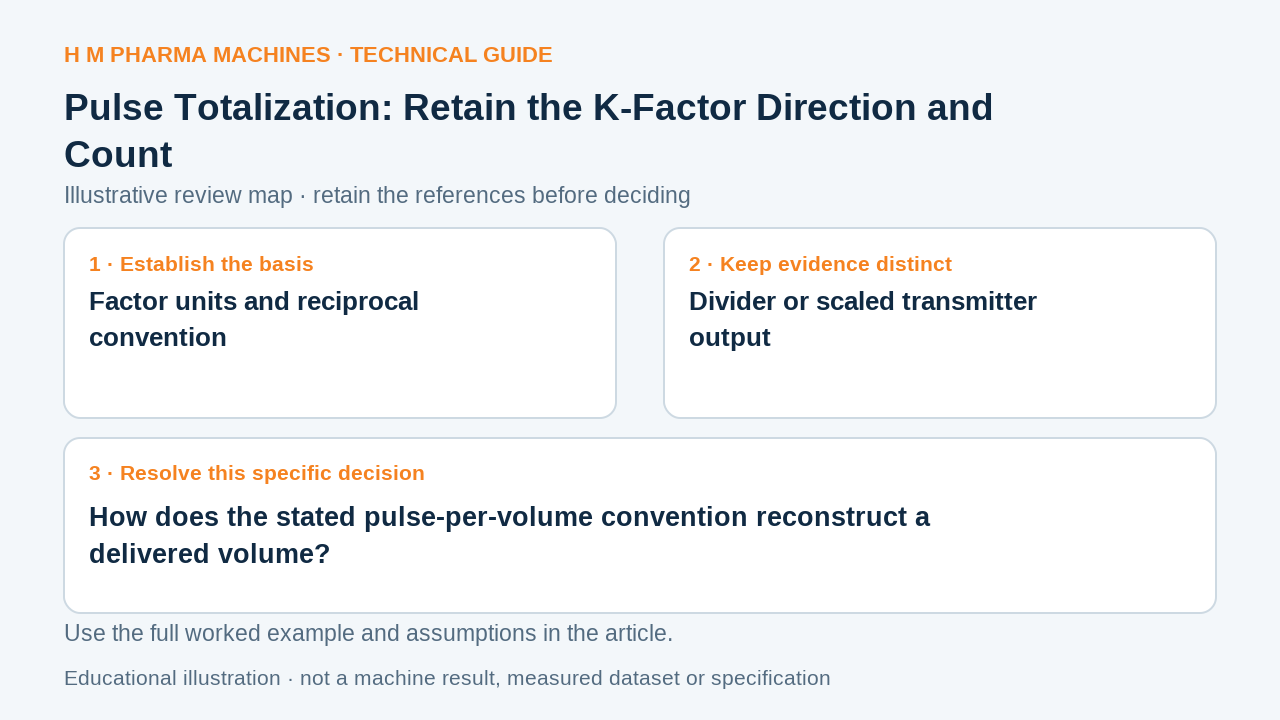
A pulse input needs the direction and units of its scaling factor. Pulses per litre and litres per pulse are reciprocals.
Read Full Article →Applied engineering reference
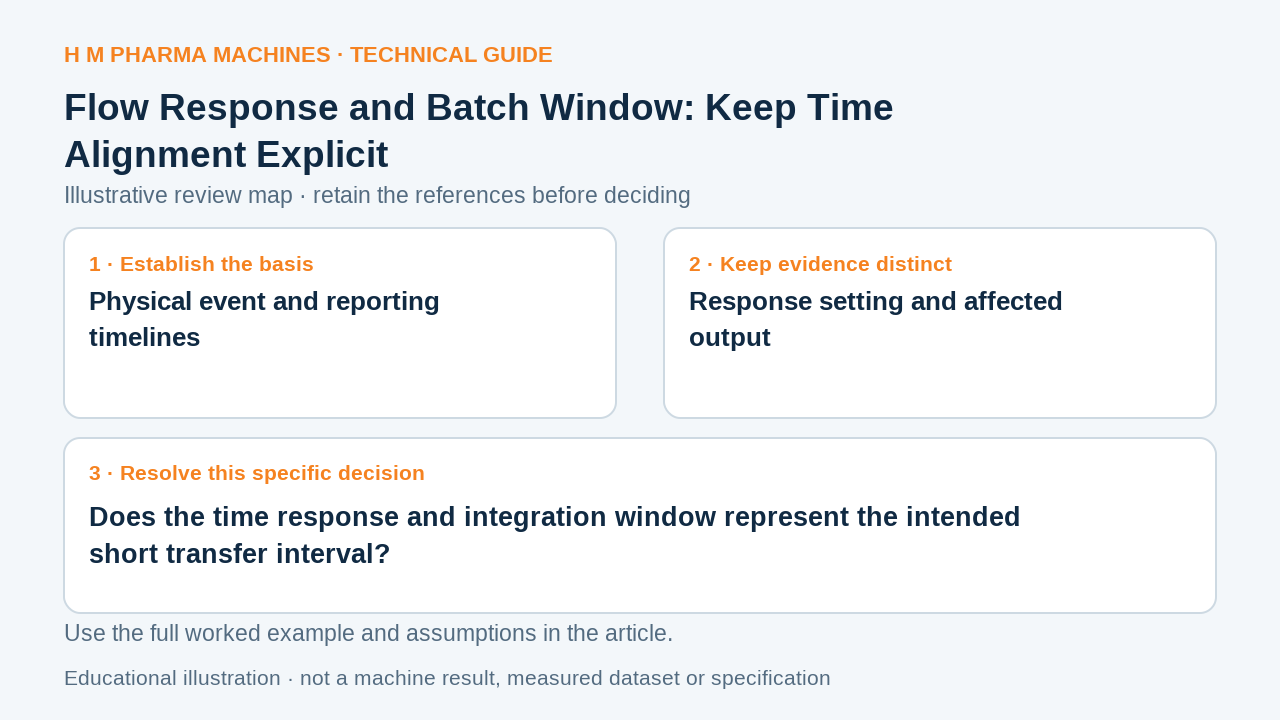
A sensor’s response setting and a controller’s batch window need a common time basis. A displayed rate is not automatically a complete short-batch total.
Read Full Article →Applied engineering reference
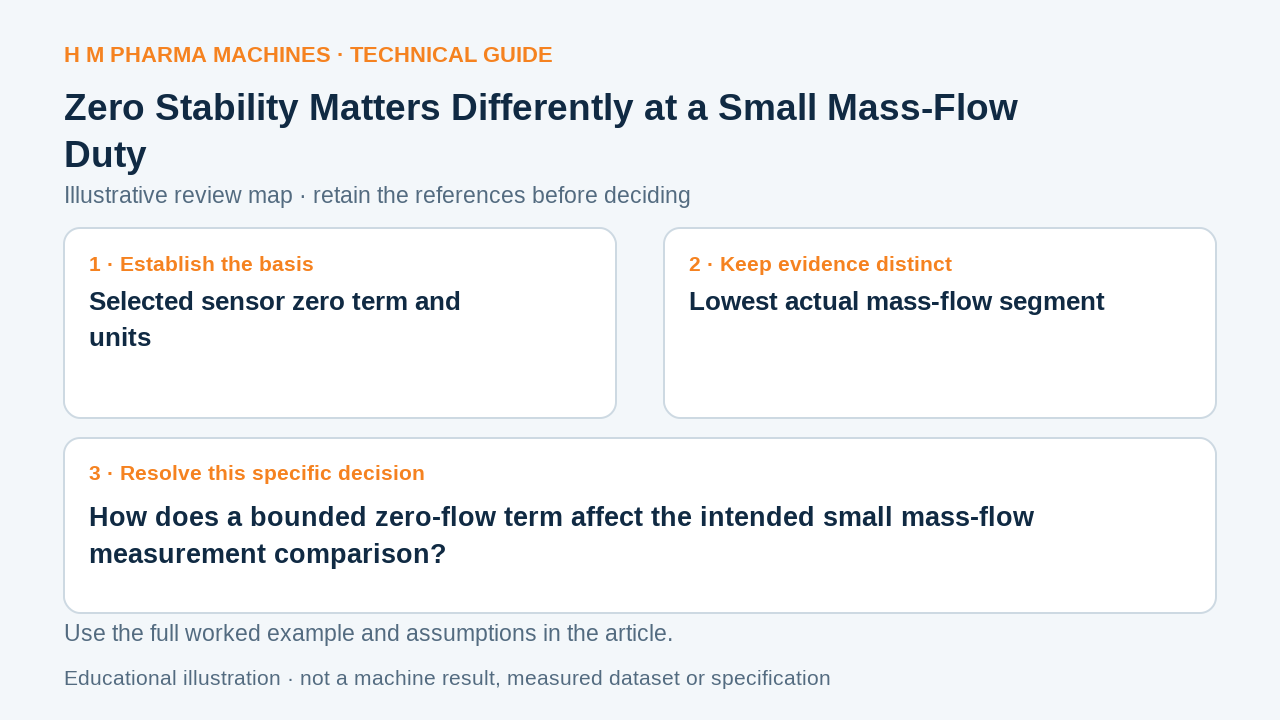
At a low mass rate, a Coriolis meter’s additive zero-stability term can become important relative to the quantity being measured.
Read Full Article →Applied engineering reference
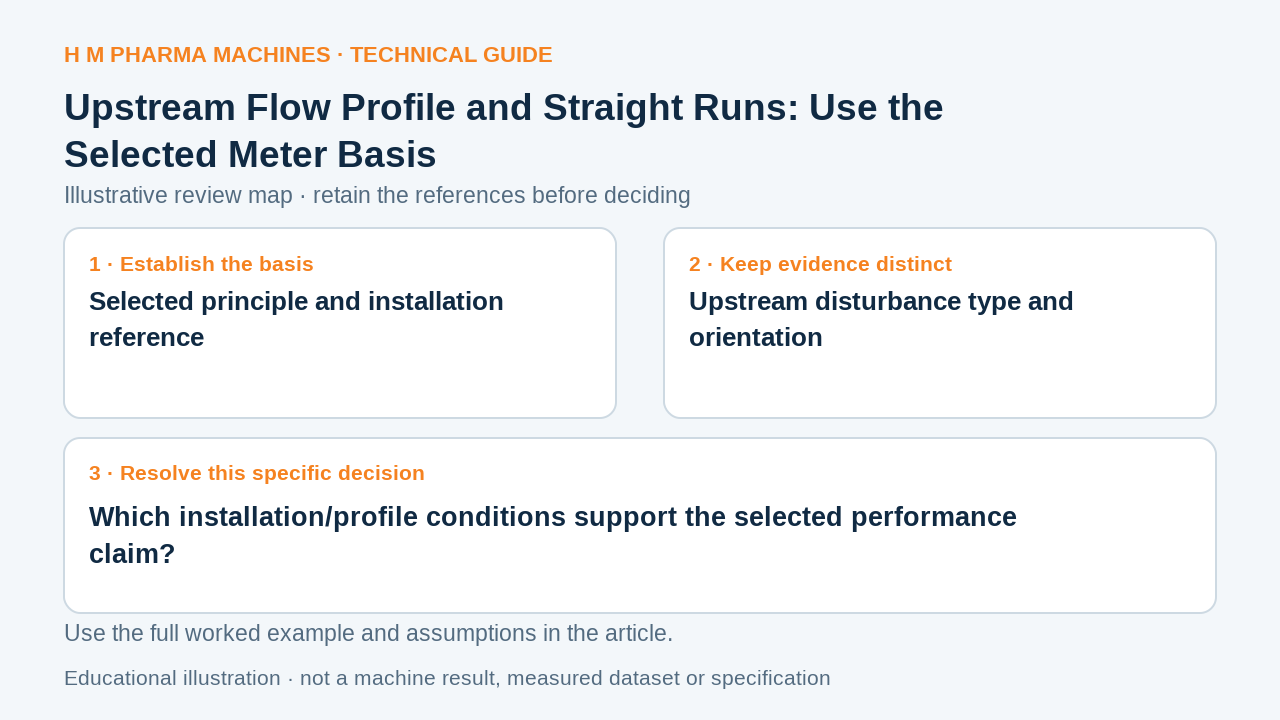
A flowmeter’s installation evidence must match the upstream disturbances actually present. One generic straight-length number can miss the relevant geometry.
Read Full Article →Applied engineering reference
A pipe that carries some liquid is not necessarily full at the measuring section. Establish the fill condition required by the selected instrument.
Read Full Article →Applied engineering reference
Adding a measuring section can change the hydraulic duty. Evaluate its pressure loss alongside its measuring performance.
Read Full Article →Applied engineering reference
Include the stressed component and actual exposure when reviewing a stainless stress-corrosion hypothesis.
Read Full Article →Share your product, container, closure, required output and process details with our engineering team.